
Sak Yant placement: which spot on your body suits your yant?
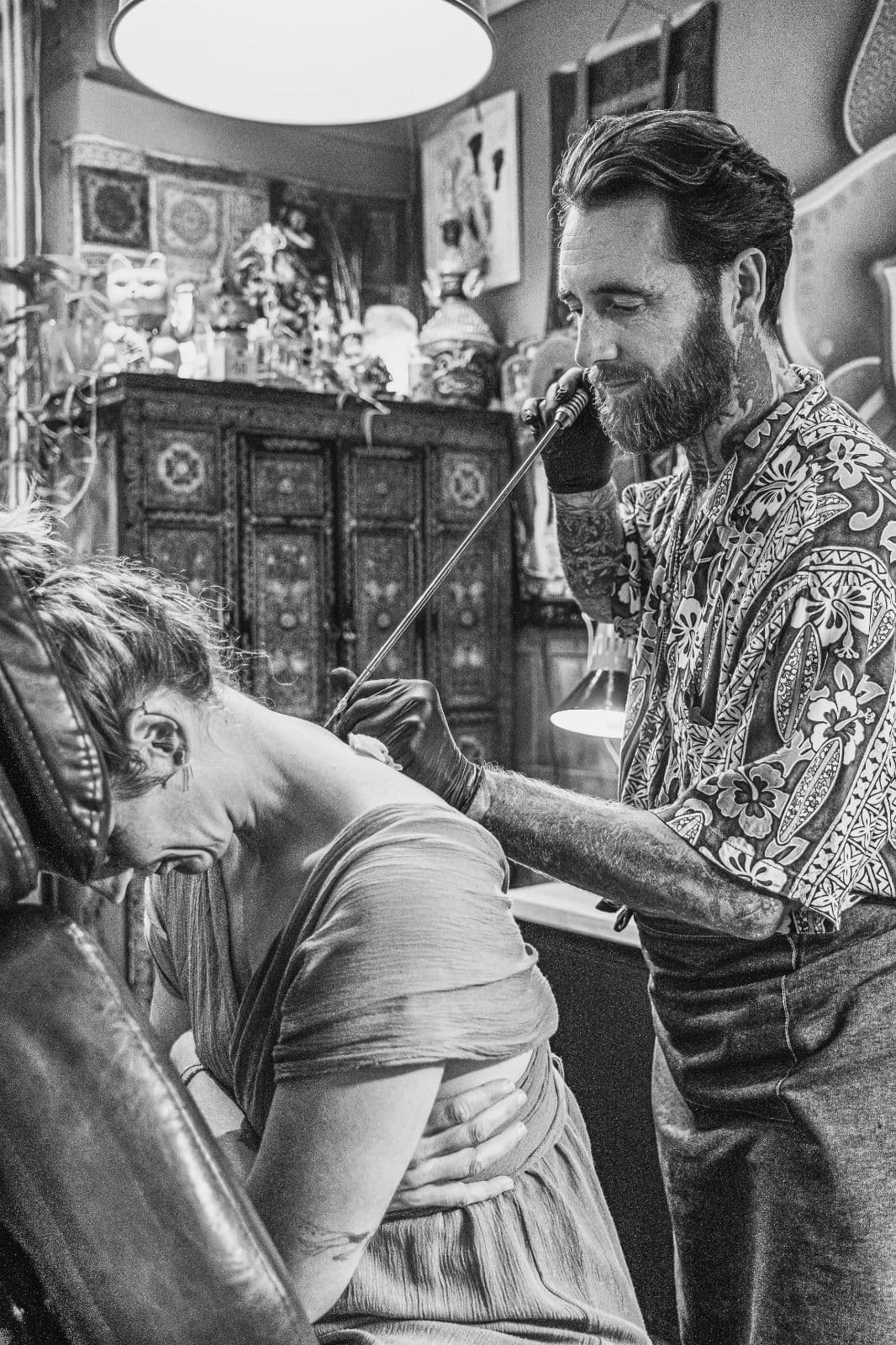
With a Sak Yant, the spot on your body is part of the meaning. From the upper back to the ribs: every placement tells a different story, and some spots simply don't belong to a sacred tattoo according to tradition. Here is how to choose the spot that suits you and your yant.
Why the placement matters as much as the design
With an ordinary tattoo you pick a spot because it looks good. With a Sak Yant it works differently: the place on your body is part of the meaning. The same yant carries a different weight on your upper back than on your forearm, and some spots simply don't belong to a sacred tattoo according to tradition.
In this article you will read which golden rule governs the placement of every Sak Yant, what the most popular spots mean, which places tradition tells you to avoid, what to consider when choosing between visible and hidden, and how our Ajarn helps you so that yant and placement truly fit together.
The golden rule: the higher on the body, the more sacred
In Thai culture the head is the most sacred part of the body and the feet are considered the lowest. That hierarchy runs through everything: in Thailand you don't touch another person's head, and you never point your feet at a person or a Buddha statue. The same hierarchy determines where a sacred tattoo belongs.
The closer a yant sits to the head, the more respect it carries. That is why a Sak Yant lives on the upper half of the body.
Traditional Sak Yants are therefore almost always placed above the waist: on the back, the shoulders, the neck, the chest or the arms. That rule is as old as the tradition itself, passed down from teacher to student for more than two thousand years. It is not a strict law with punishments, but a form of respect: you give something sacred a worthy place.
The most popular spots and their meaning
The upper back and shoulders: the classic choice
The upper back is by far the most traditional spot for a Sak Yant. There is room for the fine lines and the Khom script, the skin is firm, and the yant sits high on the body. The famous Hah Taew with its five sacred lines is classically placed on the left shoulder blade. There is a beautiful thought behind it too: a yant on your back protects you from what you don't see coming. It literally has your back.
The neck and the top of the spine
The spot just below the hairline, at the top of the spine, is the highest and therefore one of the most sacred placements in common use. This is where the Gao Yord is traditionally placed, the nine-spire yant regarded as the master yant. A yant here stands for spiritual guidance and protection that watches over you.
The chest: protection of the heart
A yant on the chest sits literally at your heart and stands for courage, strength and charisma. Warriors once had tigers and other powerful symbols placed here before going into battle. Those who choose the chest today usually choose an intention close to the heart: protection of what you love, or courage for what lies ahead.
The arms and forearms: your daily reminder
A yant on your arm or forearm is something you see every day. Many people choose this spot for exactly that reason: as a quiet reminder of their intention and of the five life rules that come with a Sak Yant. The upper arm is more traditional and easier to cover, the forearm is more personal and more visible.
The ribs and the side
The ribs are an intimate spot: the yant is almost always hidden there and belongs to you alone. It is one of the more sensitive places, though, because the skin is thin and sits directly on the bone. Those who choose it do so deliberately, and that actually fits the nature of a Sak Yant very well.
Spots that tradition tells you to avoid
Everything below the waist is considered unsuitable for a sacred yant in the tradition. Legs and feet belong to the lowest part of the body, and a sacred text or religious symbol does not belong there. Images of Buddha or sacred Khom script low on the body are experienced as deeply disrespectful in Thailand.
Do you still want a Thai motif on your lower leg or ankle? Then a decorative Thai tattoo without a blessing is a more fitting choice than a sacred yant. It can certainly be beautiful, but it is then deliberately not a Sak Yant. We also leave the head itself alone: in Thailand some monks carry yants on the scalp, but that is an exceptional practice you don't simply copy.
Visible or hidden: what to think about
A Sak Yant is not a fashion statement, but you do live with it through an ordinary working week. So think about visibility: a yant on the forearm or neck shows in a t-shirt, while a yant on the upper back, chest or ribs is covered effortlessly. Neither is better, it has to fit your life.
Practical matters count too: a freshly placed yant needs proper care in the first weeks and has to be kept out of the sun. A spot you can easily reach yourself makes the aftercare simpler, and if you choose a spot that is often exposed, also read how to protect your yant in summer from sun and sea.
Does the spot matter for the pain too?
Yes, although with a Sak Yant it is usually gentler than people expect. The traditional handpoke technique, with a long needle or bamboo rod, is experienced by most people as calmer and milder than a machine tattoo. Fleshy, muscular areas such as the upper back, shoulder and upper arm are the mildest. Places where the skin sits thinly on the bone, such as the ribs, the spine and the collarbone, you feel considerably more.
Left or right, large or small?
Many people wonder whether the left or right side matters. The tradition knows its preferences, the Hah Taew is classically placed on the left shoulder blade, but there is no hard rule that applies to everyone. What matters more is that the spot gives the design room: a yant needs air to be able to speak.
Size and placement are connected too. A small yant on the wrist or the neck can be beautiful, but the fine Khom script needs detail to stay readable. On the upper back or chest a yant can breathe and ages gracefully; on a tiny surface that detail gets lost. That is why we always check whether design and placement strengthen each other instead of limiting each other.
How the Ajarn helps you choose the placement
With us you never choose the spot alone. Every session starts with a conversation in which our Ajarn, trained and blessed in Thailand, asks about your intention: what do you seek protection for, what do you want to carry close, what may the world see and what is yours alone? Based on that, you choose the yant and the matching placement together.
Sometimes that also means honestly advising you to do it differently than you first thought. A large design needs room, a sacred yant does not belong on your calf, and a first Sak Yant on a very sensitive spot is not always the best start. The conversation is free of obligation and not a single line is placed until it feels right for you.
Frequently asked questions (FAQ) about Sak Yant placement
What is the most traditional spot for a Sak Yant?
The upper back and the shoulders. There is room for the design, the yant sits high on the body, and most classic yants, such as the Hah Taew on the left shoulder blade, have belonged there for centuries.
Can a Sak Yant go below the waist?
Not according to tradition: everything below the waist counts as the lowest part of the body and is not a worthy place for a sacred yant. If you want something on your leg, a decorative Thai design without a blessing is a better fit.
Which spot hurts the least?
Fleshy, muscular areas such as the upper back, the shoulder and the upper arm. The ribs, the spine and the collarbone are the most sensitive, because the skin sits thinly on the bone there.
Do I choose the spot myself or does the Ajarn?
Together. In the introductory conversation you discuss your intention and your wishes, and based on that the Ajarn advises which yant and which placement suit you. Nothing is placed until it feels right for you.
Does the placement change the meaning of a yant?
The core of the meaning lies in the yant itself and in the blessing. But the placement strengthens the intention: a yant at your heart carries differently than a yant covering your back. That is why we always look at yant and placement together.
Can I choose a spot that is not visible at work?
Absolutely. The upper back, the chest and the ribs are covered effortlessly by ordinary clothing. Many people deliberately choose this, and it takes nothing away from the power of the yant.
Already know which yant you want? Read about the Gao Yord, the master yant, and discover what a Sak Yant costs.
Choosing the right spot together?
The right place for your Sak Yant follows from your story, not from a catalogue. Book a free introductory talk at our studio in Breda, easy to reach from Belgium too, and discover which yant and which placement suit you. We are happy to think along with you.
Recent blogs
Dive deeper into Sak Yant, traditions and tattoo care.
Power tattoo: what people mean and what the tradition says
Power tattoo is a modern search term, not a concept from the tradition. What people mean by it, and which Sak Yant designs are actually about this.
5 min read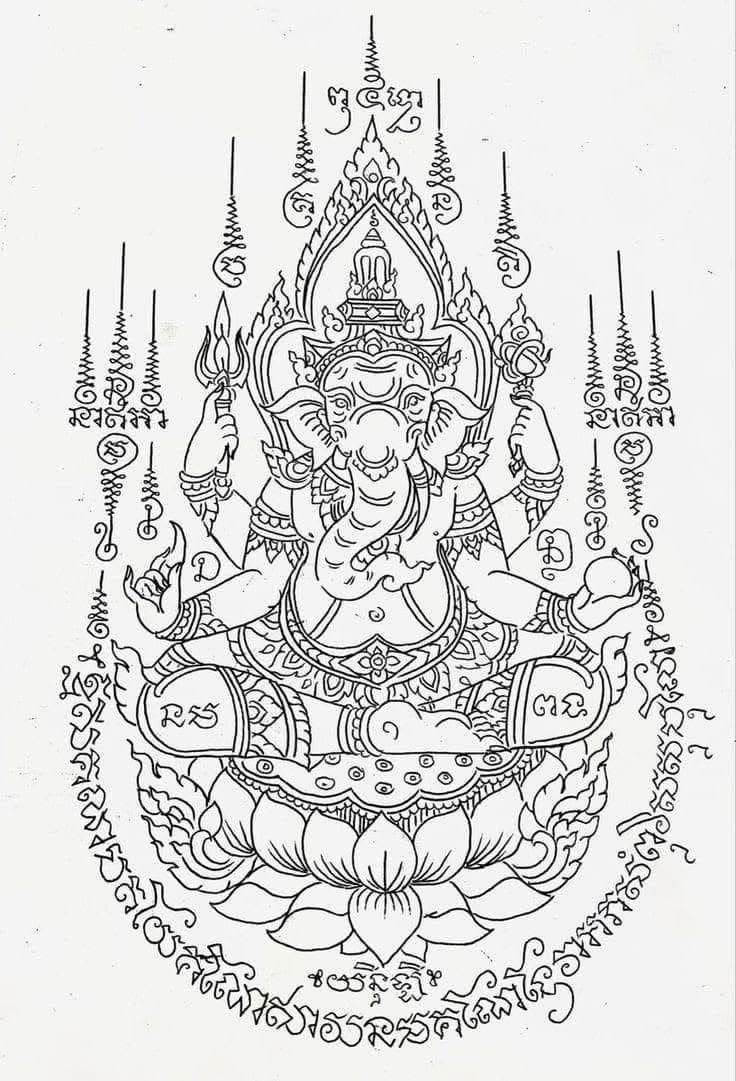
Ganesha tattoo meaning: the elephant god who clears obstacles
Ganesha, known in Thailand as Phra Pikanet, is the god of new beginnings and the remover of obstacles. Learn what a Ganesha tattoo means, where he comes from and how to wear him with respect.
7 min read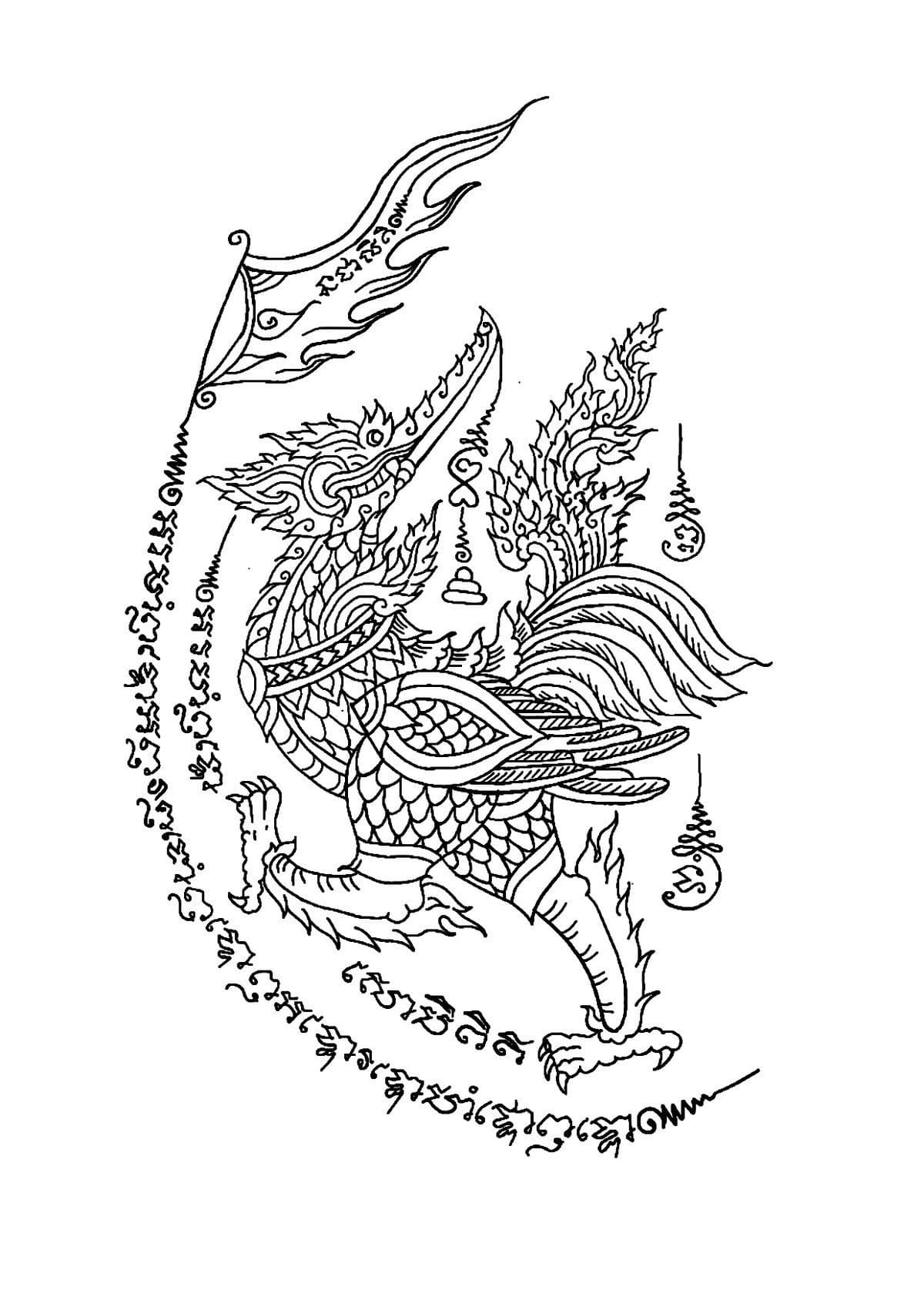
Garuda tattoo meaning: the royal bird of power and authority
The Garuda is the king of birds and the national emblem of Thailand. Learn what the Yant Krut means, why it suits leaders and entrepreneurs, and where on the body it belongs.
7 min read