
Handpoke & Bamboo Tattoo: technique, pain, healing and durability
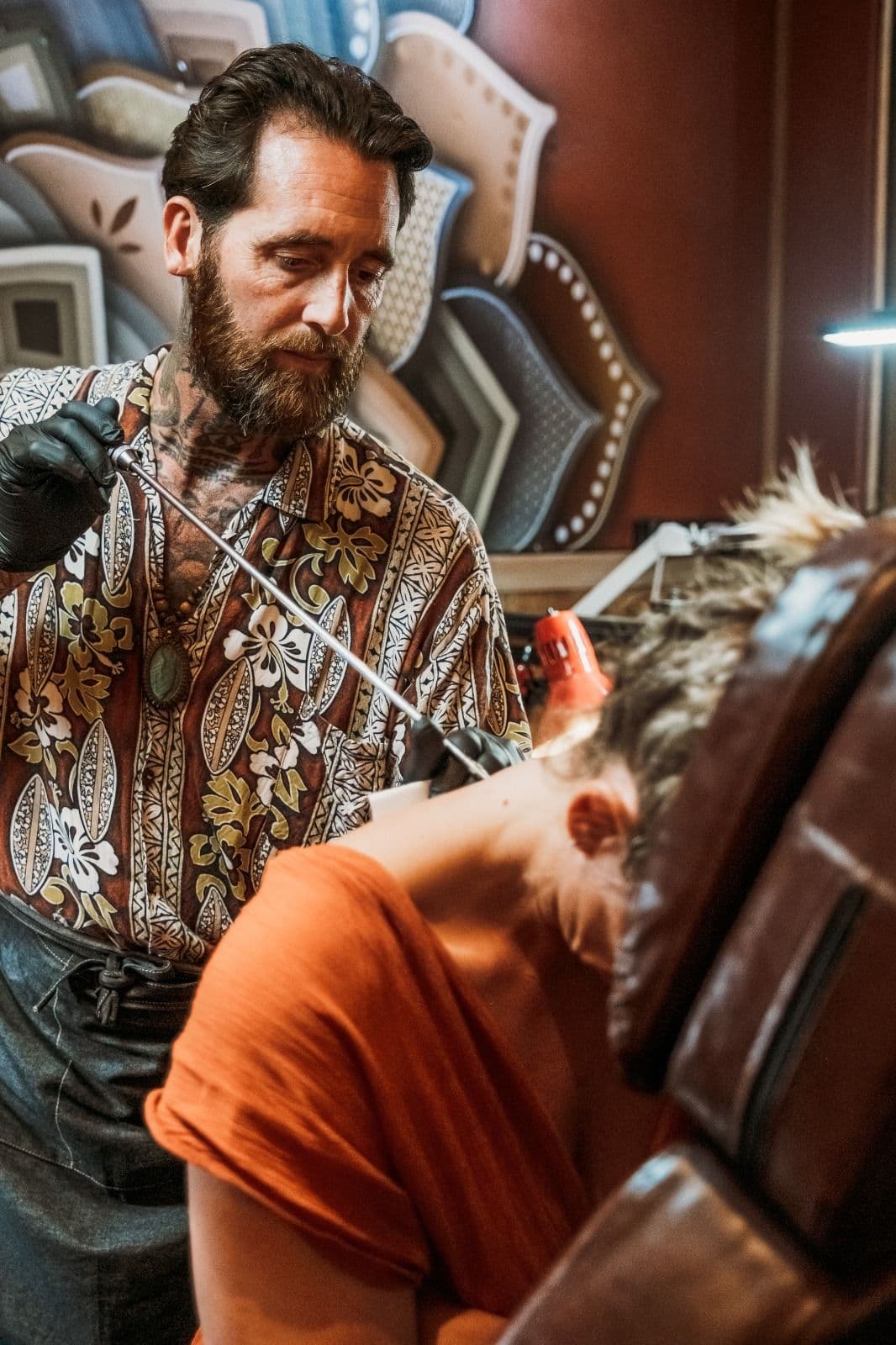
Everything about the handpoke (bamboo) tattoo technique: how it works, whether it hurts, how it heals, how durable it is and hygiene. A practical guide.
A handpoke tattoo — known in Thailand as a bamboo tattoo — is applied entirely by hand, without a machine. More and more people deliberately choose this technique for its calm process, fine line work and the centuries-old tradition behind it. This guide explains practically how handpoke works, whether it hurts, how it heals, how durable it is and where to get one safely.
What is a handpoke (bamboo) tattoo?
With a handpoke tattoo the artist deposits ink into the skin point by point using a thin, hand-moved needle. In the Thai tradition this is called Sak (to tap/strike), done with a long metal rod, the Khem Sak. The name "bamboo tattoo" comes from the origin where bamboo was used as the handle. The result is the same: a tattoo without an electric machine.
How does the handpoke technique work?
The artist stretches the skin and taps the needle in and out at a steady rhythm. Each point leaves a tiny amount of ink; together they form the lines and shading of the design. Because no motor sets the speed, the artist has full control over depth and placement. This allows refined, fine line work and gives the technique its meditative, calm character.
Does a handpoke tattoo hurt?
Many people find a handpoke tattoo milder than a machine tattoo. The sensation is more regular and less "grinding" than the buzz and vibration of a needle machine. How much you feel depends mostly on the spot: over bone (ribs, spine, feet) is more sensitive than fleshy areas. We explain exactly what to expect in our guide to Sak Yant tattoo pain.
Healing and aftercare
Because handpoke damages the skin less than a fast-spinning machine needle, many handpoke tattoos heal relatively smoothly. You generally follow the same basics: keep it clean, do not scratch, protect from sun and moisturise. Find the exact steps in our aftercare guide.
Durability: does a bamboo tattoo fade faster?
A stubborn myth is that handpoke tattoos fade faster. In practice a well-applied handpoke tattoo is just as permanent as a machine tattoo — the ink sits in the same skin layer (the dermis). Fading depends far more on placement, sun exposure and aftercare than on the technique. Fine, small line work may soften over time, but that applies to any tattoo.
Hygiene and safety
Handpoke does not mean "primitive". A professional studio uses sterile, single-use needles, the artist wears gloves and everything that touches the skin is discarded or sterilised. Always ask about hygiene standards before getting tattooed — a serious artist will happily explain.
Which designs can be done by handpoke?
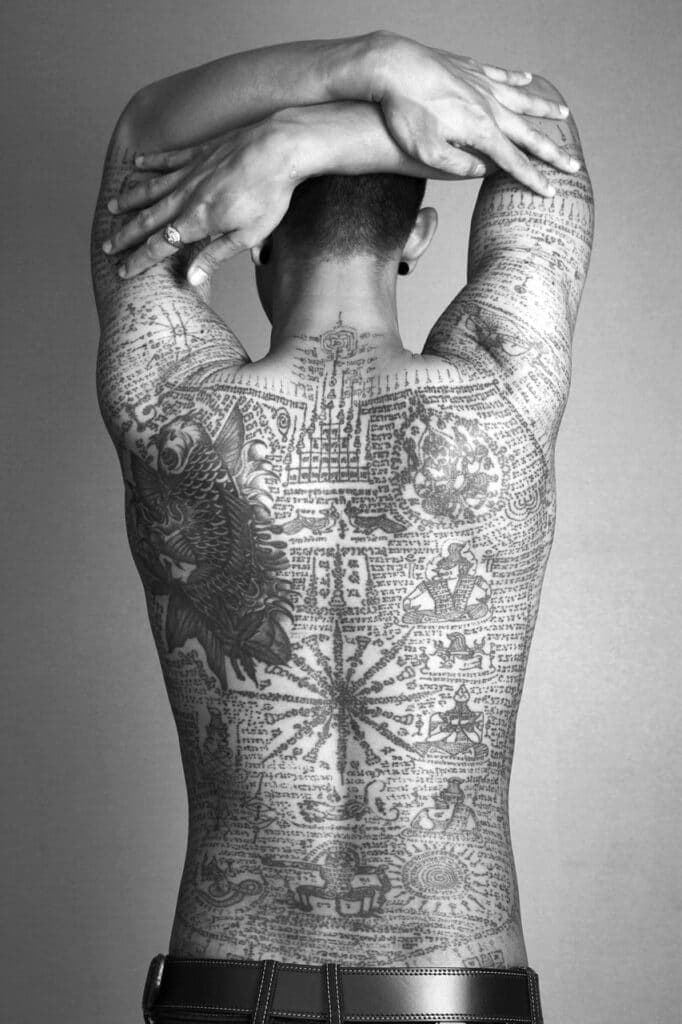
Almost any design can be done by hand, but the technique excels at fine lines, dotwork and the traditional Sak Yant designs. Want to know why handpoke matters specifically for sacred Sak Yant? Read Bamboo Tattoo and Sak Yant. For the broader background of the Thai tattoo, visit our Thai Tattoo page.
Handpoke versus machine: in short
Machine is faster for large fills; handpoke is calmer, finer and traditional. Neither is "better" — it depends on the design and what you are after. Read the full comparison in Sak Yant versus machine tattoo.
Frequently asked questions about handpoke and bamboo tattoo
Is a handpoke tattoo permanent?
Yes. A well-applied handpoke tattoo sits in the dermis and is just as permanent as a machine tattoo.
Does a handpoke tattoo take longer than a machine?
For large coloured fills usually yes; for fine lines and symbols the difference is small. The pace is calmer, which many people actually prefer.
Is handpoke safer or more hygienic?
Safety depends on the studio, not the technique. With sterile single-use needles and professional hygiene, handpoke is just as safe as a machine tattoo.
Does a bamboo tattoo hurt less?
Many people find the sensation milder and more regular than a machine, but pain depends mostly on the spot on your body.
Because handpoke takes time and craftsmanship, it also shapes the price. Read what a Sak Yant costs.
Ready for your handpoke tattoo?
Master Silas applies authentic handpoke (bamboo) Sak Yant at his studio in Breda. Want to know what your design involves? Book an appointment for a personal consultation.
Recent blogs
Dive deeper into Sak Yant, traditions and tattoo care.
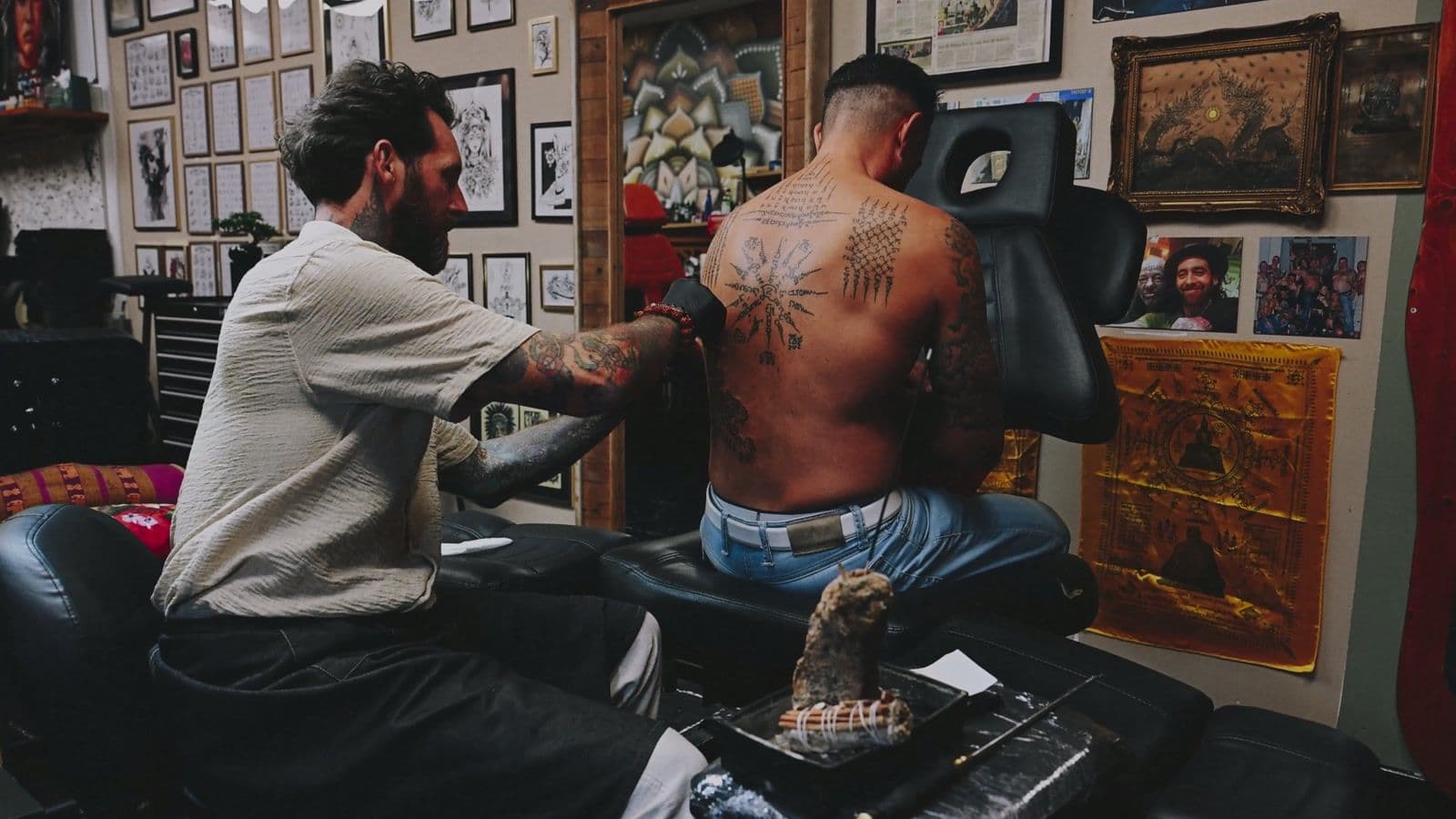
Sak Yant video: how a Sak Yant is tattooed in the Netherlands
A Sak Yant from start to finish, filmed at the studio. Watch the video and read what you see: the design, the rod, the calm in the studio and the closing moment.
4 min read
The 10 most popular Sak Yant designs and what they mean
From the Hah Taew to Ganesha: the ten Sak Yant designs chosen most often, with their meaning and where they work best on the body.
6 min read
Getting a Sak Yant from Amsterdam, Rotterdam, Utrecht or Eindhoven
You will not find an authentic Sak Yant in every city. How long it takes to reach the studio in Breda from Amsterdam, Rotterdam, The Hague, Utrecht and Eindhoven, and what to look for.
5 min read