
Sak Yant meaning: what the sacred Thai tattoo really stands for
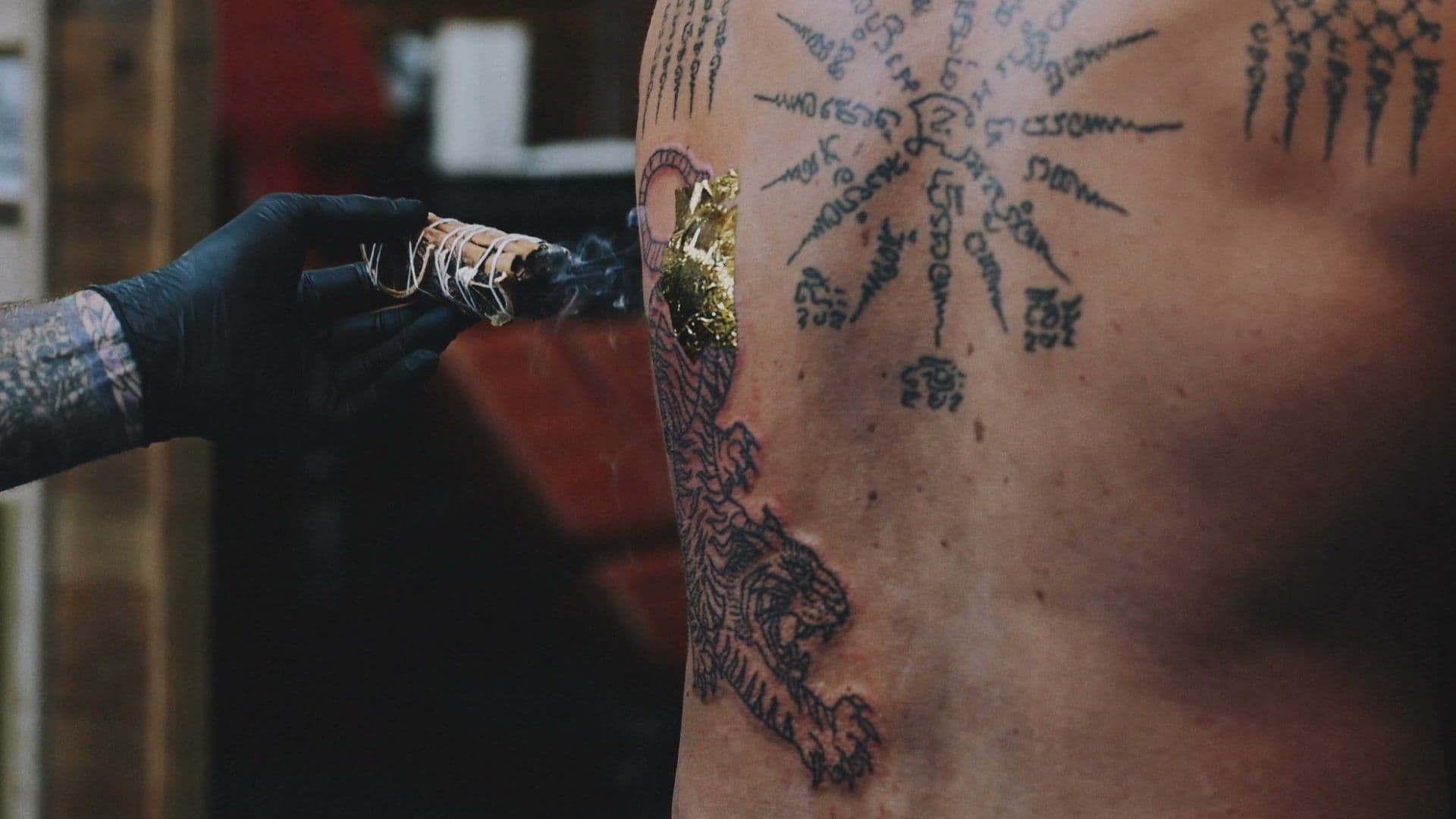
Sak Yant literally means "to tattoo a yantra": a sacred geometric tattoo with a mantra and a blessing. Discover the layered meaning behind the lines, the Khom script and the best-known yants, from Gao Yord to Hah Taew.
More and more people choose a Sak Yant on purpose, not just a beautiful Thai motif. But what does Sak Yant actually mean? The question sounds simple, yet the answer touches the very heart of this centuries-old tradition.
In this article we go through the meaning layer by layer. First the literal translation of the words, then the symbolism in the lines and the script, and finally the meaning of the best-known yants. That way you understand why a Sak Yant is more than ink: it is a prayer you carry on your skin.
Want the full overview of the tradition first? Read what a Sak Yant really is. Here we focus specifically on the meaning.
What does "Sak Yant" literally mean?
Sak Yant is made up of two Thai words, and together those two words describe exactly what happens.
Sak: the act of tattooing
In Thai, "Sak" means to tattoo, in the sense of tapping or piercing. It refers to the act itself: rhythmically tapping the ink into the skin by hand, point by point. That act is not a detail but part of the meaning. A Sak Yant is meant to be placed by hand, not with a buzzing machine.
Yant: the sacred yantra
"Yant" comes from the Sanskrit word "yantra": a sacred geometric diagram that guides and gathers energy. In the Hindu-Buddhist tradition a yantra is a kind of spiritual blueprint. A Sak Yant is therefore literally "tapping a yantra into the skin". Not a decoration, but a working symbol.
Put the two words together and the meaning of Sak Yant is: hand-tapping a sacred yantra. That definition already shows why a real Sak Yant is so different from a decorative Thai tattoo.
More than an image: the four layers of meaning
The meaning of a Sak Yant lies not in a single picture, but in four layers that only together bring the yant to life. Miss a layer and you have an image of a yant, not the yant itself.
The first layer is the geometry: the yantra shape that orders the energy. The second layer is the text, written in ancient Khom script, carrying a kata, a sacred mantra. The third layer is the blessing: the master speaks or blows the power into the yant, the activation. The fourth layer is you: the intention with which you carry the yant.
A Sak Yant draws its meaning not from how it looks, but from the yantra, the prayer, the blessing and the intention together.
The meaning of the sacred symbols
Within those layers a number of symbols keep returning. Each has its own meaning, and together they tell a story of protection, growth and strength.
The unalome, the spiral that ends in a straight line, stands for the path to inner peace: from the twists and wanderings of life to clarity. The kata, the Khom script, carries the mantra that activates the yant. And around or within the yant you often see powerful figures: the Buddha and deva (celestial beings) for blessing and protection, or animals such as the tiger, Hanuman and the garuda for strength, courage and status.
Every mark is a deliberate choice by the master. Want to go deeper into the individual marks? Read the overview of the most powerful Sak Yant symbols and their meaning.
The meaning of each Sak Yant
There is no single Sak Yant. Each yant has its own shape and its own meaning, tuned to what you seek: protection, strength, luck, love or calm. These are the best known.
Gao Yord - the nine peaks
The Gao Yord is the "master yant" with nine peaks, standing for the nine sacred peaks and the teaching of the Buddha. It is a yant of complete protection and is often the first Sak Yant. Read the full meaning of the Gao Yord.
Hah Taew - the five lines
The Hah Taew consists of five horizontal rows of Khom script, each with its own blessing: protection, luck, attraction, success and warding off misfortune. Discover the meaning of the five sacred lines.
Paed Tidt - the eight directions
The Paed Tidt is the yant of the eight directions. Its meaning: protection from every direction from which danger or misfortune may come, wherever you travel. A favourite for those often on the move.
Suea - the twin tigers
The tiger (Suea) stands for strength, courage and authority. The Suea Koo, two tigers facing each other, means double strength and self-confidence, and the nerve to stand up for yourself without being dominated.
Hanuman and the power animals
Hanuman, the monkey warrior from Thai mythology, stands for courage, loyalty and unbreakable strength. Other power animals such as the garuda (status and might) or the lizard (charm and attraction) each carry their own meaning. The master helps you choose which one suits you.
Meaning also lives in the spot on your body
In the tradition not only the yant carries meaning, but also the placement. The higher on the body, the more sacred: yants on the neck and back are seen as the most powerful, while lower on the body carries a different charge. Read how placement and meaning connect.
The five life rules: meaning you carry
A Sak Yant is not a one-off picture but a living promise. Part of the tradition are five life rules (the Sila Ha): a quiet covenant that keeps the power of the yant alive. Anyone who wants to understand the meaning of a Sak Yant cannot skip the five life rules of Sak Yant.
From meaning to your yant: choosing on intention
Because meaning is the starting point, you never choose a Sak Yant like a picture from a booklet. You begin with a conversation: where are you in life, and what are you seeking? Protection, a fresh start, strength in a hard time, calm? Only once the intention is clear does the shape follow.
Let the different Sak Yant designs and their meaning inspire you, but settle on nothing before you have spoken with the master. Ready for that step? Book a free introductory talk and together we decide which meaning suits you.
Frequently asked questions (FAQ) about the meaning of Sak Yant
What does Sak Yant literally mean?
Sak Yant comes from Thai. "Sak" means to tattoo (in the sense of tapping or piercing) and "Yant" comes from "yantra", a sacred geometric diagram. Together Sak Yant means: hand-tapping a sacred yantra.
What is the difference between a yant and an ordinary tattoo?
An ordinary tattoo is an image. A yant is a working, sacred symbol: a yantra with a kata (mantra) in Khom script, placed by a blessed master and activated with a blessing. Without those layers a yant loses its meaning.
Does every Sak Yant have the same meaning?
No. Each yant has its own meaning. The Gao Yord stands for complete protection, the Hah Taew for five blessings, the tiger for strength and courage. The master chooses or advises the yant that fits your intention.
What does the Khom script in a Sak Yant mean?
The Khom script is an ancient script in which the sacred texts are written. It contains the kata, the mantra that belongs to the yant. A real master knows what it says and speaks the mantra that activates the power of the yant.
Can you choose the meaning of your Sak Yant yourself?
You choose the intention, the meaning you seek, together with the master. On that basis comes the yant that belongs to it. So you do not choose a picture, but a purpose.
Does a Sak Yant lose its meaning without a blessing?
In the tradition, yes. The blessing (the activation by the master) is one of the four layers that make a yant a real Sak Yant. An identical image without a blessed master, correct Khom script and the matching mantra counts as decorative, not as a living yant.
Discover which meaning suits you
The meaning of a Sak Yant begins with your story. Our master, trained and blessed in Thailand, works by hand, with real Khom script and an activating blessing. Book a free introductory talk and together we decide which yant and which meaning suit you.
Recent blogs
Dive deeper into Sak Yant, traditions and tattoo care.

Sak Yant video: how a Sak Yant is tattooed in the Netherlands
A Sak Yant from start to finish, filmed at the studio. Watch the video and read what you see: the design, the rod, the calm in the studio and the closing moment.
4 min read
The 10 most popular Sak Yant designs and what they mean
From the Hah Taew to Ganesha: the ten Sak Yant designs chosen most often, with their meaning and where they work best on the body.
6 min read
Getting a Sak Yant from Amsterdam, Rotterdam, Utrecht or Eindhoven
You will not find an authentic Sak Yant in every city. How long it takes to reach the studio in Breda from Amsterdam, Rotterdam, The Hague, Utrecht and Eindhoven, and what to look for.
5 min read