
Gao Yord: the meaning of the nine peaks (the master yant)
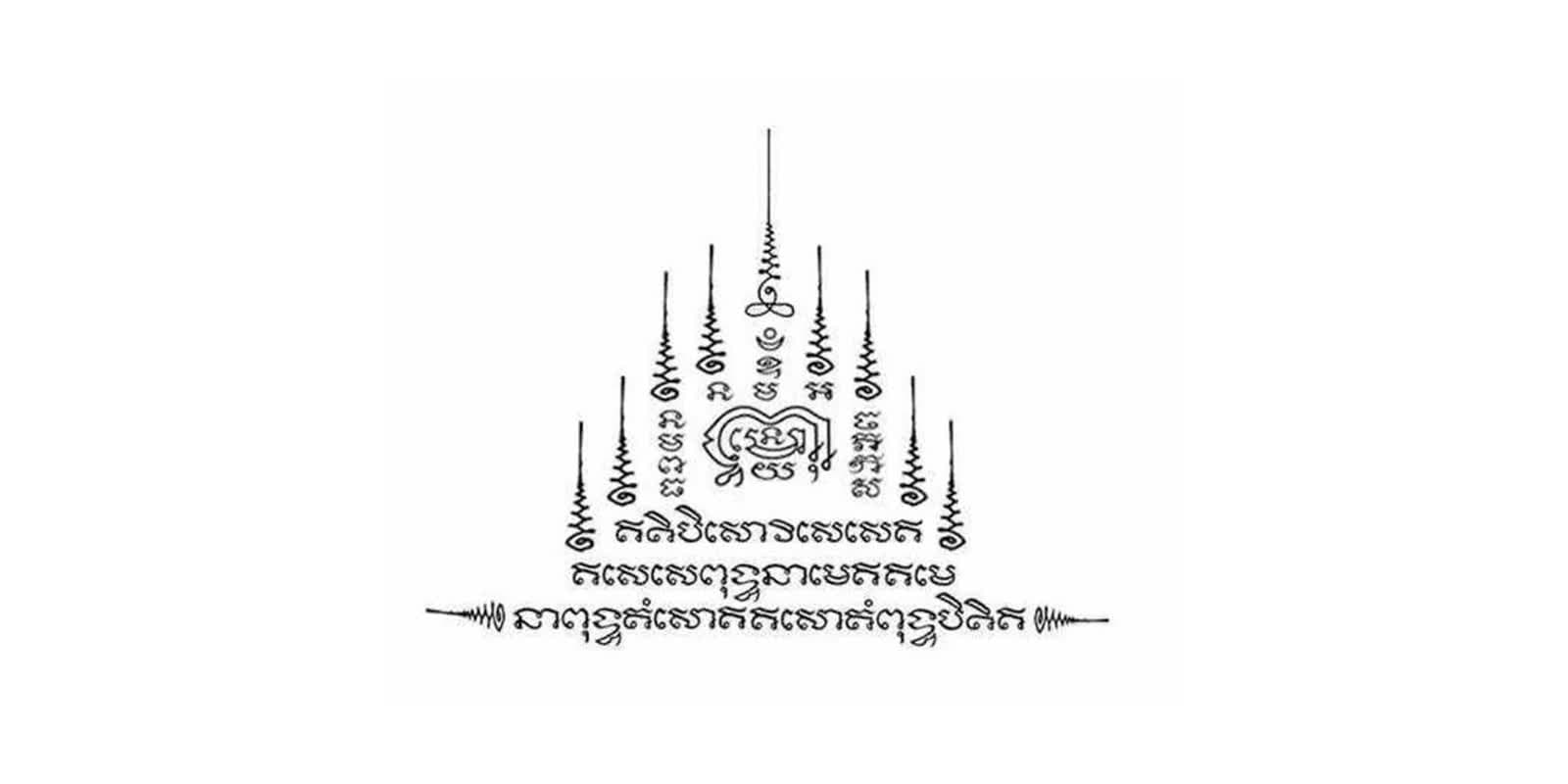
The Gao Yord is perhaps the most famous and most revered Sak Yant of all. Nine peaks, nine sacred mantras and a complete protection make it the master yant. Discover its meaning, its symbolism and why the Gao Yord is often someone's first Sak Yant.
What is the Gao Yord?
The Gao Yord is perhaps the most famous and most revered Sak Yant of all. The name literally means nine peaks, and you recognise the yant by its nine tower-shaped spires that point upward like a row of flames. In the world of sacred Thai symbols, the Gao Yord is the master yant: the yant from which all others spring.
In this article you will read what the Gao Yord means, what the nine peaks stand for, why it is often the first Sak Yant someone gets, and what protection it offers according to tradition.
The meaning of the name: nine peaks of Mount Meru
Gao means nine, Yord means peak or summit. The nine peaks refer to Mount Meru, the sacred cosmic mountain that in Buddhism and Hinduism forms the centre of the universe and is the dwelling place of the gods. Each peak stands for a sacred summit of that mountain, and together they form a gateway to the highest.
Nine peaks, nine sacred summits, a mountain that joins heaven and earth. That is the Gao Yord in a single image.
The nine peaks and their sacred mantras
Each of the nine spires carries a sacred mantra, written in the ancient Khom script. These nine mantras call upon the protection and the power of the Buddha and the teachers. The origin of this tradition goes back thousands of years, and the mantras are carefully passed down from master to student. It is not decoration, but sacred text with a purpose.
The unalome: the spirals toward enlightenment
Above the nine peaks you often see small spirals, the unalome. They stand for the winding road to enlightenment: the path begins wild and twisting and becomes straight and calm toward the top. So the Gao Yord tells a whole spiritual journey in a single image, from unrest to inner peace.
Why the Gao Yord is called the master yant
The yant that carries all powers within it
The Gao Yord is seen as the foundational yant that unites the power of all other yant symbols within it. Where the Hah Taew gives five targeted blessings, the Gao Yord offers a complete, all-encompassing protection. That is why many Ajarns call it the master or teacher yant.
Often the first Sak Yant
Because the Gao Yord is so complete, many people choose it as their first Sak Yant. It forms a strong foundation to build on later, and its broad protection suits almost any intention. If you are unsure about the placement on your body, our Ajarn thinks along with you.
What protection does the Gao Yord offer?
The Gao Yord is known for its broad protection: against danger, against ill influences and as a source of luck, success and charisma. But that power is not one-way traffic. According to tradition, a yant works together with how you live: those who respect the five life rules keep the blessing of their yant alive.
Where is the Gao Yord placed?
Traditionally the Gao Yord is placed high on the body, often on the neck or at the top of the spine, the highest and most sacred spot for a yant. There it watches over you, as it were. The upper back is a beloved, classic choice too, with enough room for the nine peaks.
Gao Yord or Hah Taew: which one suits you?
Many people hesitate between the Gao Yord and the Hah Taew with its five lines. The Hah Taew gives five targeted blessings and is a little more compact; the Gao Yord is broader and counts as the master yant. Neither is better, it depends on your intention. Curious what such a yant costs? Then also read our article on what a Sak Yant costs.
How the Gao Yord is traditionally placed
A real Gao Yord is placed by hand, line by line, with the traditional handpoke technique and a bamboo rod. Our Ajarn, trained and blessed in Thailand, speaks the mantras during the placing that give the yant its power. Most people experience the placing as calmer and milder than they expect beforehand. Afterwards, good aftercare is part of it, especially if you wear it in summer.
Frequently asked questions (FAQ) about the Gao Yord
What does Gao Yord mean?
Gao means nine and Yord means peak or summit. The Gao Yord is the yant with the nine peaks, which refer to the sacred Mount Meru and the nine sacred mantras that each peak carries.
Why is the Gao Yord the master yant?
Because it unites the powers of all other yants within it and offers a complete, all-encompassing protection. That is why it is also called the teacher yant and often forms the foundation of someone's Sak Yant journey.
Is the Gao Yord suitable as a first Sak Yant?
Yes, very much so. Because of its broad protection and strong foundation, many people choose the Gao Yord as their first yant, on which they can build later.
Where is the Gao Yord usually placed?
Traditionally high on the body: on the neck or at the top of the spine, the most sacred spot. The upper back is also a commonly chosen, classic place.
What is the difference between the Gao Yord and the Hah Taew?
The Hah Taew gives five specific blessings and is more compact, while the Gao Yord is broader and offers an all-encompassing protection as the master yant. Which one suits you depends on your intention.
What protection does the Gao Yord give?
Protection against danger and ill influences, and strength in the form of luck, success and charisma. According to tradition, that blessing stays strong as long as you live by the five life rules.
Get your own Gao Yord?
Do you want to carry the master yant yourself? In a free introductory talk, our Ajarn discusses your intention and we design your Gao Yord together. Have a look at our Sak Yant designs for inspiration, or book an appointment at our studio in Breda, easy to reach from Belgium too.
Recent blogs
Dive deeper into Sak Yant, traditions and tattoo care.
The 10 most popular Sak Yant designs and what they mean
From the Hah Taew to Ganesha: the ten Sak Yant designs chosen most often, with their meaning and where they work best on the body.
6 min read
Getting a Sak Yant from Amsterdam, Rotterdam, Utrecht or Eindhoven
You will not find an authentic Sak Yant in every city. How long it takes to reach the studio in Breda from Amsterdam, Rotterdam, The Hague, Utrecht and Eindhoven, and what to look for.
5 min read
12 myths about Sak Yant (and what is really true)
Only monks, only in Thailand, only for men? Twelve myths about Sak Yant that you hear a lot, and what the reality is.
7 min read