
Sak Yant tattoo pain - what to actually expect
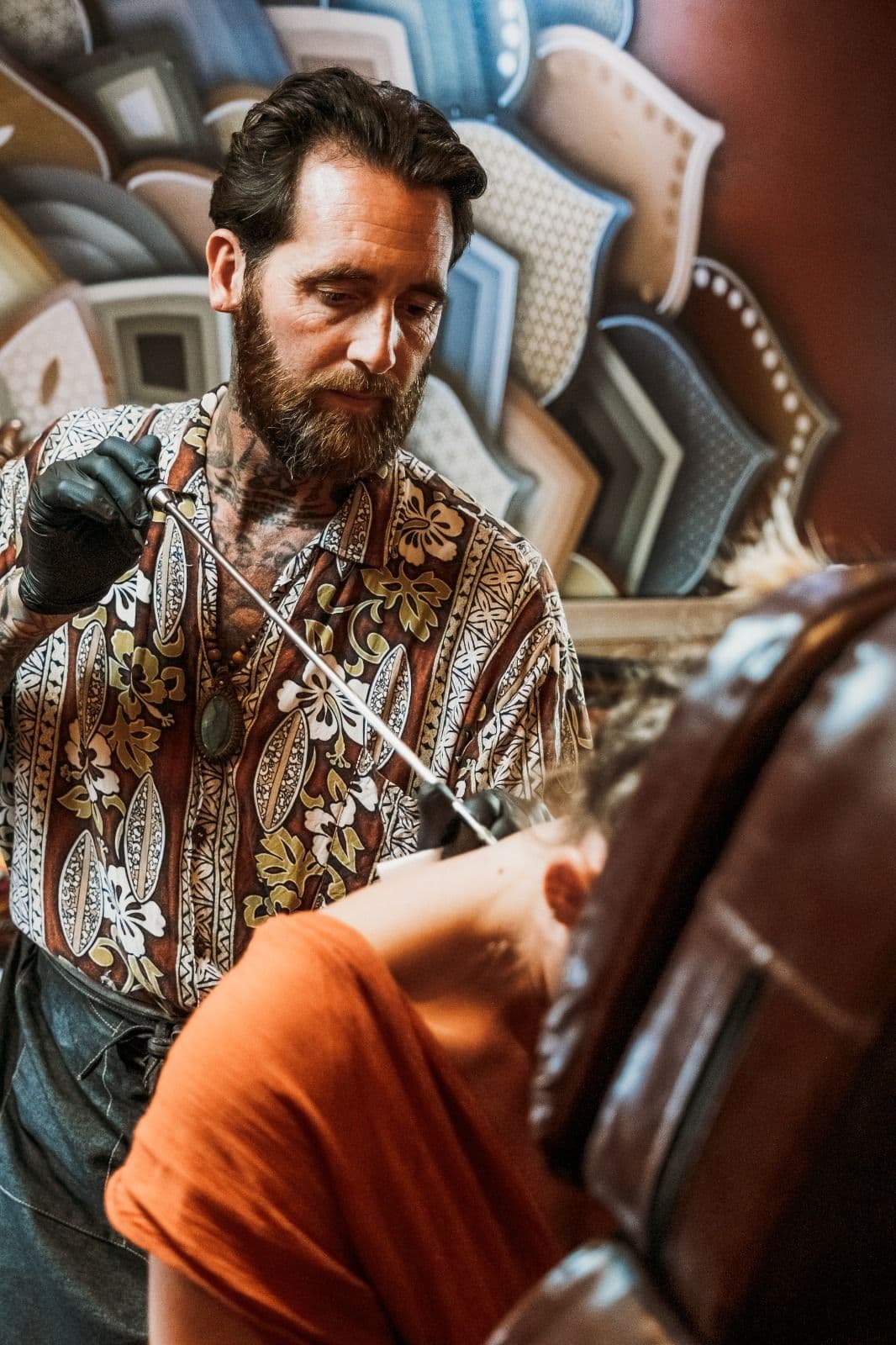
Does a Sak Yant hurt? An honest breakdown of what you feel by technique and placement, and how Silas keeps the entire session manageable.
Does a Sak Yant hurt? It's the first question of almost every request, and the honest answer is: yes, a bit. But less than you think, different from a machine tattoo, and - if the master knows his craft - bearable enough that during the session you mostly experience the ritual, not the pain. This is an honest breakdown of what your body does, what Silas does, and how to prepare for an experience you'll carry your whole life.
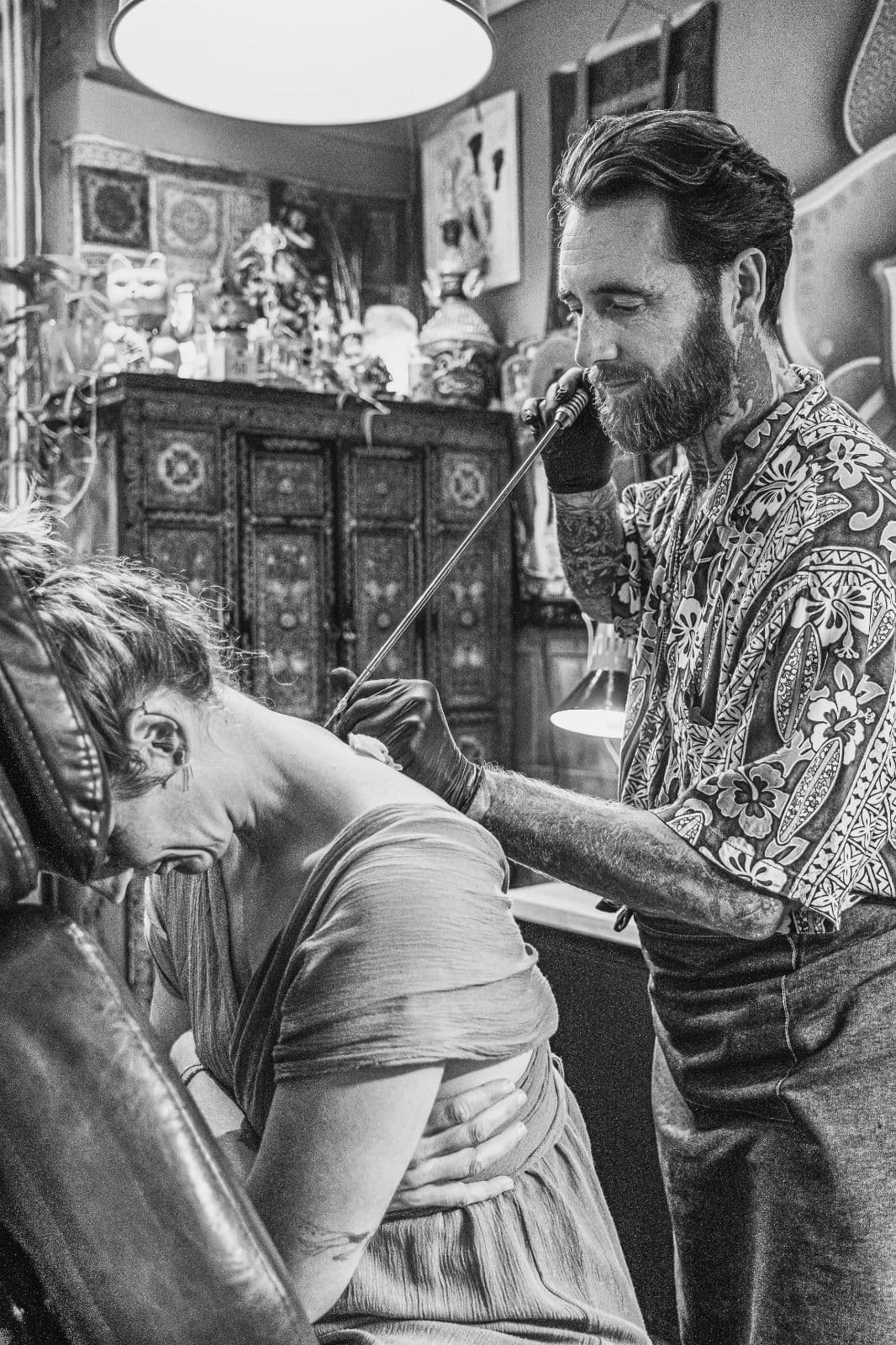
The honest truth: what does a Sak Yant actually feel like?
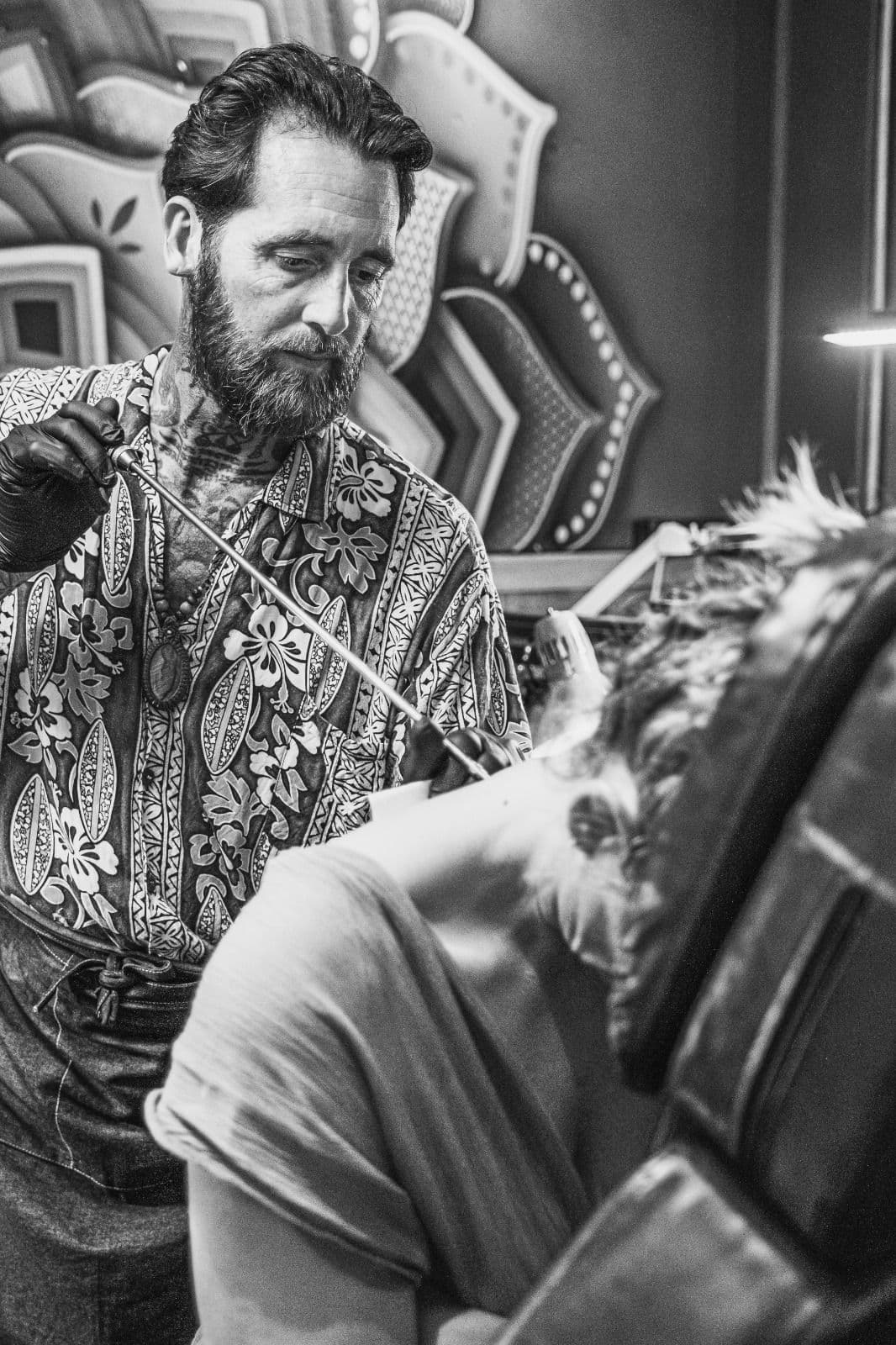
A Sak Yant is placed with a long handmade needle - traditionally bamboo (Mai Sak), nowadays more often a thin steel Khem Sak. No electric machine vibrating through your skin at 120 strokes per second, but a calm, rhythmic tapping. The pain feels sharper and more precise than a machine tattoo, but less constant. Most clients describe it as "a sharp prickle that lets you breathe between the taps".
On a pain scale of 1 to 10? An average 4 to 6, depending on placement and your own pain threshold. For reference: a regular machine tattoo in the same spot usually scores 5 to 7. The Sak Yant often hurts slightly less than people fear beforehand.
Bamboo needle, steel Khem or machine - what's the pain difference?
The technique determines the rhythm and therefore the type of pain you feel. The traditional bamboo needle (Mai Sak) is thicker and places ink in slightly deeper layers. That gives a deeper, more "throbbing" pain, but less surface irritation. The Khem Sak (steel needle, also hand-tapped) is thinner and faster - a razor-sharp sensation that's over before you register it.
An electric tattoo machine produces a constant buzz-pain that lasts the entire session. The hand-tapped Sak Yant has natural rest moments between every tap - Silas works in a calm rhythm, not the thousands of strokes per minute of a machine. That gives your nervous system small pauses that make the difference between "I can't take this" and "this is doable".
Which placement hurts the most?
Not all parts of the body react the same. The general order from most painful to least:
• Ribs, collarbone, neck: 7-8/10 - close to bone, little fat, many nerves.
• Spine: 7/10 - sensitive due to the spinal column.
• Feet, wrists, elbows: 6-7/10 - thin skin directly over bone.
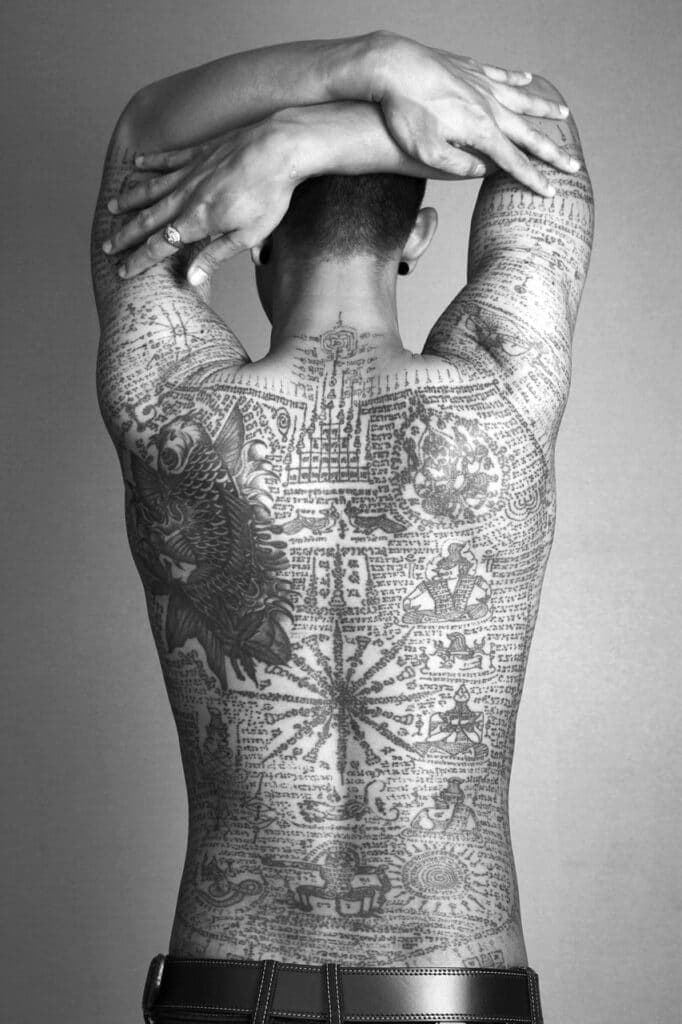
• Shoulder and shoulder blade: 4-5/10 - the classic Sak Yant spot, flesh with good cushioning.
• Upper arm, upper back, thigh: 3-4/10 - best pain balance, room for a large design.
• Calf, forehead: 4/10 - average.
Silas's advice for your first Sak Yant: choose upper back or shoulder. Enough room for a meaningful design, low pain score, and the fastest healing. Want a sensitive spot anyway? Start with a smaller design and build up later.
What Silas does to keep the ritual bearable
Pain is partly physical and partly mental. An experienced Sak Yant master works on both sides:
Pre-session intake conversation. No rushed session where the needle hits before you've even sat down. Before Silas starts, he knows what the tattoo means to you, how you're feeling in the moment, and what intention you bring. That measurably lowers your stress hormones - and your pain experience along with them.
A pace that fits you. Silas continuously reads your breathing and body language. Getting tense? He pauses. Breathing calmly? He keeps going. No fixed "I have to finish in 2 hours" pressure forcing you to push through.
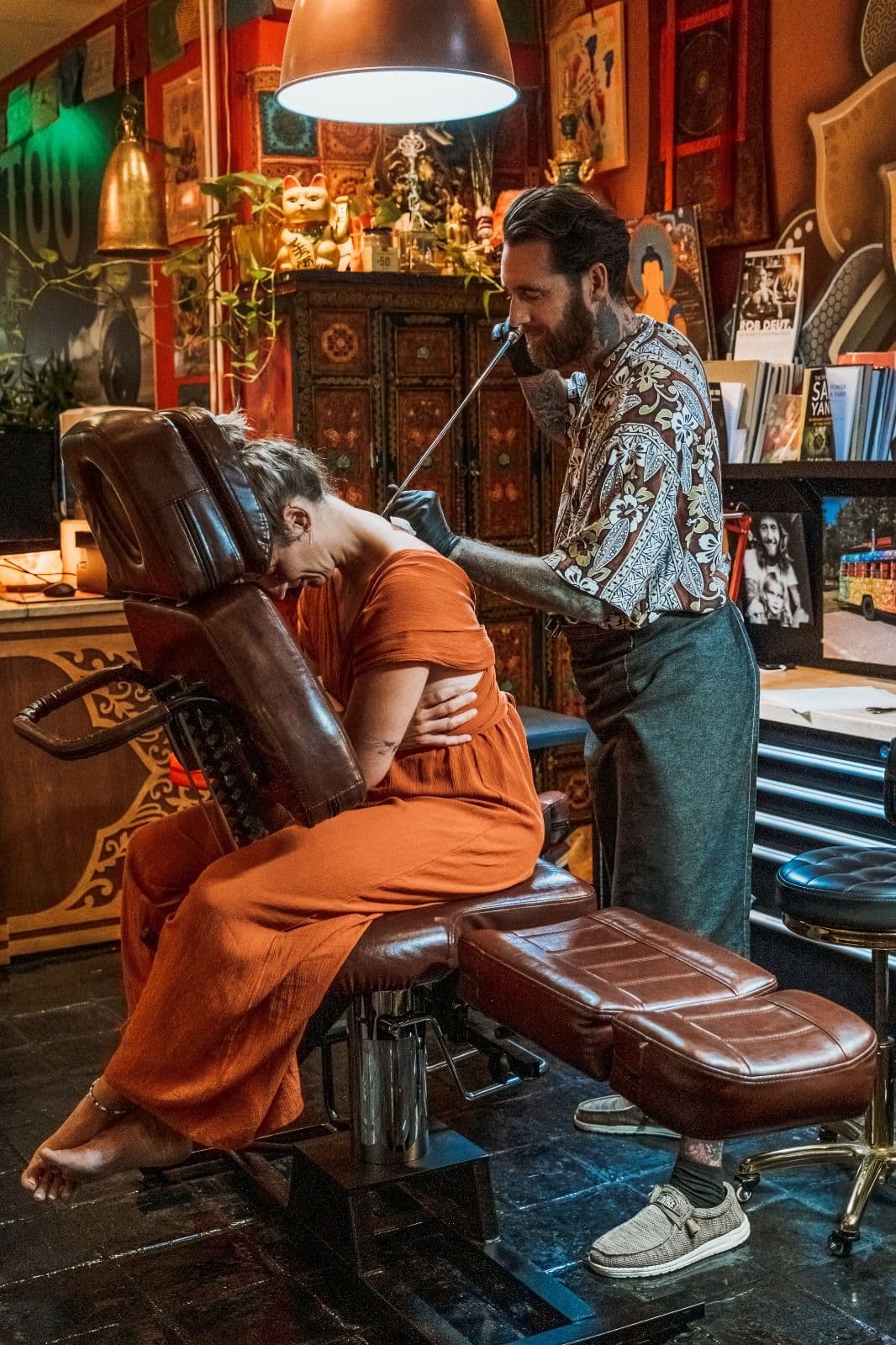
Line strategy. Starting on a less sensitive zone so your nervous system adjusts before he moves to sharper spots. Long lines get split into segments with short pauses between.
Silence or conversation - whatever you need. Some people want distraction, others close their eyes and go inward. Silas senses what fits and adapts.
How to prepare - body and mind
24 hours before: no alcohol. Alcohol thins your blood, increases pain, slows healing, and can cause pigment to bleed. Eat calmly, sleep enough. Stress and sleep deprivation double the pain experience.
2 hours before: a solid, healthy meal - no sugar crash mid-session. Drink plenty of water. Avoid coffee if you're sensitive to it; caffeine can make you restless.
On the day itself: comfortable clothing that pulls easily over the tattoo area. No tight shirts or trouser legs that will rub the fresh work afterwards. Don't come straight from the gym - a warmed-up, pumped body is more sensitive.
Mentally: remember why you're here. A Sak Yant isn't an impulse purchase, it's an intentional ritual. Hold that intention during difficult moments in the session.
Frequently asked questions about Sak Yant pain
Does a Sak Yant hurt more or less than a regular machine tattoo?
In most spots, slightly less. The hand-tapped technique gives natural pauses between every prick, and the skin trauma is more superficial than a fast machine needle. That doesn't mean "painless" - it means "doable for anyone who has thought it through".
Can I take painkillers beforehand?
No ibuprofen, aspirin, or other blood thinners. They increase bleeding during the session and can cause pigment to bleed. Paracetamol is OK if truly needed. The best "painkiller" remains good sleep, healthy food, and showing up mentally prepared.
How long does an average session take?
It depends on the design, the size and the placement, and it can take longer than you expect. Silas plans this with you during the intake conversation so you know what to expect.
What if I can't handle the pain mid-session?
You say so. Silas pauses immediately. We drink water, breathe calmly, and continue when you're ready. A Sak Yant isn't a competition or a test. Clients who took short breaks come out just as "complete" as those who went through in one go - the tattoo and the blessing stay the same.
Ready for your first Sak Yant?
The real question isn't whether it hurts - that's easy to answer with "yes, a bit". The real question is whether the meaning of your Sak Yant is big enough to endure a session of discomfort for it. For people who choose this consciously, the answer is almost always yes. You carry the Sak Yant your whole life; the session is a brief intense passage.
Want to know which design fits you? Browse the Sak Yant designs. Doubts or questions? Book an appointment - Silas reads every request personally during the intake conversation.
Recent blogs
Dive deeper into Sak Yant, traditions and tattoo care.
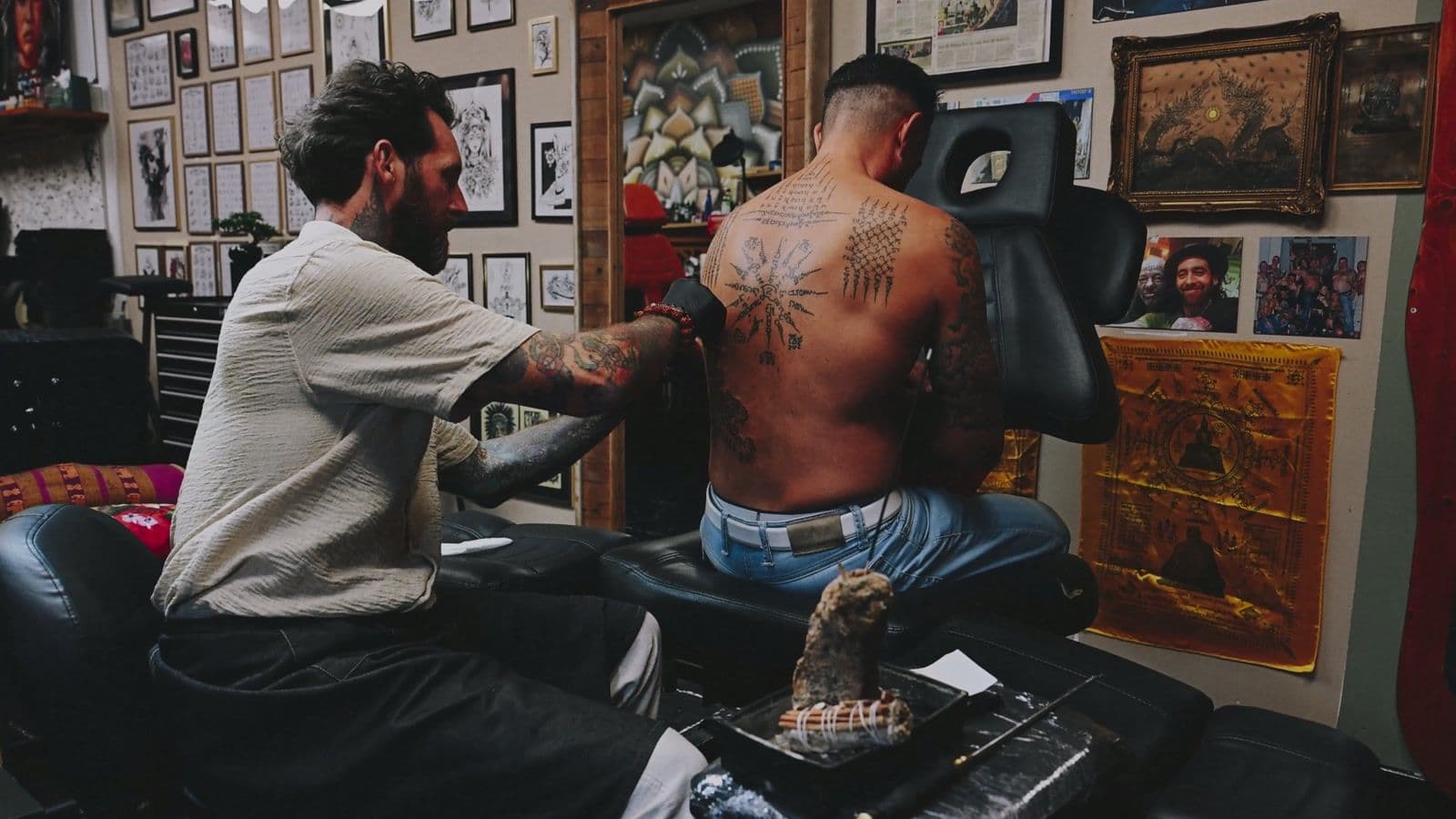
Sak Yant video: how a Sak Yant is tattooed in the Netherlands
A Sak Yant from start to finish, filmed at the studio. Watch the video and read what you see: the design, the rod, the calm in the studio and the closing moment.
4 min read
The 10 most popular Sak Yant designs and what they mean
From the Hah Taew to Ganesha: the ten Sak Yant designs chosen most often, with their meaning and where they work best on the body.
6 min read
Getting a Sak Yant from Amsterdam, Rotterdam, Utrecht or Eindhoven
You will not find an authentic Sak Yant in every city. How long it takes to reach the studio in Breda from Amsterdam, Rotterdam, The Hague, Utrecht and Eindhoven, and what to look for.
5 min read