
Which Sak Yant suits me? A guide by intention
Protection, strength, authority, love, luck or calm: which yant fits what you are looking for? An overview of the designs by intention, and how to make the final choice.
Most people start with a picture. They see a yant on someone's back or on Instagram, like it and want the same. Within the Sak Yant tradition it works exactly the other way around. First comes the question of what you are looking for, and only then the design that goes with it. Every yant has its own purpose, and choosing a design for its shape is a bit like judging a book by its cover.
This guide sorts the designs by what you wish for. It is a starting point, not an end point: you make the final choice in a conversation with the master, who also looks at your body, your life and any yants you already wear.
First the question: what are you looking for?
Try to put it in one sentence. Do you want protection? Do you want the strength to see something through? Are you looking for calm, or for connection with others? Are you at the start of something new? The answer almost always falls into one of the six groups below. Sometimes into two, and that is an answer too: there are designs that combine two purposes.
Protection
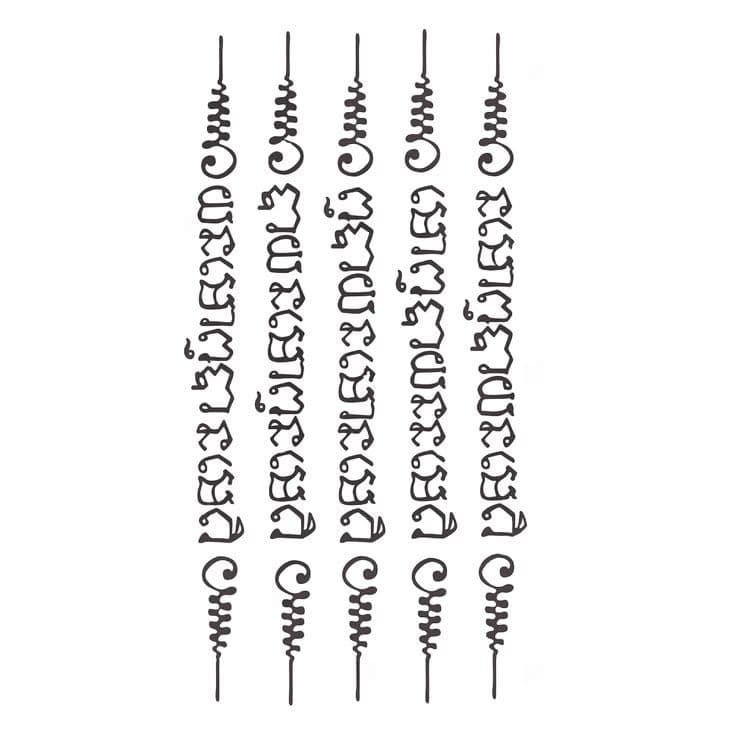
Protection is the oldest and most common reason for getting a Sak Yant. The Hah Taew is the best known protective yant: five lines of mantra that each protect against something different, from bad influences to misfortune.
The Paed Tidt protects in all eight directions of the compass, which makes it the yant for travellers and people who are often on the road.
The Gao Yord, with its nine peaks, is regarded as the master yant: the most complete protection, and the foundation other yants build on.
The Kroh Petch is seen as a spiritual shield that helps you stay steadfast in difficult situations. And the Naga, the water serpent, protects thresholds and transitions.
Strength and courage
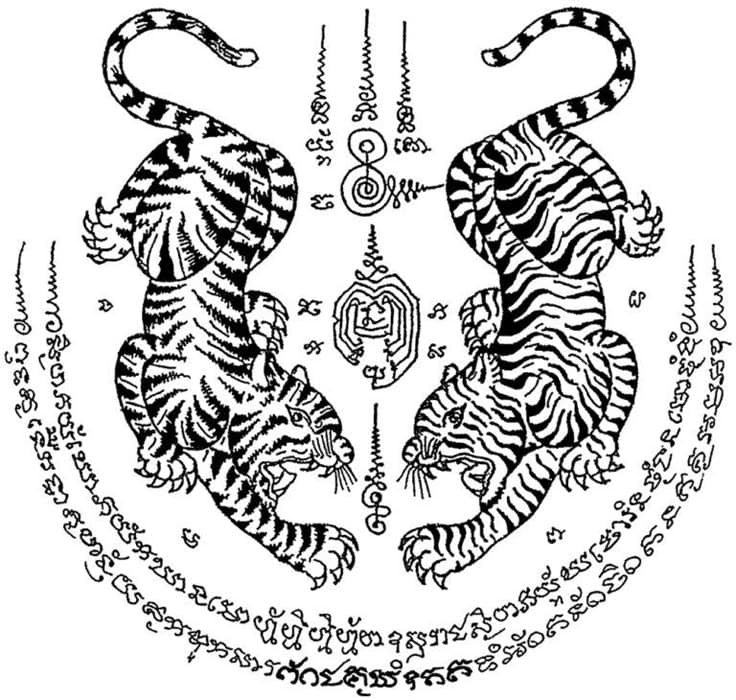
If you are looking for the strength to see something through, you will usually end up with one of the animals. The tiger stands for raw power and fearlessness. The Suea Koo, with two tigers, for a greater and more balanced power.
Hanuman, the monkey god from the Ramayana, combines strength with loyalty. His yant is for people who seek strength in order to serve others. The Singha, the guardian lion of the temples, stands for courage and authority.
The Jorakhe Bak, the crocodile, stands for a tough will to survive and for perseverance. Less well known, but just right for anyone who needs staying power.
Authority and success in your work
The Maha Amnaj is the yant for influence, self-confidence and respectful authority, and is often chosen by people who lead others or work for themselves.
Garuda, the royal bird, stands for power and authority. It is no coincidence that it is the symbol of the Thai royal house. The Mang Korn, the Thai dragon, combines authority with prosperity.
Love, charisma and connection
The Na Metta is dedicated to metta, loving kindness. The yant stands for warmth and charisma, and for relationships that run more smoothly, both personal and professional. It is traditionally placed close to the heart.
The hong birds stand for beauty, grace and purity. Combined with a lotus, they are chosen as a yant for love and connection: the lotus with hong.
Luck and new beginnings
Ganesha, known in Thailand as Phra Pikanet, is the remover of obstacles and the protector of new beginnings. It is the yant for anyone starting a business, beginning a new life or wanting something to succeed. There is also a double Ganesha.
The turtle stands for a long life, health and wisdom that grows slowly. A calm yant for anyone who thinks long term.
Calm, direction and insight
Not everyone is looking for strength or protection. For anyone who wants to leave a period of confusion behind, the unalome is the most popular symbol: the line from searching to clarity.
The lotus stands for blossoming out of difficult circumstances and is often chosen after a hard period. The Buddha eye stands for seeing beyond illusion, an understated choice for anyone seeking insight.
By stage of life: what people often choose
Besides the wish itself, the moment in your life plays a part too. A few situations that come up often, with the designs people tend to choose for them in practice.
Before a big trip or a move abroad, many people choose the Paed Tidt, the protection in eight directions. People who travel alone sometimes combine it with a Hah Taew.
With a new job, a promotion or the start of your own business, the Maha Amnaj and Ganesha often come up: authority and the removal of obstacles.
After a loss or a hard period, people are more likely to choose calm and direction: the lotus or the unalome.
In a new relationship, or when closing the door on an old one, the Na Metta is often mentioned, the yant for warmth and connection.
And anyone who plays a sport at a high level or has a demanding job usually ends up with the tiger, the Suea Koo or Hanuman.
These are patterns, not rules. A yant you choose for a specific moment is one you will still be wearing afterwards. So choose something that will still feel right in ten years rather than something that only fits now.
Combining: is that possible?
Yes, and within the tradition it happens all the time. Many wearers start with a protective yant and add another later. The order does matter, though. The Gao Yord, for example, is often seen as the foundation. The spot matters too: the higher on the body, the more respectful. More about placement.
So plan ahead. If you know you will want a second yant later, choose the spot for the first one so that there is room left.
What should not decide your choice
Three things that often tip the balance in practice, but really should not. First, what a famous person wears. A yant that suits someone else does not automatically suit you. Second, the size you had in mind. A design tattooed too small to fit a particular spot loses its legibility over the years. Third, the price. Choosing a cheaper yant because it is smaller means choosing a different purpose.
Three questions to ask yourself
What should this yant do for me, in one sentence? If you cannot say that yet, you are not ready to choose, and that is fine.
Would I choose this design even if nobody ever saw it? If the answer is no, you may be choosing mainly on looks.
Does it fit the way I want to live? Every yant comes with life rules. A yant for authority asks you not to misuse that authority, a yant for love asks you to give that love as well.
How the consultation works
You do not make the final choice alone. In the conversation before the session, you and the master go through what you are looking for and any yants you already wear. That leads to a proposal for a design, a spot and a size. That conversation is not a formality: it is where a yant becomes personal. Why a real master makes the difference.
Frequently asked questions about choosing a Sak Yant (FAQ)
Can I choose a design myself?
Yes. You are welcome to come in with a design that speaks to you. The master will check whether it fits what you are looking for, and with traditional yants the layout and the text are fixed. So a design from the internet is not simply copied.
Which Sak Yant is the most powerful?
No single yant is the most powerful across the board. Every yant is powerful for its own purpose. The Gao Yord is often called the most complete, but for someone looking for love and connection, a Na Metta is more powerful than a tiger.
What is a good first yant?
Many people start with a protective yant, such as the Hah Taew or the Paed Tidt, because protection suits almost everyone. But if you already know exactly what you are looking for, start there.
Can I combine two meanings in one yant?
Sometimes. There are designs that already carry two purposes, such as the lotus with five mantra lines, which combines the lotus with the protection of the Hah Taew. Combining elements from different yants yourself is not done: a yant is a complete whole.
Can my yant take on a different meaning for me later?
Yes, and that often happens. The traditional meaning stays the same, but what the yant means to you personally grows with your life.
What if I have two wishes?
Then choose a design that carries both, or plan two yants. The lotus with five mantra lines, for example, combines the lotus with the protection of the Hah Taew. Two separate yants are possible too, but think ahead about how they will sit together on your body.
Does the master choose the design for me?
No, you decide. The master advises you based on what you are looking for and what fits traditionally. In Thai temples the monk or master often chooses, but in the consultation beforehand you choose together.
Recent blogs
Dive deeper into Sak Yant, traditions and tattoo care.
The 10 most popular Sak Yant designs and what they mean
From the Hah Taew to Ganesha: the ten Sak Yant designs chosen most often, with their meaning and where they work best on the body.
6 min read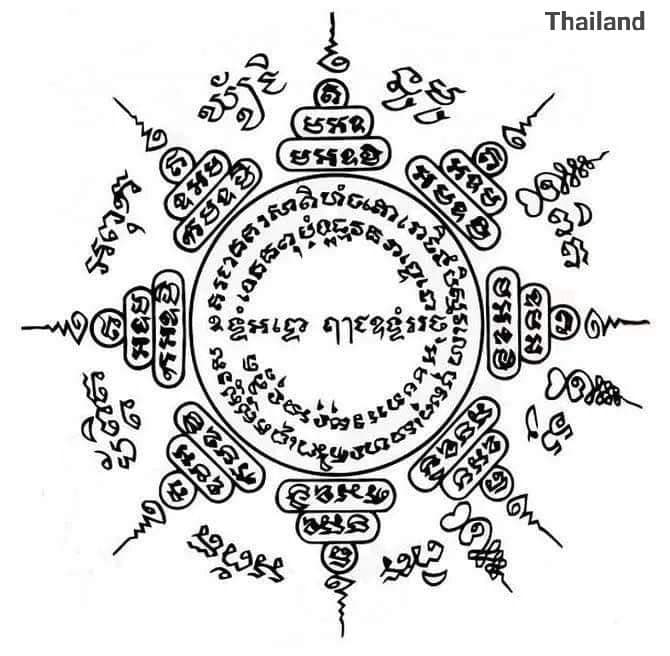
Getting a Sak Yant from Amsterdam, Rotterdam, Utrecht or Eindhoven
You will not find an authentic Sak Yant in every city. How long it takes to reach the studio in Breda from Amsterdam, Rotterdam, The Hague, Utrecht and Eindhoven, and what to look for.
5 min read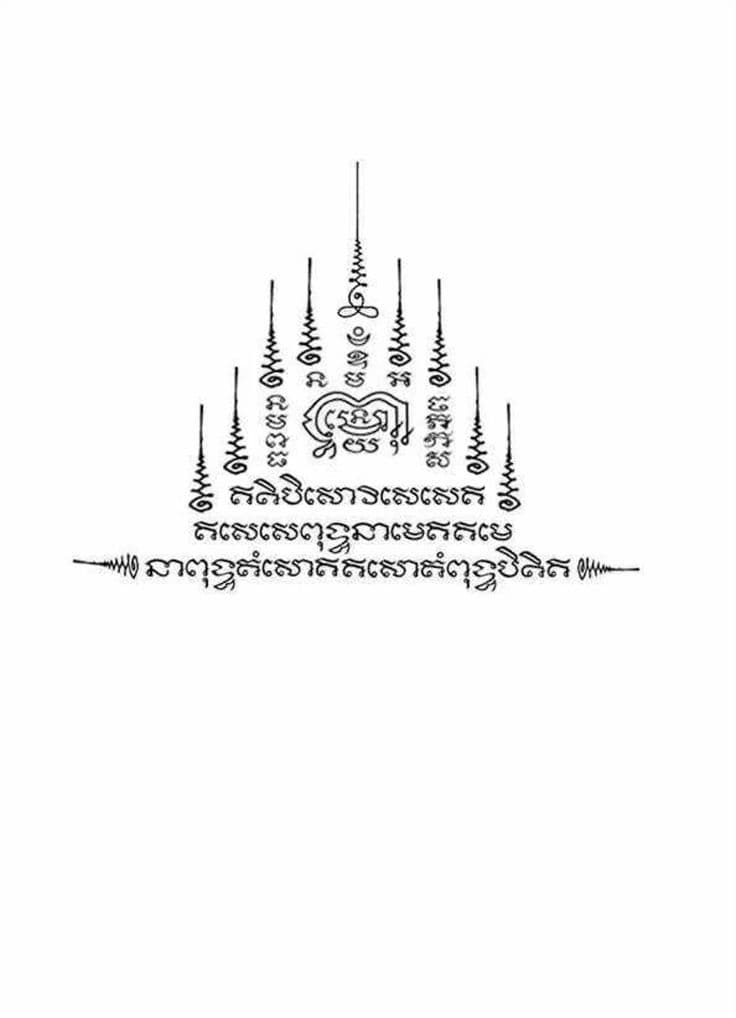
12 myths about Sak Yant (and what is really true)
Only monks, only in Thailand, only for men? Twelve myths about Sak Yant that you hear a lot, and what the reality is.
7 min read