
Naga tattoo meaning: the water serpent of protection and renewal
The naga is the serpent king of Thai mythology: guardian of temples, ruler of the water and symbol of transformation. Learn what a naga tattoo means and who it suits.
Anyone who has ever visited a Thai temple has stepped past him, perhaps without realising it: the naga. The stair railings of nearly every temple are shaped as long serpent bodies ending in crowned heads. The naga guards the passage from the ordinary world into the sacred one.
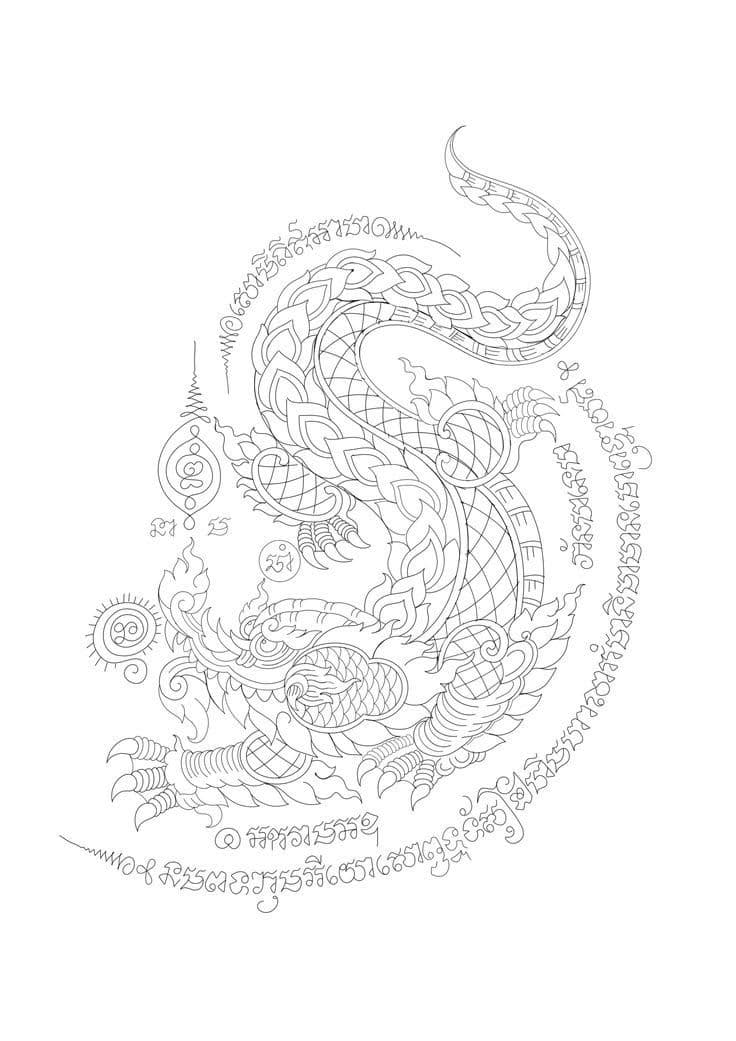
Exactly that role, watcher at the threshold, makes the naga one of the most beloved figures in Thai imagery and in the Sak Yant tradition. In this article you will read where the naga comes from, what his tattoo means and why he suits people moving through change.
Who is the naga?
The naga is a giant serpent from the mythology of India and Southeast Asia: ruler of the water, guardian of treasures and gatekeeper of the underworld. In Thailand and Laos he is inseparable from the Mekong; stories of the Phaya Nak, the serpent king living in the river, are told there to this day.
The naga also has a special bond with Buddhism. According to tradition, the Buddha sat in deep meditation for seven days when a heavy storm broke loose. The serpent king Mucalinda rose from the earth, coiled his body beneath the Buddha and spread his seven heads above him like a canopy. The naga as protector of the sacred: you see that image everywhere in Thailand.
There is one more beautiful detail. In Thailand, a man about to be ordained as a monk is called a "nak", after the naga who, according to legend, wanted to become a monk so badly that he disguised himself as a human. The naga thus also stands for the longing to grow, even when the road is long.
The meaning of a naga tattoo
Within the Sak Yant tradition the naga carries three powers, and all three belong to the water he comes from.
Protection
Just as the naga guards the temple stairs and sheltered the Buddha, the yant protects its wearer. It has traditionally been chosen by people who travel a great deal or who live and work on and around the water. The naga guards the thresholds you cross.
Transformation and renewal
A snake sheds its skin: it leaves the old one behind and emerges new. That makes the naga the natural symbol of change. His tattoo is often chosen after a closed chapter: an addiction, a relationship, an old version of yourself.
Strength in stillness
The naga is not a hunter like the tiger. His strength is that of water: patient, flowing, and unstoppable when it needs to be. The yant suits people who do not want to be the loudest voice in the room, but do want the longest breath.
The snake that leaves its old skin behind does not look back. The naga tattoo marks exactly that moment.
Naga, dragon or Mang Korn: what is the difference?
The naga is often confused with the dragon, and in Thai imagery the two genuinely blend into each other. Yet there is a difference. The Mang Korn, the dragon of the Sak Yant tradition, has legs and claws and enters the story through Chinese imagery; the naga is a water serpent without legs, rooted in Indian and Thai mythology.
In the catalogue you will find the naga in the Hanuman with naga design, where the monkey general and the serpent king come together. Also browse the other Sak Yant designs to see the figures side by side.
Where on your body does a naga belong?
The naga's elongated body lends itself beautifully to the length of the body: along the upper arm, over the shoulder or along the side of the back. Here too the tradition holds: the higher, the more honour. In our article on Sak Yant placement you can read how to make that choice.
The final shape and spot are decided together with the master: a naga can be small and quiet, but also large and flowing across a whole arm or the side of the back.
Who does the naga suit?
The naga suits people in transition: closing an old chapter, travelling often, seeking protection without a show of force. Torn between the naga and another design? That is exactly what the conversation with the master is for. Why that conversation matters so much, you can read here.
Frequently asked questions (FAQ) about the naga tattoo
What does a naga tattoo mean?
The naga stands for protection, transformation and strength in stillness. As guardian of temples and protector of the Buddha he watches over thresholds and transitions; as a skin-shedding serpent he symbolises leaving an old version of yourself behind.
What is the difference between a naga and a dragon?
The naga is a legless water serpent from Indian and Thai mythology; the Mang Korn dragon has legs and claws and enters the Sak Yant tradition through Chinese imagery. Both stand for power, but the naga is more strongly tied to water, protection and renewal.
What do the seven heads of the naga mean?
The seven heads refer to the serpent king Mucalinda, who spread his seven heads like a canopy above the meditating Buddha to shield him from a storm. A naga with multiple heads emphasises that protective role.
Is the naga a Buddhist symbol?
The naga comes from ancient Indian mythology but plays a major role in Thai Buddhism: he guards temple stairs and protected the Buddha during his meditation. In the Sak Yant tradition he is placed and blessed within the Buddhist ritual.
Where is the best place for a naga tattoo?
The serpent's body follows the length of the body beautifully: along the upper arm, over the shoulder or along the back. The higher on the body, the more honour you pay the symbol. The precise spot is decided together with the master.
Does a naga tattoo suit women too?
Absolutely. The naga is not a typically masculine power animal like the tiger; its themes, protection, renewal and strength in stillness, are universal. The master tunes the size and shape to your body and your story.
Ready to leave your old skin behind?
Standing at a threshold and drawn to the naga? Book a free introductory talk with our Thailand-blessed master and find out whether the naga fits your story.
Recent blogs
Dive deeper into Sak Yant, traditions and tattoo care.
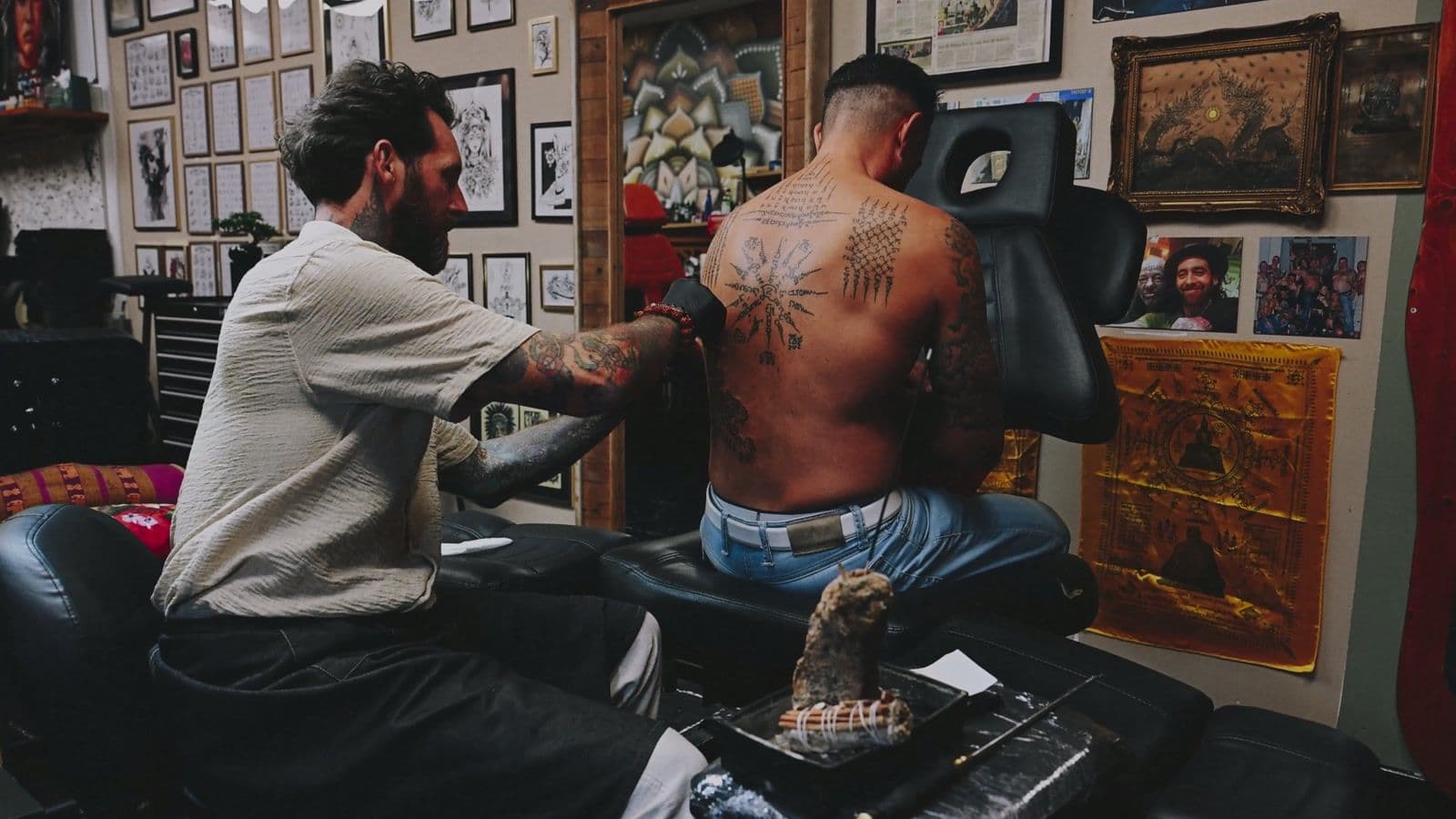
Sak Yant video: how a Sak Yant is tattooed in the Netherlands
A Sak Yant from start to finish, filmed at the studio. Watch the video and read what you see: the design, the rod, the calm in the studio and the closing moment.
4 min read
The 10 most popular Sak Yant designs and what they mean
From the Hah Taew to Ganesha: the ten Sak Yant designs chosen most often, with their meaning and where they work best on the body.
6 min read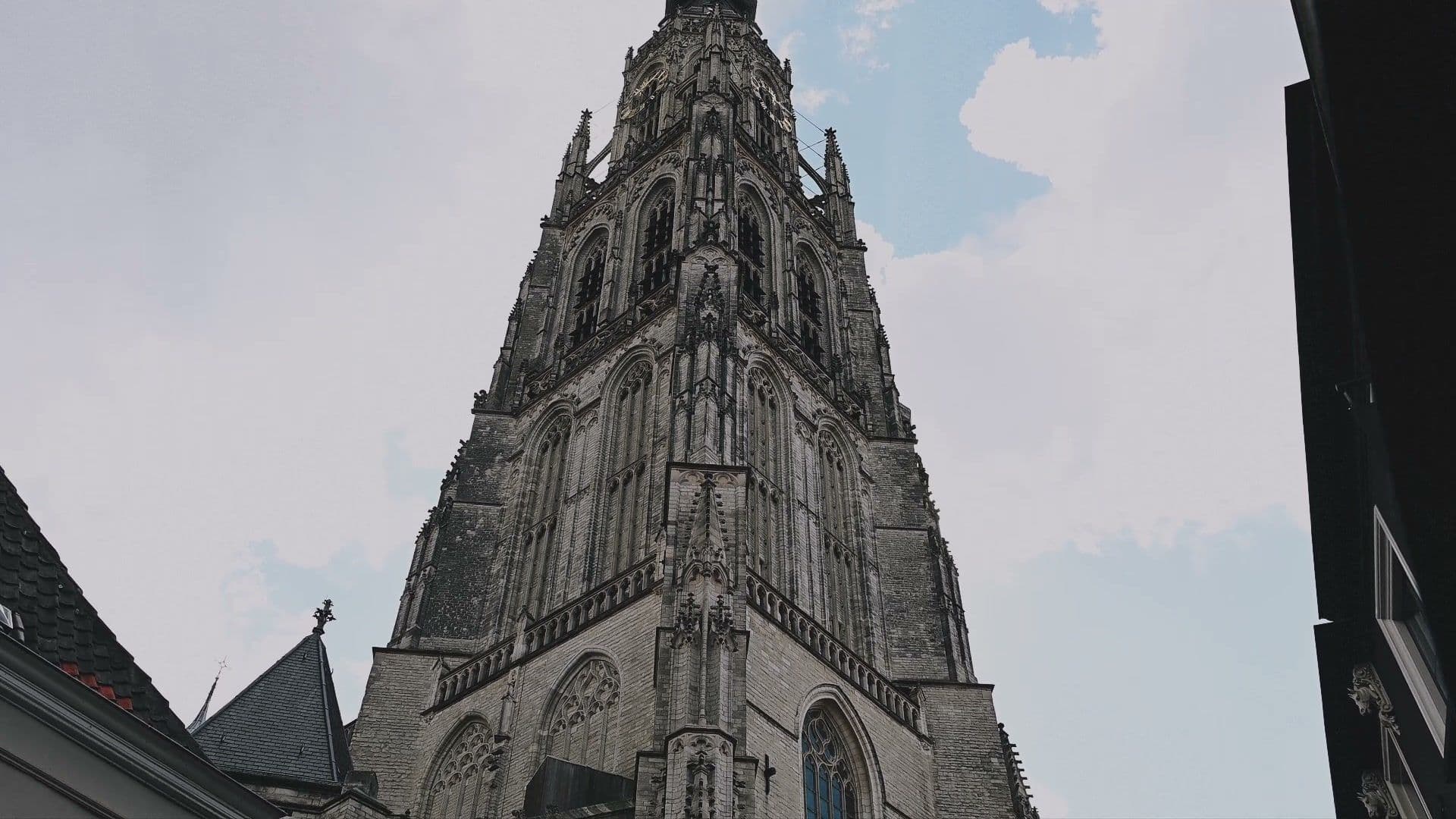
Getting a Sak Yant from Amsterdam, Rotterdam, Utrecht or Eindhoven
You will not find an authentic Sak Yant in every city. How long it takes to reach the studio in Breda from Amsterdam, Rotterdam, The Hague, Utrecht and Eindhoven, and what to look for.
5 min read