
Traditional tattoo meaning: what makes a tattoo truly traditional?
The traditional tattoo meaning covers two very different things: a Western style or a cultural tradition with its own method and meaning. We explain the difference, and why Sak Yant is a living tradition.
If you look up the traditional tattoo meaning, you will find two very different answers. In the West, "traditional tattoo" usually means a style: American traditional or old school, with bold black lines and a limited number of colours. Alongside that there are cultural traditions with their own method, their own meaning and often rituals too. The Thai Sak Yant belongs to that second group. In this blog you will read what the difference is, and what makes a tattoo truly traditional.
Two meanings of "traditional tattoo"
With tattoos, the word traditional sometimes says something about a style and sometimes about an origin, and that causes confusion. If you ask for a "traditional" in a Western tattoo shop, you usually get a design in a recognisable style, done with a machine. If you talk about traditional tattooing in a cultural sense, you mean a practice that has been passed down from generation to generation within a community.
Both are valuable, but they are different things. One is an aesthetic, the other a tradition with rules, meaning and its own way of working. It helps to know which of the two you are looking for before you make a choice.
American traditional and old school: a style
American traditional, also called old school, is a recognisable Western style. Typical features are bold black outlines, a limited palette with a lot of red, green, yellow and black, and simple, strong shapes. Well-known motifs are swallows, anchors, roses, hearts, daggers, eagles and panthers. The style is often associated with sailors.
An old school tattoo is usually done with a machine and has no fixed spiritual meaning. Motifs can carry a symbolic charge, but there is no ritual and there are no rules for the wearer. You mainly choose the design because you like the style. That is a perfectly good reason, it is just a different kind of tradition from that of cultures where tattooing has a sacred or social meaning.
Cultural traditions: method and meaning belong together
In a cultural tattoo tradition, the way a tattoo is made and what it means cannot be separated. It is not only about how the design looks, but also about who makes it, how it is made and what it means for the wearer. Three well-known examples:
- Japanese tebori: tattooing by hand, with needles fixed to a handle that bring the ink into the skin with a rhythmic movement. It belongs to the Japanese tradition of large, flowing designs with motifs from stories and nature.
- Polynesian tatau: tapped in with a comb-like tool and a small mallet, with patterns that say something about ancestry, status and identity. The word tattoo is derived from this word tatau.
- Thai Sak Yant: handpoked with a long needle, with sacred script and geometric patterns, closed with a blessing and tied to life rules.
What these traditions share is that the tattoo is more than decoration. The knowledge is passed on from teacher to student, and the design carries a meaning that is understood within that culture.
Sak Yant: a living tradition
Sak Yant is not a style from the past, but a tradition that is still practised and passed on today. The tradition is more than 2,000 years old and belongs to Thailand and the surrounding region. A yant is a sacred design, built from geometric shapes, animals or figures and lines of sacred script. In the tradition each design has its own meaning, from protection to strength or compassion.
What makes Sak Yant traditional is the whole. The tattoo is handpoked, point by point. Sacred script is used, often in the old Khom script, with texts you do not simply change. After the tattooing comes a blessing, and the wearer receives life rules. You can read more about the script in The script in a Sak Yant, and our Sak Yant guide sets out the basics.
Handpoked: bamboo tattoo or steel needle
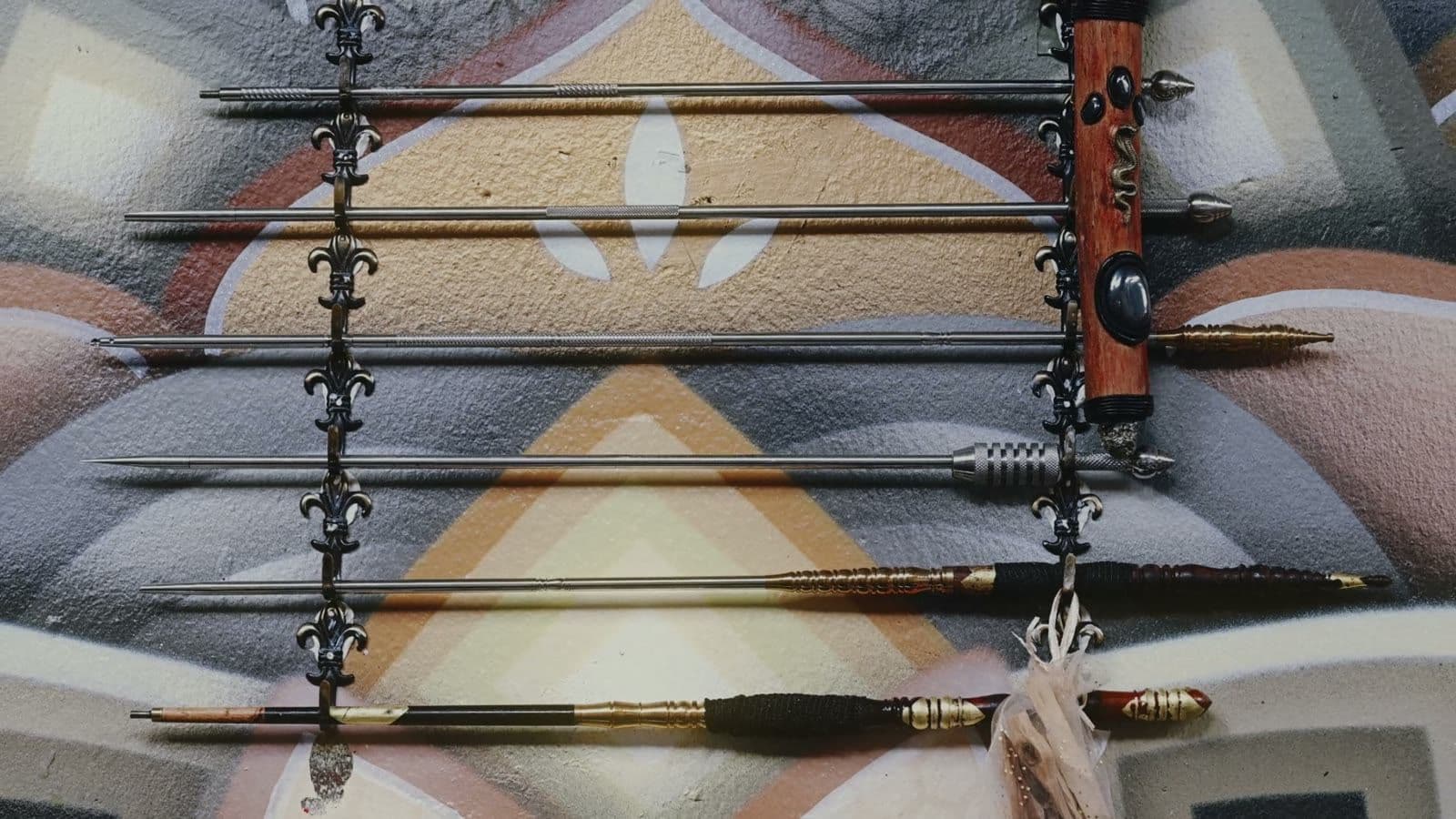
The technique is one of the clearest differences from a modern tattoo. With a Sak Yant the ink is brought into the skin by hand, without a motor. Traditionally this is done with a long steel needle, the Khem Sak, or with a bamboo stick with a needle at the tip. Many people know that last form as a bamboo tattoo.
The rhythm of the hand sets the pace. That is why a handpoked tattoo feels different from a machine, and many people experience it as more regular. In Bamboo tattoo and Sak Yant you can read what makes this technique special, and in Handpoke and bamboo tattoo: technique, pain and healing how it works in practice. We set out the difference with a machine in Sak Yant vs. machine tattoo.
How to recognise a truly traditional tattoo
A tattoo is truly traditional when method, meaning and context belong together. A design that looks like a Sak Yant but is made with a machine, without explanation and without a blessing, has the form but not the tradition. The other way round, a handpoked technique alone does not turn any random design into a Sak Yant.
So pay attention to a few things:
- Is the meaning of the design explained, and does it suit you?
- Is the sacred script respected rather than adapted to taste?
- Does it come with a blessing and an explanation of the life rules?
- Did the person making it learn the knowledge within the tradition?
That last point matters. Silas van Gemert has more than 25 years of experience and from 2010 spent years learning from monks in Thailand. Read more about Silas, or why it makes a difference in Why get a Sak Yant from a master?
Tradition and respect as a Westerner
You do not have to be Thai to wear a traditional Sak Yant, but respect for the tradition does matter. That means taking the meaning seriously, knowing the life rules and not treating the design as a fashion accessory. We wrote a separate blog about that question: Can a Westerner get a Sak Yant? Would you like to read more broadly about tattoos from Thailand first? Then Thai tattoo: meaning and designs is a good place to start.
Frequently asked questions about traditional tattoos (FAQ)
What is a traditional tattoo?
It depends on who is asking. In the West it usually means the American traditional or old school style, with bold lines and few colours. In a cultural sense it is a tattoo from a living tradition with its own method and meaning, such as the Thai Sak Yant.
What is the difference between old school and a Sak Yant?
Old school is a Western style that is usually done with a machine, without a fixed spiritual meaning. A Sak Yant is handpoked, contains sacred script and ends with a blessing. A Sak Yant also comes with life rules.
Is a bamboo tattoo always a Sak Yant?
No. Bamboo tattoo says something about the technique, not about the design or the meaning. A Sak Yant is a sacred design from the Thai tradition that is handpoked, with a bamboo stick or a long steel needle.
How old is the Sak Yant tradition?
The tradition is more than 2,000 years old. It is still practised and passed on today, in Thailand and beyond.
Does a traditional tattoo always have a meaning?
Not always. With a style like old school you mainly choose the look, although motifs can carry a symbolic charge. In cultural traditions such as Sak Yant, the meaning is the very heart of the tattoo.
Would you like a traditional Sak Yant, handpoked and with an explanation of its meaning? The studio in Breda works by appointment, with no deposit, and beforehand you get a clear price indication. Book an appointment or first take a calm look at the Sak Yant designs.
Recent blogs
Dive deeper into Sak Yant, traditions and tattoo care.
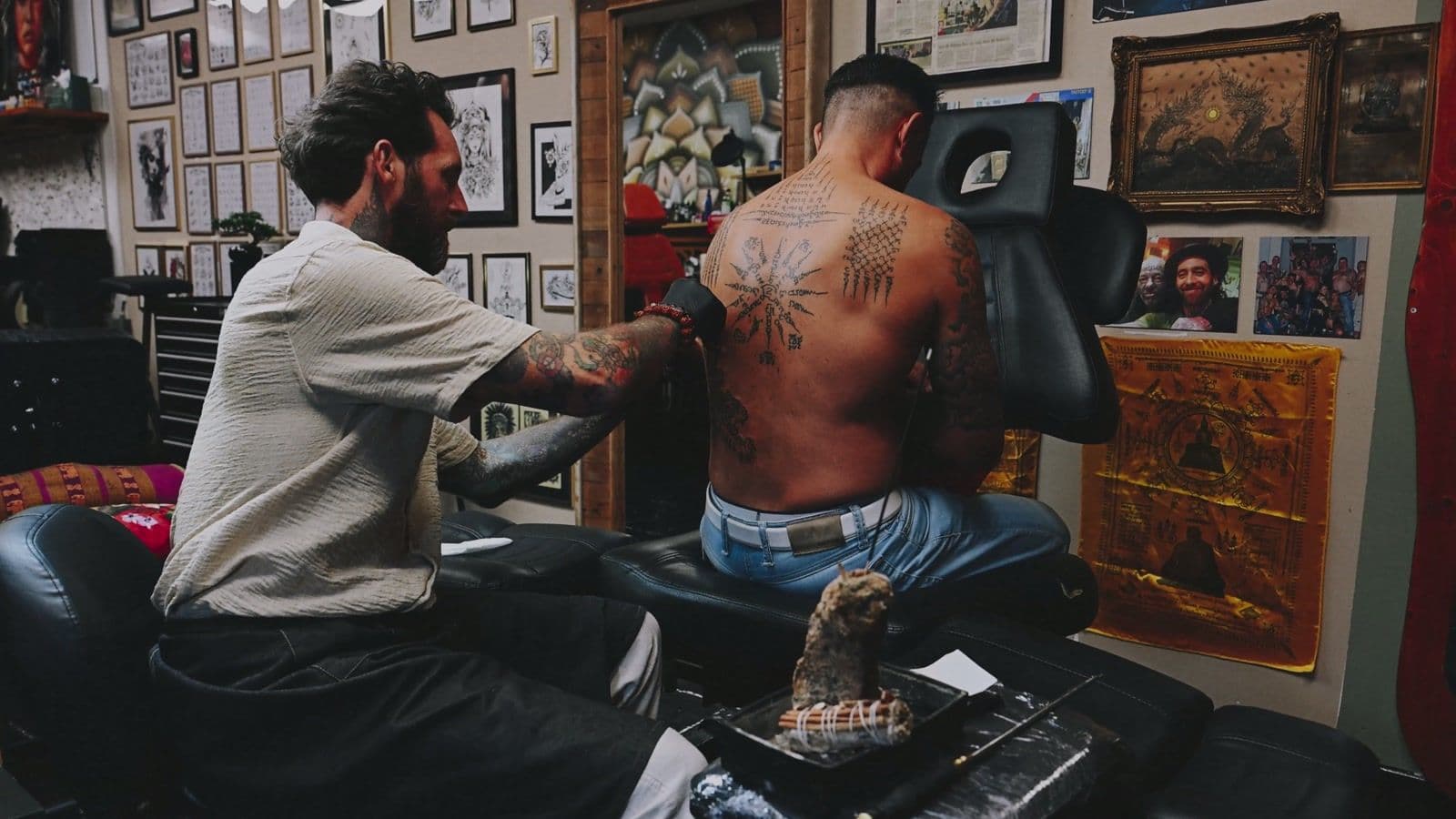
Sak Yant video: how a Sak Yant is tattooed in the Netherlands
A Sak Yant from start to finish, filmed at the studio. Watch the video and read what you see: the design, the rod, the calm in the studio and the closing moment.
4 min read
The 10 most popular Sak Yant designs and what they mean
From the Hah Taew to Ganesha: the ten Sak Yant designs chosen most often, with their meaning and where they work best on the body.
6 min read
Getting a Sak Yant from Amsterdam, Rotterdam, Utrecht or Eindhoven
You will not find an authentic Sak Yant in every city. How long it takes to reach the studio in Breda from Amsterdam, Rotterdam, The Hague, Utrecht and Eindhoven, and what to look for.
5 min read