
Can a Westerner get a Sak Yant? On respect and cultural appropriation
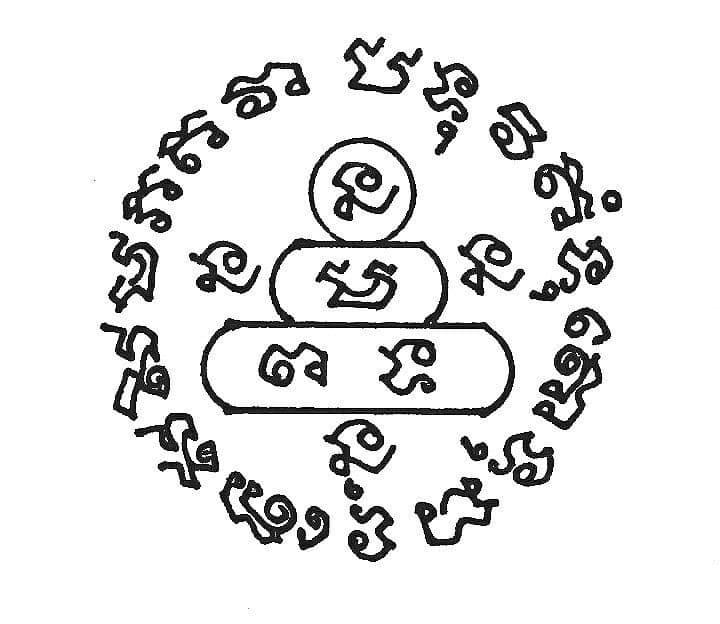
Is a Sak Yant cultural appropriation? How people in Thailand see it, where the line lies between respect and a lack of it, and what you can do in practice.
Can you get a Sak Yant as a Westerner? It is one of the most frequently asked questions, usually with an undertone of doubt. Isn't it cultural appropriation? Is it disrespectful towards Thai Buddhists? The honest answer is that it can be done, but that it is not automatically fine.
This article explains how people in Thailand itself see it, where the line lies between respect and a lack of it, and what you can do in practice to stay on the right side of that line.
How do people in Thailand see it?
The Sak Yant tradition has never been exclusively Thai. The yants come from a mix of Buddhism, Hindu influences and older animist beliefs from across Southeast Asia, and the designs are also tattooed in Cambodia, Laos and Myanmar. At temples such as Wat Bang Phra, foreigners receive a yant every day, tattooed by the same monks and masters who also help Thai wearers.
So the tradition does not say that foreigners may not wear a yant. What people do object to is the use of sacred images as decoration. In some places in Thailand there are signs saying that Buddha is not decoration, and the Ministry of Culture has spoken out in the past against tourists taking religious tattoos home as souvenirs. The objection is about the way it is done, not about the person.
How Sak Yant spread around the world
For a long time Sak Yant was mainly known in Southeast Asia itself. That changed when foreign visitors got a yant at Thai temples and the images spread around the world. The best-known example is Angelina Jolie, who had a Hah Taew tattooed early this century. After that, interest grew quickly, and so did the number of studios outside Asia offering the style.
That growth has two sides. More people are getting to know the tradition properly. But there are also more tattoos that look like a Sak Yant without being one: copied designs, made-up text, no ritual. That is precisely why the question of respect has become more important in recent years.
Where is the line?
The difference between respect and appropriation comes down to three questions. Do you know what you are wearing? Do you know where it comes from? And did you get it through the right channel?
Knowing what you are wearing is the minimum. A Sak Yant contains a text in Khom script with a kata, a formula in Pali. If you do not know what it says, you are wearing something you cannot account for. More about the script.
Knowing where it comes from means understanding that a yant is not a style but part of a living religious tradition. The five life rules that come with it are the clearest example of that. A yant is a promise, not an accessory.
The right channel is a master who has been trained and blessed within the tradition. A yant traced from a book by someone who cannot read the text is, in the tradition, not a yant but a picture of one. Why the master matters.
What is seen as disrespectful
A few things are clearly sensitive in Thailand. A Buddha image on your lower leg, your foot or below the waist. The feet are considered the lowest and least pure part of the body, and wearing a sacred image there is seen as an insult. More about Buddha tattoos and the rules.
Getting a yant as a joke or as a holiday souvenir, without knowing what it is. The same goes for having a design altered because the text is not pretty enough, or wanting only the animals without the script. The script is the actual yant. The image around it is what carries it.
And finally: mixing traditions. A yant with a hamsa, an Om and a dreamcatcher in the same design may look spiritual, but it mixes up three traditions that have nothing to do with each other.
After the session: treating your yant with respect
Respect does not stop when the session is over. Within the tradition there are a few things wearers observe, and they apply just as much to Westerners.
The five life rules are the core: no killing, no stealing, no lying, no misuse of alcohol or drugs and no sexual misconduct. If you take them seriously, you wear the yant as it was intended.
Beyond that, it comes down to small things. A yant is not a joke, nor a conversation starter to show off with. Anyone who asks about it deserves an honest answer about what it is. And if you do not know that answer, that is a reason to look into it further.
If you are ever unsure whether something is appropriate, the question is simple: would you do this in the same way in front of someone for whom this tradition is sacred? If the answer is yes, you are usually on the right track.
Do you have to be a Buddhist?
No. Most wearers, in Thailand too, are not strict practitioners. A yant does not ask you to convert. What it does ask is that you take the rules that come with it seriously, and that you treat the yant as something more than ink.
Why not just get it in Thailand?
You can, and for some people getting a yant at a Thai temple is exactly the experience they are after. Keep in mind, though, that the monk or master there often decides which yant suits you, that there may be a language barrier and that there is little time for explanation. If you want to know what you are wearing, a conversation in a language you understand helps. More about Wat Bang Phra, the most famous Sak Yant temple.
What you can do in practice
Read up before you choose a design. Look beyond the picture to what the yant means, where it comes from and which rules come with it.
Ask the master what the text says, and where he learned the yant. A master who cannot answer that is not a master.
Choose the placement deliberately. High on the body is respectful, below the waist is not. How to choose the right spot.
And take the rules seriously. Not as dogma, but as the promise that comes with the yant. In the end, that is the difference between wearing a yant and wearing a picture of one.
If you are unsure whether it is for you
Doubt is not a bad sign. It means you are taking it seriously. A few signs that a Sak Yant suits you: you are mainly interested in what it means, you are willing to follow the rules, and you would choose the design even if nobody saw it.
Signs that you had better wait a little: you mainly want it because someone else has one, you want it sorted quickly, or the script does not really interest you. In that case a Thai-style tattoo without a ritual is more honest, or simply a bit more time.
These questions come up naturally in the consultation before the session. It is not an exam, but a way of looking together at whether a yant suits you right now. What happens in a session.
Frequently asked questions about Sak Yant and respect (FAQ)
Is a Sak Yant cultural appropriation?
Not automatically. The tradition is open to foreigners, and Westerners receive a yant at Thai temples every day. It becomes appropriation when you treat it as decoration: without knowing what it is, where it comes from or what comes with it.
Do Thai people find it strange when a Westerner wears a yant?
Usually not. Many Thai people are curious or react positively, especially if you know what you are wearing. What does not go down well is a sacred image in the wrong place, such as a Buddha on your leg.
Can I get a yant without following the rules?
Within the tradition, the rules are part of the yant. If you do not want to follow them, it is worth thinking about whether a yant is the right choice. In that case, a Thai-style tattoo without a blessing is the more honest choice.
Can I get a Buddha tattoo?
You can, but it is sensitive. Only high on the body, never on the legs or feet, and with respect for what the image means. That is why many people choose a more understated symbol such as the Buddha eye.
Can I get a yant on my forearm as a Westerner?
You can, the forearm is above the waist. The classic spots, though, are the back, the shoulders and the neck. Which spot suits your design best is something you discuss in the consultation beforehand.
Can I get a yant without the text?
Then it is no longer a Sak Yant. The script is the actual yant. The image around it is what carries it.
Recent blogs
Dive deeper into Sak Yant, traditions and tattoo care.
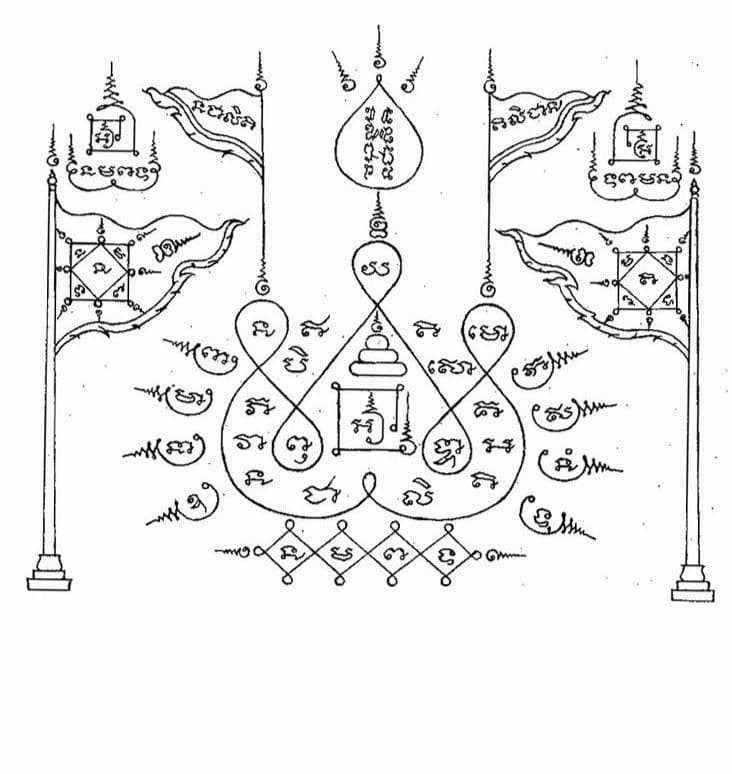
Holistic tattoo: a tattoo as a ritual, not a product
Holistic tattooing means the reason, the conversation, the ritual and the aftercare weigh as much as the design. The four phases, what really differs, and what merely sounds good.
10 min read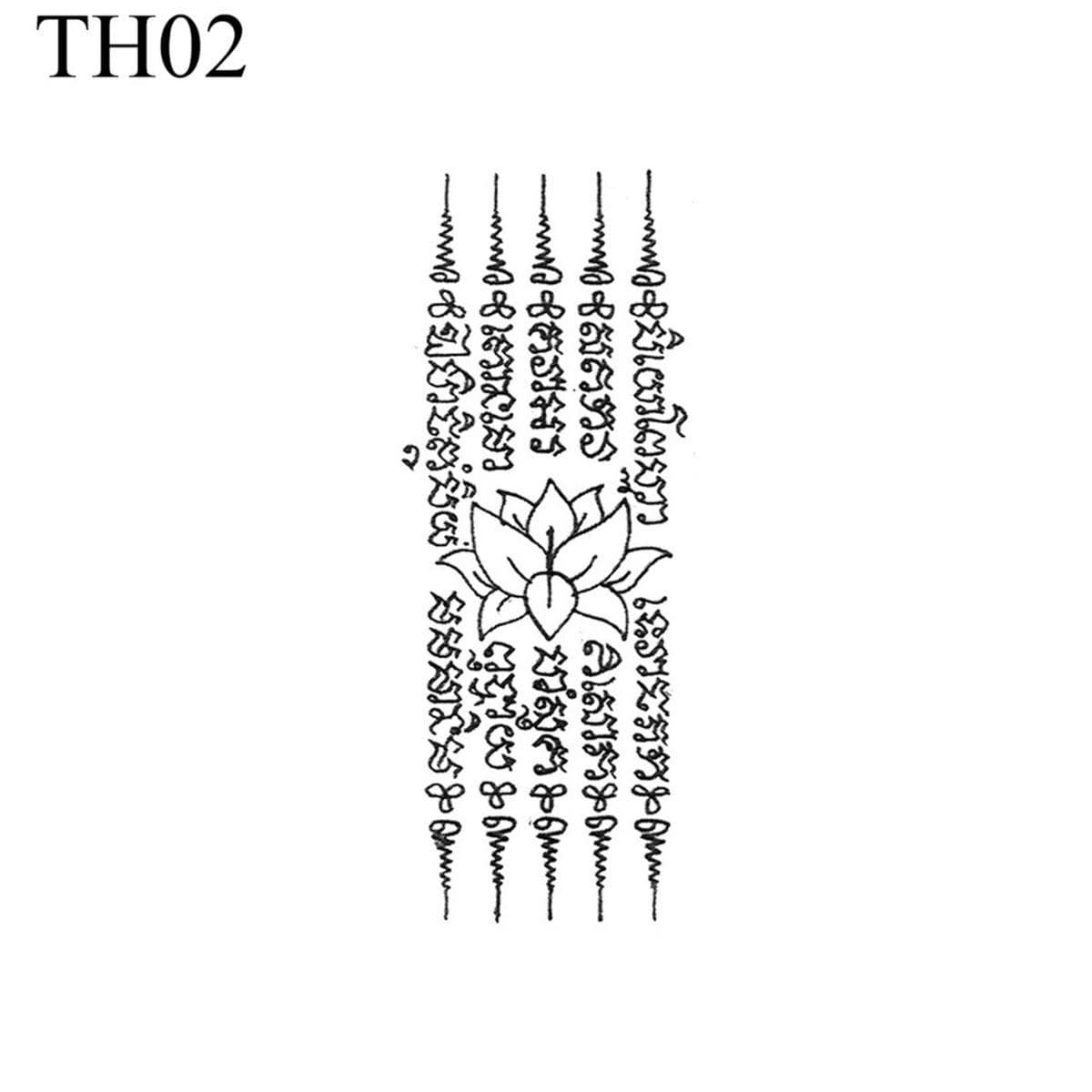
Lotus tattoo meaning: rising out of the mud
The lotus stands for flourishing that comes out of difficult circumstances. Its origins, the meaning of each colour, the petal count, its role within Sak Yant and the mistakes to avoid.
11 min read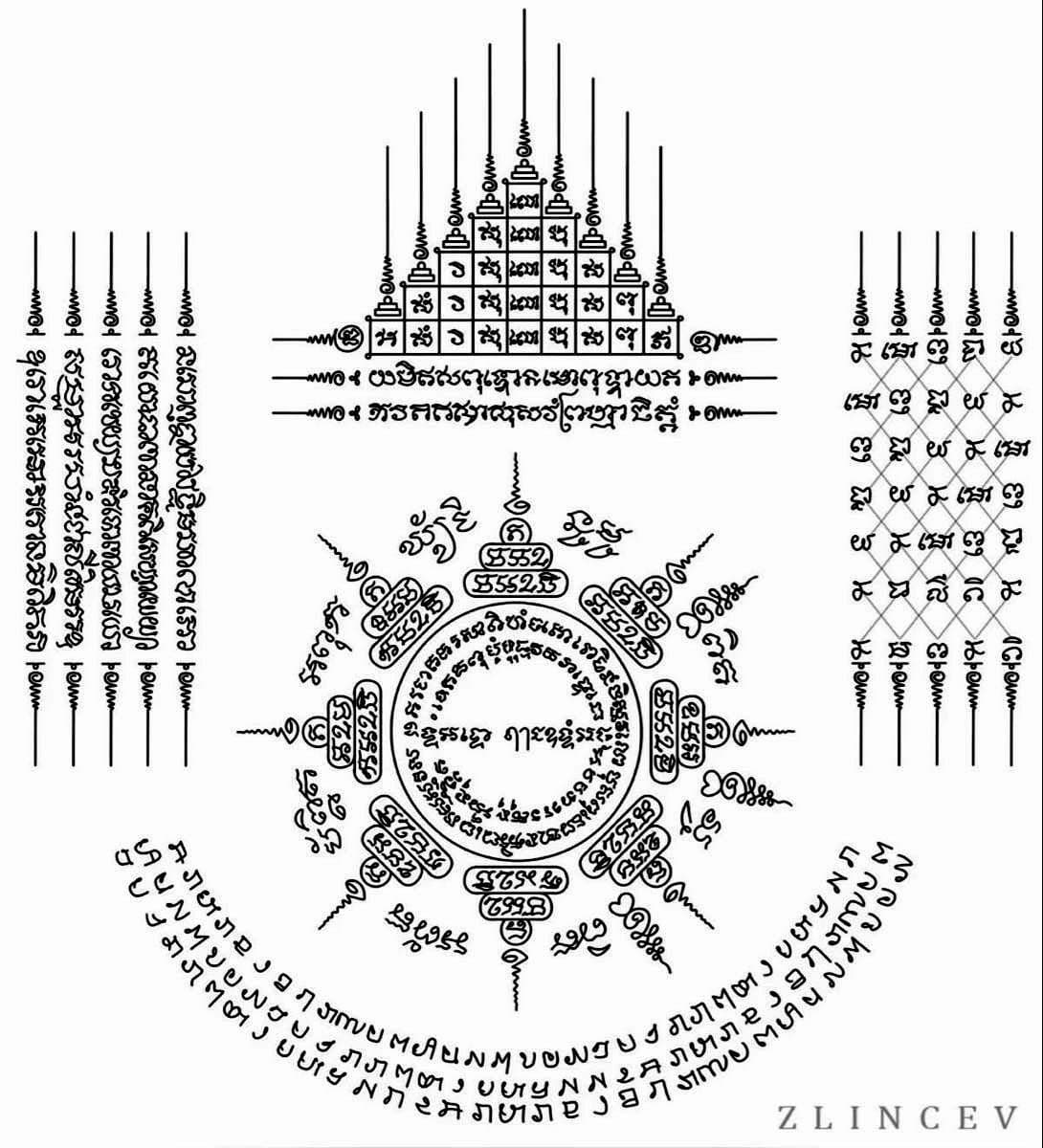
Mandala tattoo meaning: and why a yantra is something else
A mandala is an image to rest your attention in, a yantra is a working diagram. The structure, the types, the difference, and where a mandala does and does not work on your body.
11 min read