
What happens in a Sak Yant session? From first message to aftercare
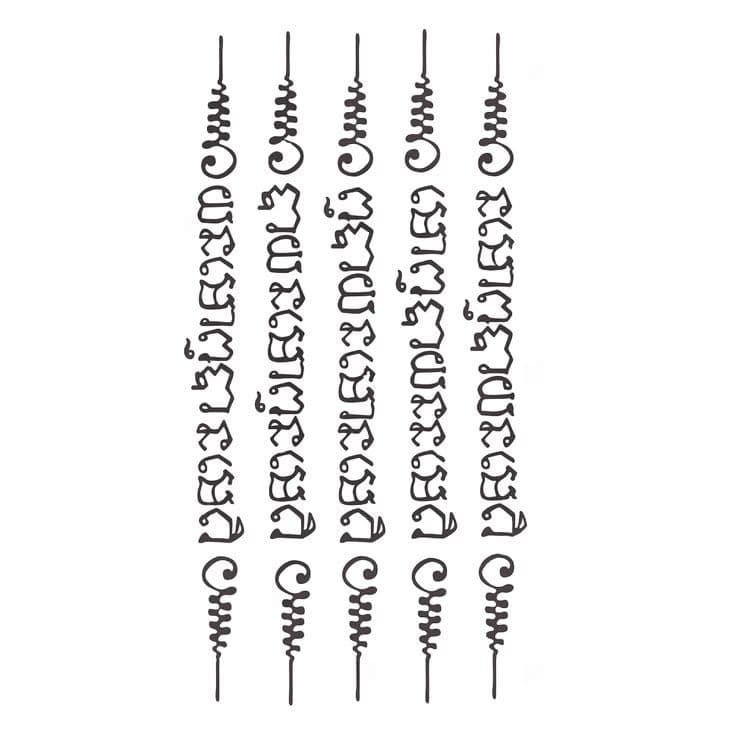
What happens when you get a Sak Yant? The whole process in six steps: first contact, the intake conversation, preparing, the session, the blessing and aftercare.
Getting a Sak Yant is not the same as walking into a tattoo shop. There is a conversation beforehand, a ritual is part of it, and the aftercare carries on once the session is over. If you know what is coming, you will feel more at ease. So here is the whole process, from your first message to the weeks that follow.
Step 1: first contact
It starts with a short message, via WhatsApp or the contact form. Tell us what you are looking for and which design speaks to you, if you already know. Silas reads every request himself. For the quickest reply, include straight away which design you have in mind, where on your body, roughly how big and when you are available.
If you already have a tattoo near the spot you have in mind, send a photo along too. That way it can be taken into account from the start.
Not sure which design yet? That is fine, that is what the next step is for. If you would like to browse in the meantime, the guide by intention is a good place to start.
Step 2: the intake conversation
Every Sak Yant begins with a personal conversation, at the studio or online if you live far away. You talk about what you are looking for, which design fits, where it will go on your body and how large it needs to be to stay legible for years to come.
If you live far away, the conversation can take place over a video call. You then only travel for the session itself.
The conversation is not a formality. Silas wants to feel whether there is a connection. Without that mutual connection, a Sak Yant does not go ahead. That may sound strict, but it works both ways: the conversation also tells you whether this is what you are looking for.
After the intake you schedule the session. There is no fixed price per design: the price depends on the design, the level of detail, the size and the placement, and you get a clear estimate beforehand.
Step 3: preparing
Good preparation makes the session more comfortable. Get a good night's sleep, eat a normal meal beforehand and drink plenty of water. Avoid alcohol for at least 24 hours before and do not take blood thinners, as they make the skin bleed more. Wear clothes that give easy access to the spot where the tattoo will go.
There is nothing special you need to bring. Above all, bring yourself: good vibes, a good mood and a clear intention. A bottle of water is handy.
Before the session you fill in a consent form, with a short health declaration. That way the studio knows whether there is anything to take into account. If you have any known allergies, mention them beforehand. If in doubt, a patch test can be done.
Step 4: the session at the studio
The studio is in the centre of Breda, a ten-minute walk from the station. Arrive in good time so you can start calmly. The session opens with a ritual: a blessing and the recitation of mantras. Then the Sak Yant is tattooed by hand, using the traditional handpoke method.
Handpoke feels different from a machine, more like a rhythmic tapping. Most people find it quite bearable. How it feels depends mainly on the placement: the shoulder and upper arm are less sensitive than the ribs and spine. More about pain.
How long the tattooing takes depends on the design, the size and the placement, and with the conversation, the ritual and the closing it can take longer than you expect. So allow plenty of time; you get an estimate at the intake.
Hygiene goes without saying. Needles and rods are new and are thrown away after every session, gloves and covered surfaces are used throughout, and the room is cleaned before and after every session.
If you are nervous
Nerves before your first Sak Yant are normal. It helps to know there is no rush: the session only starts when you are ready, and the ritual at the beginning naturally gives you a moment to settle.
Calm breathing really makes a difference. Breathe in slowly through your nose and out for a long time, especially at the moments when it gets more sensitive. Do not hold your breath, as that only makes your body tense up.
If you need a short break, say so. A session is not a competition. And if you have eaten well and had enough to drink, you will find it easier to keep going.
Step 5: the blessing and the life rules
Once the tattooing is done, there is a closing prayer. You receive the five life rules that come with a Sak Yant: do not kill, do not steal, do not lie, do not misuse alcohol or drugs and do not engage in sexual misconduct. They are not laws with punishments attached, but the promise that belongs to the yant.
You do not need to understand the prayers or say them along. The ritual is performed for you. What is asked of you is attention: this is the moment a drawing becomes a Sak Yant. Many people find these the most special minutes of the whole session.
Afterwards there is time to ask questions about the meaning of your yant and about the life rules. Take that time, it is your yant.
Step 6: aftercare
Afterwards you get a personal explanation of how to care for the tattoo and how it heals, and you take home the balm that Silas makes himself. Keep the tattoo clean for the first few days, do not scratch it, and avoid sun, saunas, swimming pools and heavy sweating until the skin has healed, usually 2 to 4 weeks. The full aftercare guide.
If you have questions in the weeks that follow about healing, meaning or the rules, the studio is still just a WhatsApp message away.
The first 48 hours after your session
The first two days matter most. The skin is open and sensitive then, much like a graze. Follow the instructions you are given carefully.
For the first few days, wear loose, clean clothing over the spot so that nothing rubs. Think of bag straps and backpacks if the yant is on your shoulder or back. Do not exercise to the point of sweating and do not take a bath, though a quick shower is fine.
A little redness and tenderness is normal. If it gets worse after a few days rather than better, or you feel unwell, contact the studio or your GP.
Do not plan your Sak Yant just before your holiday
Many people want a yant before the summer. If so, leave at least three to four weeks between your session and your departure. Sun, sea and swimming pools are bad for a fresh tattoo in the first few weeks. More about a Sak Yant in summer.
Cancelling or rescheduling
If something unexpected comes up, let the studio know as soon as possible. If you are ill or the skin at the spot is inflamed, it is better to reschedule. A Sak Yant is tattooed at the right moment, not at a moment when your body is busy dealing with something else.
Frequently asked questions about a Sak Yant session (FAQ)
How long does a Sak Yant session take?
It depends on the design, the size and the placement, and with the conversation, the ritual and the closing it can take longer than you expect. You get an estimate at the intake.
Do I need to bring anything?
No. Bring good vibes, a good mood and a clear intention. A bottle of water is handy, and wear clothes that give easy access to the spot.
Do I have to be a Buddhist?
No. Anyone who respects the tradition is welcome. More about Sak Yant and respect.
Can I get more than one yant in a session?
That is possible, depending on the size and placement. Many people build up their yants step by step. You discuss what is feasible during the intake.
How far in advance should I book?
At least one to two weeks, and earlier during busy periods. Sometimes there is a spot at short notice, so feel free to ask.
Can I drive myself home after the session?
Yes. Most people feel fine afterwards. Do make sure nothing rubs against the fresh tattoo, such as a seatbelt across a fresh yant on your shoulder.
What does a Sak Yant cost?
That depends on the design, the level of detail, the size and the placement. You get a clear estimate beforehand. What determines the price.
Recent blogs
Dive deeper into Sak Yant, traditions and tattoo care.
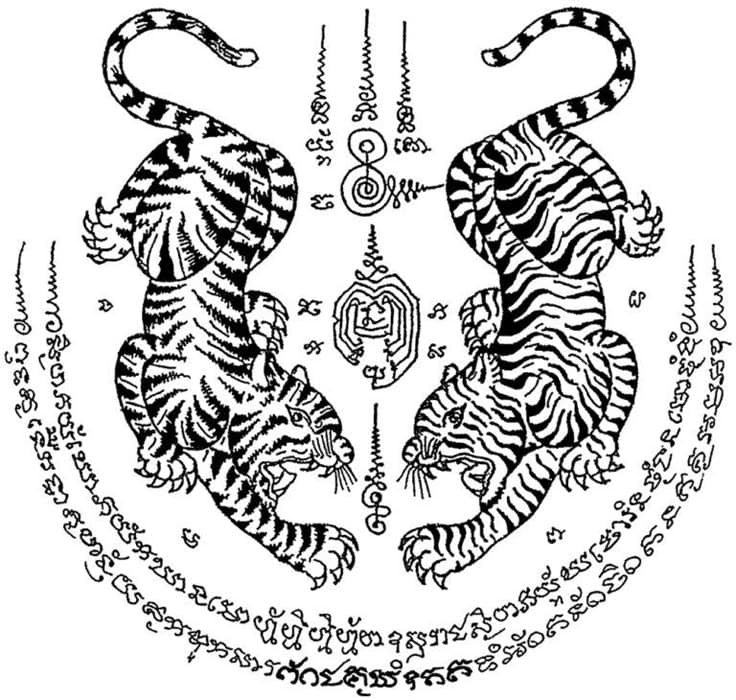
The 10 most popular Sak Yant designs and what they mean
From the Hah Taew to Ganesha: the ten Sak Yant designs chosen most often, with their meaning and where they work best on the body.
6 min read
Getting a Sak Yant from Amsterdam, Rotterdam, Utrecht or Eindhoven
You will not find an authentic Sak Yant in every city. How long it takes to reach the studio in Breda from Amsterdam, Rotterdam, The Hague, Utrecht and Eindhoven, and what to look for.
5 min read
12 myths about Sak Yant (and what is really true)
Only monks, only in Thailand, only for men? Twelve myths about Sak Yant that you hear a lot, and what the reality is.
7 min read