
Buddha tattoo: meaning, respect and the rules that come with it
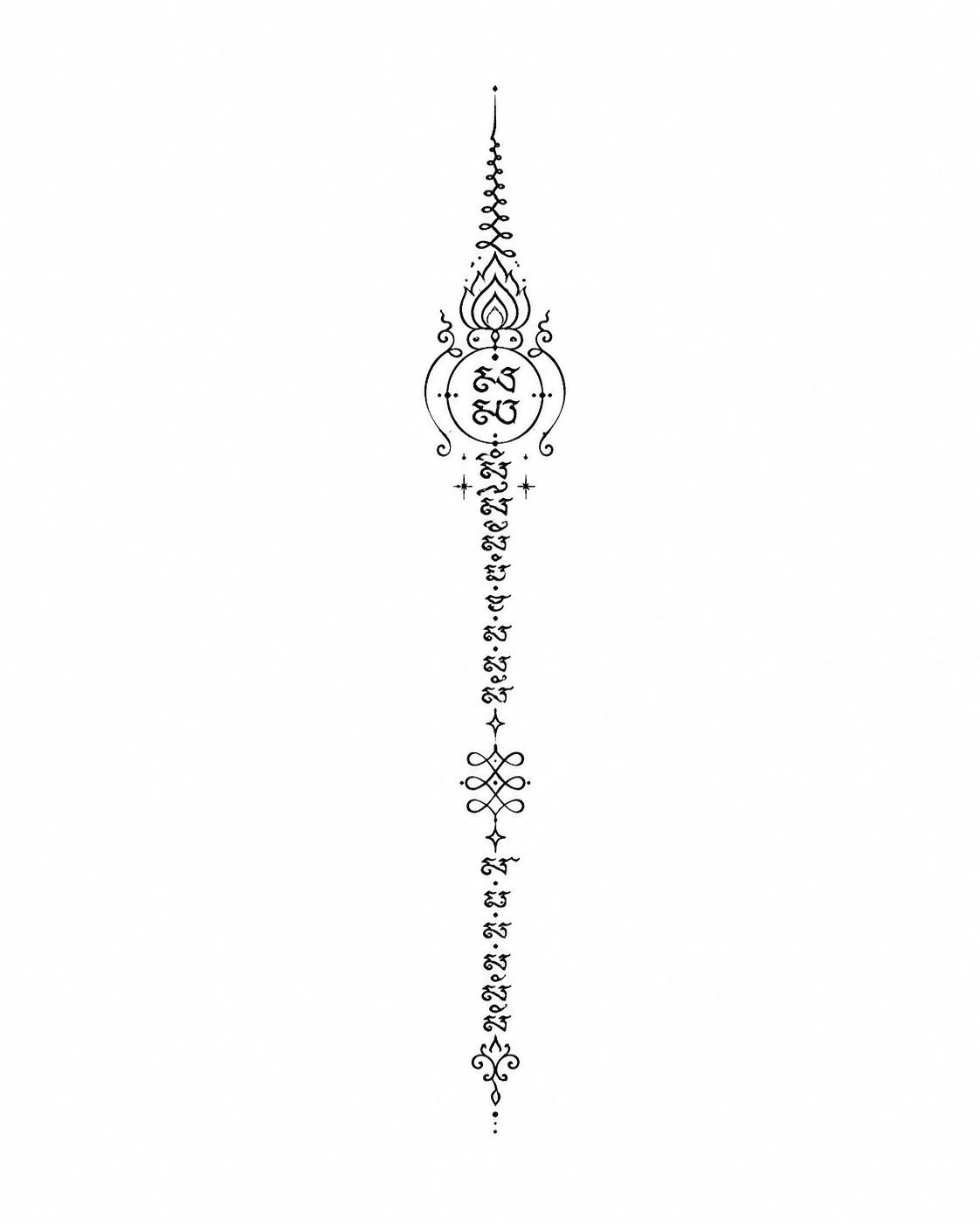
A Buddha tattoo is sensitive for many Thai people, and in some countries even a problem at the border. Learn what the image means, how the Sak Yant tradition handles it and which respectful choices you have.
Few tattoos provoke such contradictory reactions as a Buddha tattoo. For one person it is a symbol of calm and enlightenment; for another, and certainly for many Thai people, it is a sacred image that does not belong on a body without the right context. At airports in Thailand, posters ask tourists not to use the Buddha as decoration.
Does that mean a Buddha tattoo can never be done? No. But it does mean that context, placement and intention weigh more heavily here than with any other design. In this article you will read what the image means, why it is sensitive, how the Sak Yant tradition has held a reverent form for it for centuries, and which choices you have if Buddhism speaks to you.
What does the image of the Buddha mean?
The Buddha is not a god but a human being who, according to tradition, fully awakened: Siddhartha Gautama, who came to insight after years of searching and taught for the rest of his life. The seated figure in meditation stands for that awakening: calm that does not depend on circumstances, compassion without conditions and the capacity to grow that lives in every person.
Whoever considers a Buddha tattoo is usually looking for exactly that: an anchor of calm, a reminder of a path they want to walk. The intention is almost always good. The sensitivity is not in the intention, but in the form.
Why a Buddha tattoo is sensitive
In Thai Buddhism an image of the Buddha is not an illustration but an object of veneration. It belongs in an elevated, clean place and is treated with reverence. A sacred image on a body that sweats, dances and lies on the beach feels, to many believers, like that reverence turned upside down. The lower on the body, the greater the discomfort: feet and legs are considered the least honourable parts of the body.
This is not an abstract principle. Sri Lanka has denied tourists with visible Buddha tattoos entry to the country, and in Thailand campaigns have been asking for respectful treatment of the Buddha's image for years. Anyone travelling through Southeast Asia with a large Buddha on their calf can expect uncomfortable situations.
Important to see: the objection is almost never about whether you, as a Westerner, may feel connected to Buddhism. It is about how the image is treated. Respect is not a side issue here, it is the whole issue.
The question is not whether you may wear the Buddha. The question is whether you wear him the way he ought to be worn.
How the Sak Yant tradition handles it: the Ong Phra
The Sak Yant tradition has held a form for centuries in which the image of the Buddha is worn on the skin: the Ong Phra, a stylised seated Buddha figure, built up from lines and surrounded by mantras in the ancient Khom script. The difference with a decorative Buddha lies in three things.
The form is stylised, not a portrait
The Ong Phra is not a realistic depiction but a yant: a geometric, symbolic rendering. That keeps the image within the tradition of sacred diagrams rather than decorative art.
The placement is high and honourable
An Ong Phra is placed high on the body: on the back between the shoulder blades, on the neck or higher. Never below the waist. In our article on Sak Yant placement you can read why height equals honour in the tradition.
The ritual makes it sacred
The yant is placed by hand by a blessed master, with the right mantra and an activating blessing. That makes the tattoo not a picture of the Buddha, but a blessed object on your skin, with the obligations that come with it: the five life rules that every wearer of a Sak Yant receives.
Respectful alternatives to the Buddha image
If you want the meaning without the sensitive image, the tradition holds beautiful alternatives. The Buddha eye design points to wisdom and watchfulness without depicting the figure itself. The unalome draws the path to enlightenment in a single line. And a mantra in Khom script carries the teaching without any image. Browse all Sak Yant designs to see which form fits your intention.
For many people such an alternative turns out to fit even better: after all, it is not about the portrait, but about what the Buddha's path means to you.
How to make a good choice
If you want a Buddha tattoo, do it the way the tradition intended: as a blessed Ong Phra, high on the body, placed by a master who knows the mantras and performs the ritual. If you are in doubt, choose one of the alternatives and carry the meaning without the image. What is best avoided: a realistic Buddha found online, low on the body, placed without any context.
A good master thinks this through with you and will honestly say so when an idea does not fit. With this design, the conversation beforehand is not a formality but the heart of the choice.
Frequently asked questions (FAQ) about the Buddha tattoo
Is it acceptable to get a Buddha tattoo?
There is no ban, but the image is sensitive, especially in Buddhist countries. The Sak Yant tradition holds a reverent form in the Ong Phra: stylised, high on the body and blessed by a master. Worn that way, a Buddha tattoo is a sign of devotion rather than decoration.
Why do some people consider a Buddha tattoo disrespectful?
In Thai Buddhism a Buddha image is an object of veneration that belongs in an elevated, clean place. A sacred image as decoration on the body, especially low on the body, turns that reverence upside down. The objection is about form and placement, not about your intention.
Can a Buddha tattoo cause problems when travelling?
It can. Sri Lanka has denied entry to tourists with visible Buddha tattoos, and in Thailand visible Buddha tattoos, especially low on the body, can draw uncomfortable reactions. In any case, always cover the tattoo when visiting temples.
What is an Ong Phra?
The Ong Phra is the Buddha yant of the Sak Yant tradition: a stylised seated Buddha figure surrounded by mantras in Khom script, placed high on the body and blessed by a master. It is the traditional, reverent way to wear the Buddha on the skin.
Where should a Buddha tattoo be placed?
Always above the waist and preferably as high as possible: between the shoulder blades, on the neck or on the upper back. Feet and legs are out of the question; in the tradition they are the least honourable parts of the body.
Are there alternatives to a Buddha image as a tattoo?
Yes. The Buddha eye stands for wisdom and watchfulness without depicting the figure, the unalome draws the path to enlightenment, and a mantra in Khom script carries the teaching without any image. For many people such a form ends up fitting their intention better.
Rather start with a good conversation?
With this design especially, everything starts with a conversation about intention, form and placement. Book a free introductory talk with our Thailand-blessed master and find out which form fits what you want to carry.
Recent blogs
Dive deeper into Sak Yant, traditions and tattoo care.
The 10 most popular Sak Yant designs and what they mean
From the Hah Taew to Ganesha: the ten Sak Yant designs chosen most often, with their meaning and where they work best on the body.
6 min read
Getting a Sak Yant from Amsterdam, Rotterdam, Utrecht or Eindhoven
You will not find an authentic Sak Yant in every city. How long it takes to reach the studio in Breda from Amsterdam, Rotterdam, The Hague, Utrecht and Eindhoven, and what to look for.
5 min read
12 myths about Sak Yant (and what is really true)
Only monks, only in Thailand, only for men? Twelve myths about Sak Yant that you hear a lot, and what the reality is.
7 min read