
Unalome meaning: the symbol of the spiritual path
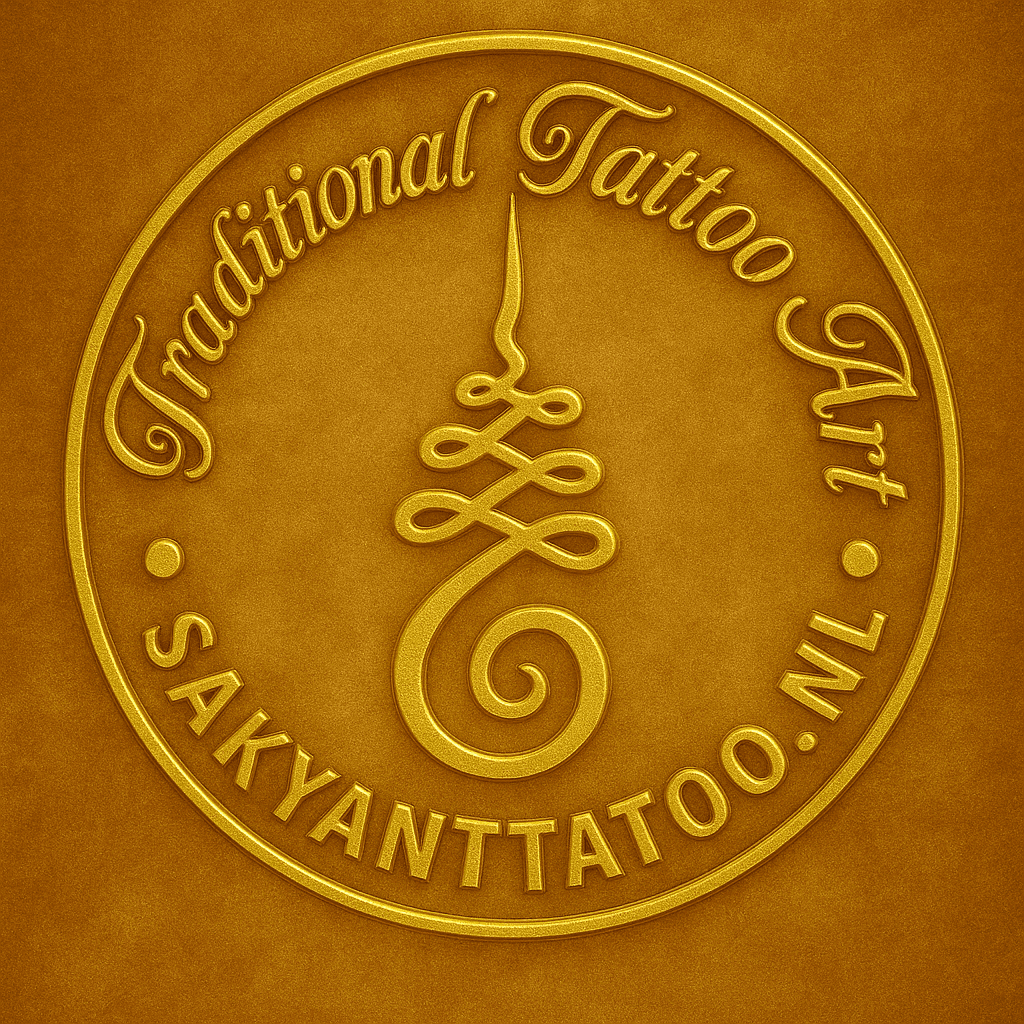
What does the Unalome mean? The spiral of searching, the bends of growth and the straight line of clarity, plus the four variants.
The Unalome is one of the most recognisable symbols in the Sak Yant tradition, and at the same time one of the most misunderstood. Many people know the shape from Instagram or Pinterest, where it mostly turns up as elegant line work. Within the tradition something more concrete sits behind it: a depiction of how a life unfolds.
What does the Unalome mean?
The Unalome reads from bottom to top, like a path you walk. At the bottom it starts with a spiral or curl. That stands for the phase of searching: confusion, doubt, making the same mistakes again. Above it the line moves through bends, the back and forth of growth, setback and recovery. Towards the top those bends grow calmer, until the line runs straight up. That straight part stands for clarity: knowing what you want and why.
At the top of the line there are often dots or a crown. These are read as the moment of enlightenment or surrender, the point at which the searching stops. Within Buddhism the symbol is also connected to the crown of the Buddha, which explains why the Unalome sits at the top in many designs.
Important to know: the precise explanation differs per tradition and per master. One ajarn emphasises the life path, another awareness or protection of the mind. Anyone who tells you there is one correct meaning is telling you only part of the story.
Why does the Unalome sit above a Yant?
In a Sak Yant the layout is not arbitrary. The mantra text and the geometry form the body of the design, and the Unalome closes it off from above. You can see it as the direction the whole design points in: everything below it is about strength, protection or luck, and the Unalome places that in the perspective of your own development.
The four Unalome variants
There is no single fixed Unalome. The shape leaves room for interpretation, and you see that back in the designs that are asked for most.
Where do you have an Unalome placed?
Within the Sak Yant tradition the rule of thumb is that higher on the body is seen as more sacred. The Unalome is therefore often placed on the back, neck, shoulder or forearm. For a fine or minimalist execution the forearm or wrist works well, because the vertical line naturally follows the body there.
Direction matters: the Unalome should point upwards, from the spiral to the straight line. A design placed upside down reverses the reading direction of the symbol. That is exactly the kind of detail that goes wrong when a design is taken from a catalogue without knowing the meaning behind it.
Frequently asked questions about the Unalome (FAQ)
Is the Unalome a religious symbol?
The Unalome comes from Buddhist imagery and is seen as spiritual within that context. Whether you wear it as a religious symbol depends on your own relationship to that tradition. Many wearers see it mainly as a personal reminder of their own path.
Can I get an Unalome without the rest of a Yant?
Yes. The Unalome is regularly placed as an independent design, usually in a fine execution. It is good to discuss beforehand what you want to express with it, because that determines the shape, the placement and the size.
Is it true that the spiral runs differently for men and women?
You often read that online, but the grounding for it is thin and the explanation differs per source. Within the tradition the focus is on the direction of the path, not on who wears it. Discuss this with your ajarn if it means something to you.
How long does placing an Unalome take?
A standalone Unalome is one of the shorter designs, certainly in a minimalist execution. If it becomes part of a larger Yant, that whole determines the length of the session.
Which Unalome suits you?
The four variants differ mainly in style, not in meaning. What fits depends on where you want to wear it, how visible you want it and whether it stands on its own or becomes part of a larger design. During the intake we go through what you want to say with it, and which execution goes with that.
Recent blogs
Dive deeper into Sak Yant, traditions and tattoo care.
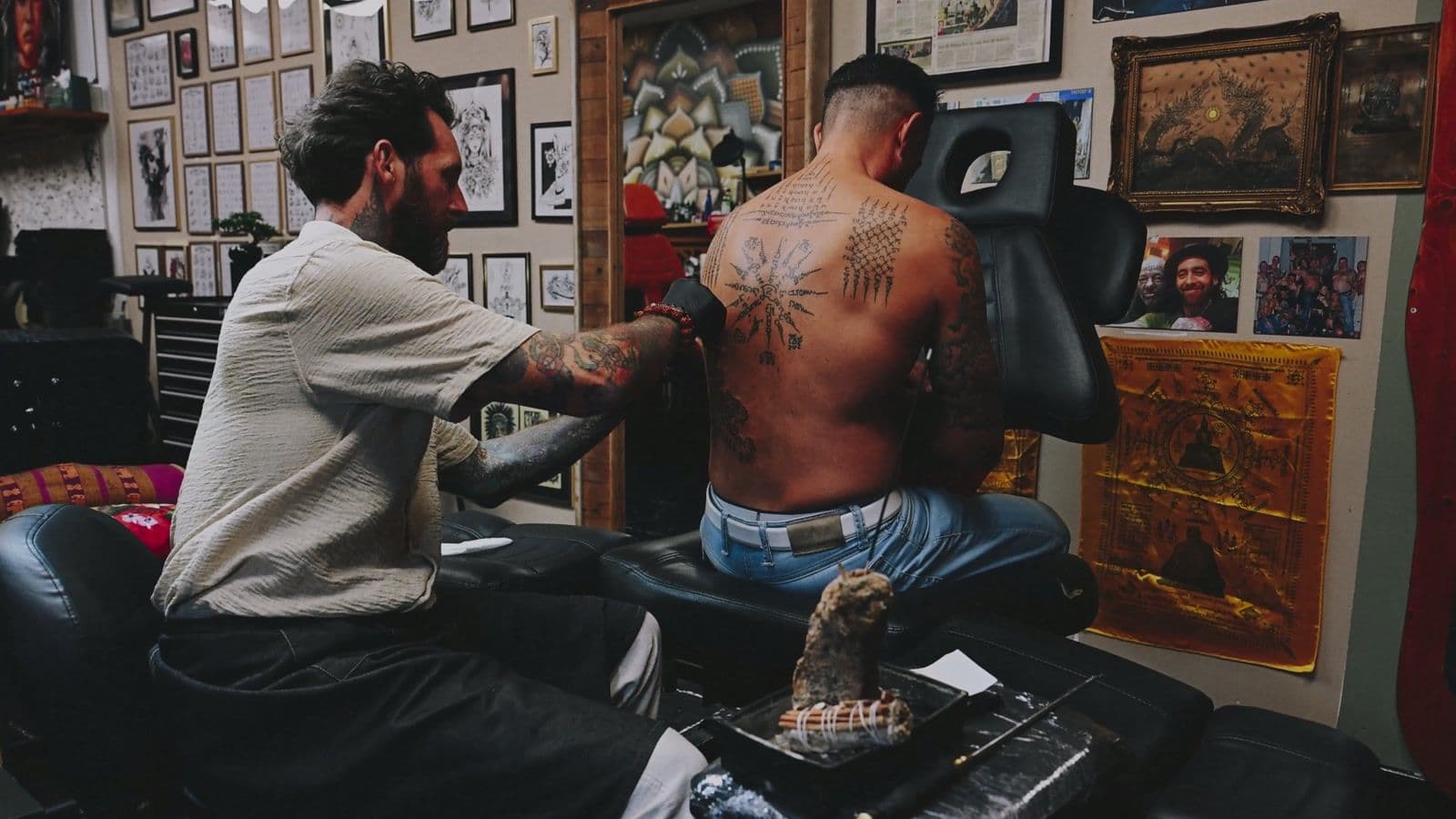
Sak Yant video: how a Sak Yant is tattooed in the Netherlands
A Sak Yant from start to finish, filmed at the studio. Watch the video and read what you see: the design, the rod, the calm in the studio and the closing moment.
4 min read
The 10 most popular Sak Yant designs and what they mean
From the Hah Taew to Ganesha: the ten Sak Yant designs chosen most often, with their meaning and where they work best on the body.
6 min read
Getting a Sak Yant from Amsterdam, Rotterdam, Utrecht or Eindhoven
You will not find an authentic Sak Yant in every city. How long it takes to reach the studio in Breda from Amsterdam, Rotterdam, The Hague, Utrecht and Eindhoven, and what to look for.
5 min read