
12 myths about Sak Yant (and what is really true)
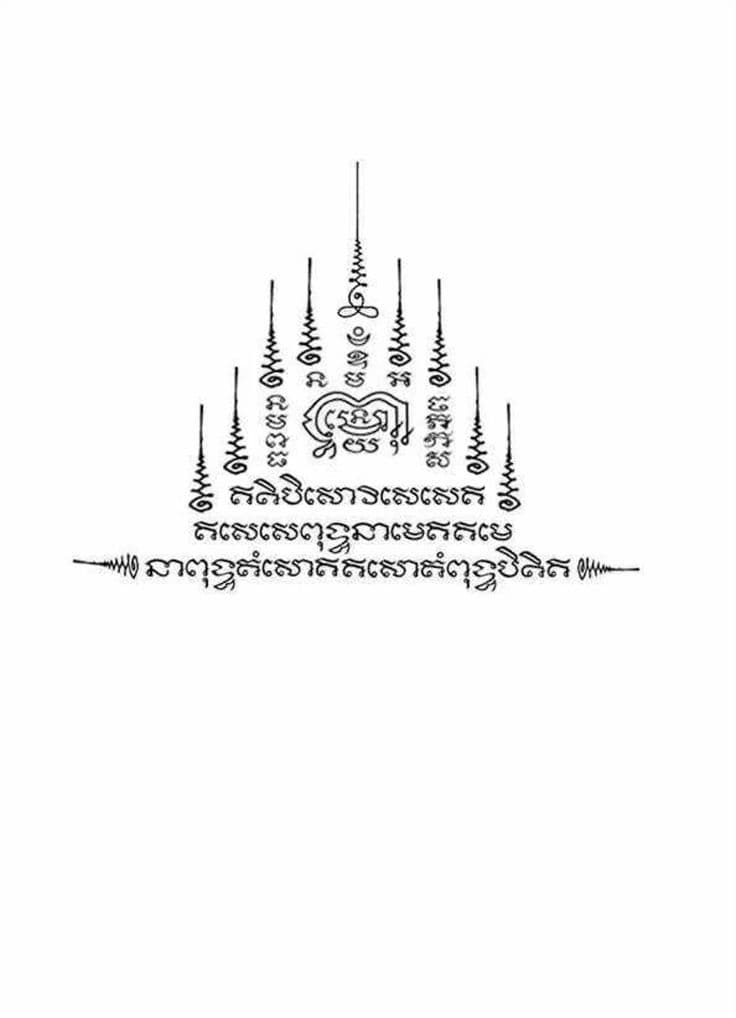
Only monks, only in Thailand, only for men? Twelve myths about Sak Yant that you hear a lot, and what the reality is.
There are plenty of stories going around about Sak Yant. Some come from travel blogs, some from films and some from tattoo shops that know the style but not the tradition. Below are twelve myths you hear a lot, and what the reality is.
It pays to know these myths. They often shape the choices people make: where they get their yant, which design they choose and what they expect from it. If you know the facts, you choose better.
1. "A Sak Yant is just a Thai tattoo"
A Sak Yant is a yant, a sacred diagram containing a text, that is tattooed and blessed as part of a ritual. A tattoo in Thai style without that text and without a blessing is a picture of a Sak Yant, not a Sak Yant. How it differs from an ordinary tattoo.
The difference is not in how it looks. Two tattoos can look the same at first glance, while one is a Sak Yant and the other is not. What counts is who tattooed it, whether the text is correct and whether a blessing was part of it. So always ask about the origin, not just the portfolio.
2. "Only monks are allowed to tattoo a Sak Yant"
In Thailand, yants are tattooed both by monks and by Ajarns. An Ajarn is a master who is not a monk, but who has been trained in the tradition and blessed to tattoo yants. Both are perfectly normal within the tradition. Why the master matters.
In practice, many foreigners actually get their yant from an Ajarn, because an Ajarn has more time to explain and because monks may not touch women. An Ajarn has often studied for years under a monk or an older master before being allowed to tattoo. So the difference between the two says nothing about the power of the yant.
3. "You have to go to Thailand for a real one"
A real Sak Yant is tied to the master, not to the country. What matters is that he has been trained in the tradition, can read the text and is permitted to give the blessing. A trip to a Thai temple can be a wonderful experience, but it is not a requirement. More about Wat Bang Phra.
A trip to Thailand has its drawbacks too. You often only get one chance during your holiday, there may be a language barrier and the monk or master regularly decides for you which yant suits you. If you want to know what you are wearing, a conversation in a language you understand helps. And the aftercare does not fall in the middle of your holiday.
4. "The script is just decoration"
The script is the most important part. The lines in Khom script contain a formula in Pali that is recited while the yant is being tattooed. A design in which the script has been altered because it looked nicer is no longer correct. Which language is written in a Sak Yant.
The texts are written in Khom, an old script read mainly by monks and masters. The average Thai person can read it no better than a Westerner. That is exactly why it matters so much that the person tattooing the design knows what it says.
5. "You can have a design from the internet copied"
You are welcome to come in with a design that appeals to you, but it will not simply be copied. If you cannot read the text, you do not know whether it is right. With traditional yants, the structure and the text are fixed, and the master checks whether the design fits what you are looking for.
Many designs circulating online have already been traced at least once, sometimes several times. With every copy, syllables can shift or drop out. A master draws the yant afresh, with the correct structure, and adapts the size to your body.
6. "A Sak Yant is only for Buddhists"
No. Most people who wear one, in Thailand too, are not strict practitioners. What is asked of you is respect for the tradition and for the rules that come with it. Can a Westerner get a Sak Yant?
Many Thai wearers have a yant for protection, luck or strength, and take the rules seriously without going to the temple every day. Nothing more is asked of a Westerner. Interest and respect are enough to start with.
7. "A Sak Yant is for men"
Plenty of women get a yant too. There is a rule that monks may not touch women, but that rule is about the monk, not the woman. Sak Yant for women.
What does differ is what people are looking for, and that guides the choice of design. The meaning of a yant is the same for everyone. A Hah Taew on a woman's shoulder means exactly the same as on a man's.
8. "Handpoke hurts far more than a machine"
Most people actually find it less painful: a rhythmic tapping rather than a scraping feeling. The spot on your body makes far more difference than the technique. What to really expect.
Handpoke goes point by point, at a steady rhythm, and many people notice that the skin heals calmly afterwards. Breathing helps: in slowly and out for a long time, especially on the more sensitive spots. And if you arrive rested and after a good meal, you will find it easier to keep going.
9. "A Sak Yant is always black"
Black is the most common, but red is also used in the tradition, sometimes for the whole design and sometimes only for the script. Take a look at the lotus in red or the tiger with red Khom script, for example.
Which colour fits depends on the design and the tradition it comes from. Red is often used to make the script stand out or to give a design extra emphasis. In the conversation beforehand you will hear which colour belongs with your yant.
10. "You can put one anywhere on your body"
Within the tradition, the higher on the body, the more respectful. The neck, upper back, shoulders and upper arms are the classic spots. A yant is never placed below the waist. How to choose the right spot.
The background is that in Thailand the head is considered the most sacred part of the body and the feet the lowest. A sacred design on your ankle or foot is therefore seen as disrespectful. In practical terms, too, a higher spot is often better: the design has more room there.
11. "The power is in the ink"
According to the tradition, the power comes from the blessing and from how you live. That is why there are five life rules that come with it. The ink stays, the power is up to you.
Within the tradition it is said that a yant can lose its power if you do not follow the rules. There are rituals to renew that power, such as the annual Wai Khru festival in Thailand. But the core remains: a yant is an agreement with yourself, not an amulet that works on its own.
12. "A Sak Yant is a souvenir"
If you see a yant as a holiday keepsake, you are missing the point. A Sak Yant is a promise to yourself, made within a tradition that is centuries old. That is exactly why the conversation beforehand matters so much: to make sure you are doing it for the right reason.
That does not mean you need a deeply spiritual reason. Many people choose a yant at a moment of change: a new job, a journey, the end of a hard period. The yant marks that moment and reminds you of it. That is exactly what it is meant for.
Frequently asked questions about Sak Yant (FAQ)
What does Sak Yant mean?
Sak means to tap or to tattoo, and yant comes from the Sanskrit yantra, a sacred geometric figure. What Sak Yant really means.
Is a Sak Yant permanent?
Yes. It is a tattoo made with ordinary tattoo ink and stays visible for the rest of your life. So think carefully about the design, the size and the placement.
How much does a Sak Yant cost?
That depends on the design, the level of detail, the size and the placement. What determines the price.
Who is allowed to tattoo a Sak Yant?
A monk or an Ajarn who has been trained in the tradition and has received the blessing to tattoo yants. A tattooist who has only mastered the style tattoos a picture of a Sak Yant.
Does a Sak Yant hurt?
You will feel it, but most people find it quite manageable. More about pain.
Can a Sak Yant lose its power?
According to the tradition, it can if you do not follow the life rules. That is why those rules are part of the yant, and why they are passed on to you after the session.
Where does Sak Yant come from?
From Southeast Asia, with roots in Buddhism, Hindu influences and older animist traditions. The origins of Sak Yant.
Recent blogs
Dive deeper into Sak Yant, traditions and tattoo care.
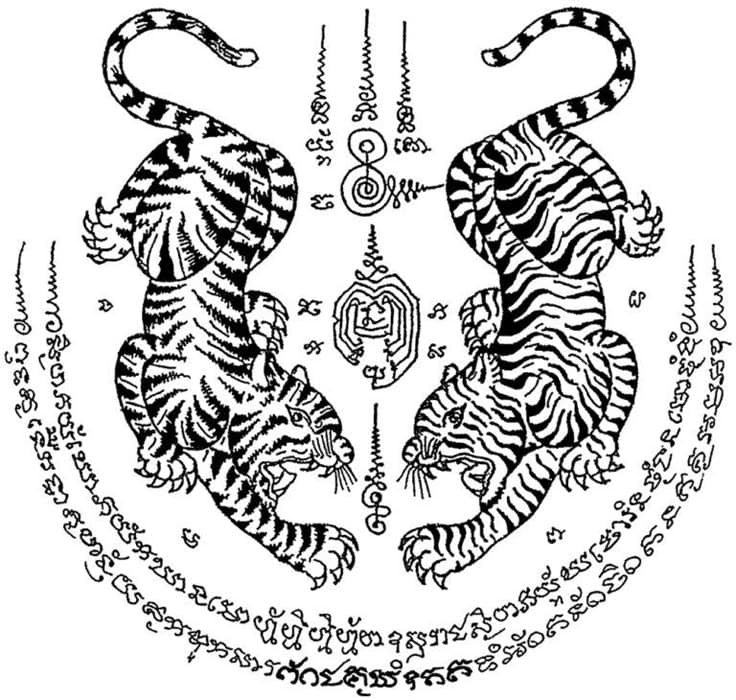
The 10 most popular Sak Yant designs and what they mean
From the Hah Taew to Ganesha: the ten Sak Yant designs chosen most often, with their meaning and where they work best on the body.
6 min read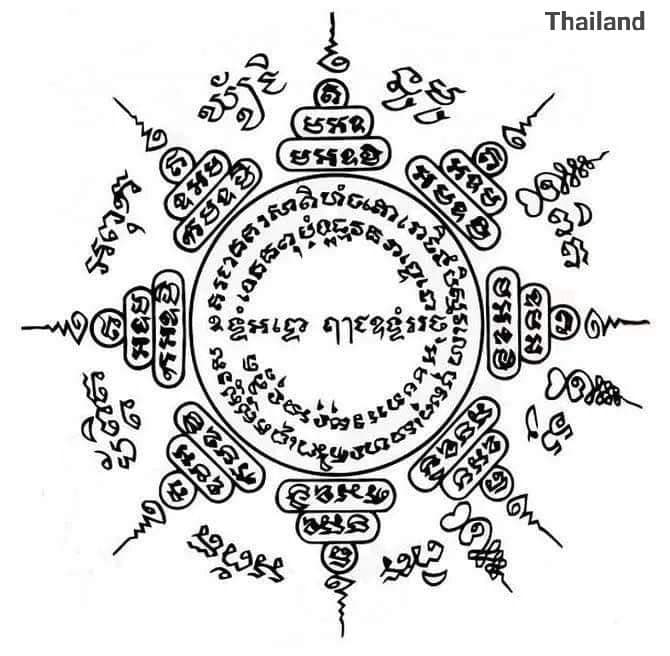
Getting a Sak Yant from Amsterdam, Rotterdam, Utrecht or Eindhoven
You will not find an authentic Sak Yant in every city. How long it takes to reach the studio in Breda from Amsterdam, Rotterdam, The Hague, Utrecht and Eindhoven, and what to look for.
5 min read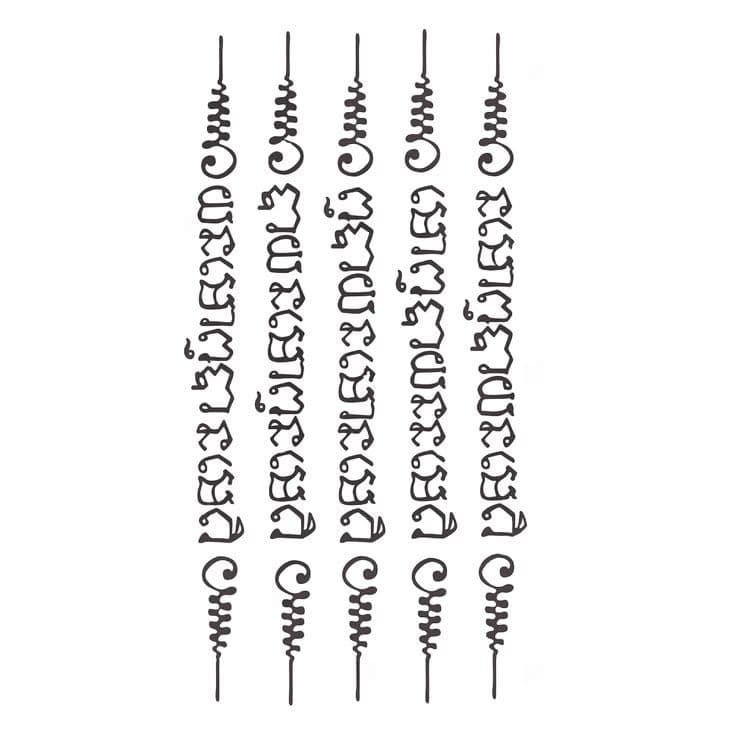
What happens in a Sak Yant session? From first message to aftercare
What happens when you get a Sak Yant? The whole process in six steps: first contact, the intake conversation, preparing, the session, the blessing and aftercare.
6 min read