
Sak Yant for women: designs, placement and what the tradition says
Can women get a Sak Yant, and what is different? About the rule for monks, the designs women often choose, placement, pain and practical questions.
A Sak Yant is not just for men. That misconception exists mainly because the images that circulate usually show Thai fighters and soldiers. In reality, many women also get a yant, in Thailand and beyond. There are, however, a few things within the tradition that work differently if you are a woman, and a few questions women ask more often than men.
This article sets them out: what the tradition says, which designs are often chosen, where to place them and what to keep in mind in practice.
Can women get a Sak Yant?
Yes. There is no rule in the tradition that excludes women from getting a Sak Yant. What does exist is a rule for the monks who do the tattooing. A Buddhist monk is not allowed to touch a woman. In temples where monks do the tattooing themselves, this is solved by placing a cloth between the monk's hand and the skin, or by referring the woman to an Ajarn, a lay master who is not a monk.
So the rule is about the monk, not the woman. With an Ajarn who is not a monk, such as Silas, it does not apply. According to the tradition, a Sak Yant is only ever tattooed by a man, because it is believed that masculine energy is needed to pass on the spiritual power. That applies to giving the tattoo, not to wearing it.
Does a yant mean something different on a woman?
No. A Hah Taew on a woman's shoulder means the same as on a man's. The designs are not divided by gender. What does differ is what people are looking for, and that guides the choice. The five life rules are the same for everyone as well.
Designs women often choose
Below is an overview of the designs that women often choose in practice, with the reason behind each. It is a description, not a prescription. Within the tradition, a woman with a tiger on her back is just as normal as a man with a lotus.
The Hah Taew is the best-known yant in the world, partly thanks to Angelina Jolie. Five vertical lines of mantra, each with its own protection. The design is narrow and fits well on a shoulder blade.
The Na Metta is dedicated to metta, loving kindness. The yant stands for warmth, charisma and good connections with others, both in relationships and at work.
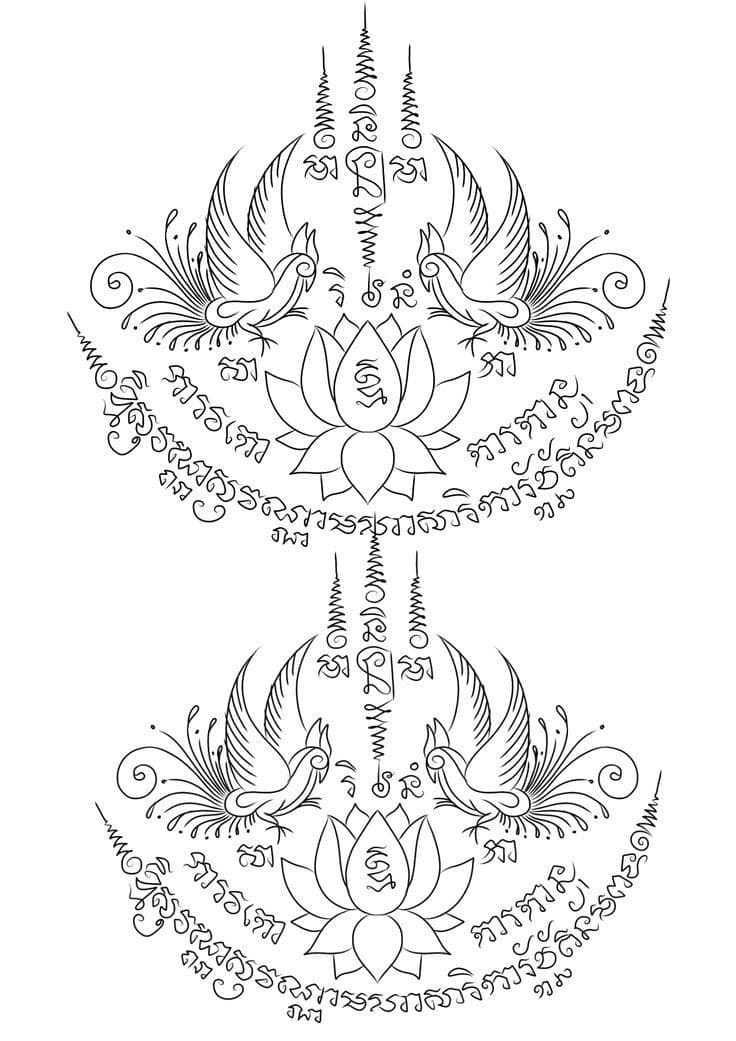
The lotus with hong birds combines the lotus, purity growing out of the mud, with the hong, the mythical bird of beauty and grace. It is often chosen as a yant for love and connection. There are other lotus designs too.
The unalome is the symbol of the spiritual path, from confusion to clarity. Its narrow, vertical shape fits places with little room, such as the neck or along the spine.
The Paed Tidt protects in eight directions, which makes it popular with women who travel a lot or often go out alone.
Placement
Within the tradition, the higher on the body, the more respectful. The neck, upper back, shoulder blades and upper arms are the classic spots. A yant is never placed below the waist. Everything about placement.
A question women ask more often is whether a yant can go on the ribs or close to the heart. It can. In fact, the Na Metta is traditionally placed close to the heart. Keep in mind, though, that the ribs are among the more sensitive spots.
What you wear matters in practice too. A yant between the shoulder blades is visible in an open-back top and disappears under a blouse. A yant on the neck shows when your hair is up. Think ahead about whether you want it to be visible, at work and elsewhere.
Start small or go big straight away?
Many women hesitate between a small, subtle yant and a larger design. Both are possible, but there are a few things to weigh up.
A small yant has a lower limit. The script has to stay legible, and fine lines blur together over the years. Narrow designs such as a unalome or a Hah Taew work well at a small size. Animals and designs with a lot of detail need more room.
If you think you might add more later, take the layout into account now. A small yant right in the middle of the shoulder blades fixes the rest of the back. A yant placed slightly higher or to one side leaves room free.
And ask yourself how you want it to look in ten years. A yant does not change with the trends. Choose the size at which the design comes into its own, not the size that feels least daunting right now.
Three questions to help you choose
What do I want this yant to do for me? Protection, strength, love, calm or direction. The answer decides which group of designs you choose from.
Where do I want to see it, and when would I rather not show it? That decides the spot.
How much room do I have, now and later? That decides the size. If you cannot make up your mind, the guide by intention is a good place to start. The rest you discuss in the consultation before the session.
Pain
Hand poke feels different from a machine: more of a rhythmic tapping than a scraping. Most people find it quite bearable. How it feels depends mainly on the spot, not on whether you are a man or a woman. Fleshy areas such as the shoulder and upper arm are the least sensitive, the ribs and spine the most. What you can really expect.
Pregnancy and breastfeeding
This is general tattoo advice, not a Sak Yant rule: do not get tattooed while you are pregnant or while you are breastfeeding. Your body has other priorities then, and any risk of infection is one too many. Wait until afterwards. The yant is not going anywhere.
A yant you already have does not stand in the way of a later pregnancy. The classic spots, such as the back, shoulders and neck, change little in shape. The skin on the belly and hips can stretch, but that is not where a yant is traditionally placed anyway.
Menstruation and the tradition
In some Thai traditions there is a belief that a yant receives less power during menstruation, and there are temples that would rather women did not visit during that time. This is a traditional belief that varies from master to master, not a fixed rule. If it matters to you, you can simply plan the appointment around it.
Aftercare
Aftercare is the same for everyone. The first two weeks determine what the lines will look like in ten years. Watch out for bra straps and bag straps rubbing against a fresh yant on the shoulder or back. The full aftercare guide.
What you can ask in the consultation
The conversation before the session is there for you too. Feel free to ask any questions you have. A few that women often ask:
How will this design look on my body, in the spot I have in mind? A design that looks good on paper can turn out differently than you expect on a narrow shoulder.
What exactly does the script say? You should know what you are wearing, and a master can explain it.
What does the aftercare mean for my daily life? Think of work, sport, clothing and sun in the first two weeks.
And if you are unsure: you do not have to decide on the spot. A good conversation sometimes ends with agreeing that you will sleep on it.
Frequently asked questions about Sak Yant for women (FAQ)
Can a woman get a Sak Yant?
Yes. There is no rule that excludes women. It is only monks who may not touch a woman, which is why they use a cloth or refer women to an Ajarn who is not a monk.
Which Sak Yant is most popular with women?
The Hah Taew, the Na Metta, the lotus and the unalome are chosen most often. But the choice should follow from what you are looking for, not from what is common among women.
Is there a female Sak Yant master?
According to the tradition, a Sak Yant is tattooed by a man. There are women who tattoo yants, but within the classical tradition this is not common.
Can I get a small yant?
Yes, but there is a minimum size. The script has to stay legible, and fine lines blur together over the years. A narrow design such as a unalome or a Hah Taew works better at a small size than an animal.
Is a Sak Yant a good first tattoo?
Yes. Many women choose a Sak Yant as their first tattoo, precisely because there is a meaning behind it. The consultation beforehand helps you weigh up design, spot and size at your own pace.
Recent blogs
Dive deeper into Sak Yant, traditions and tattoo care.
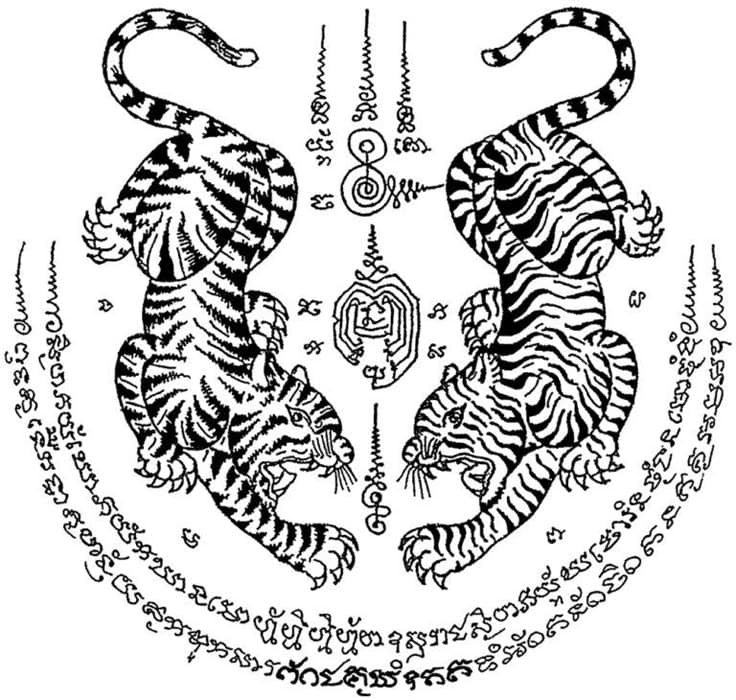
The 10 most popular Sak Yant designs and what they mean
From the Hah Taew to Ganesha: the ten Sak Yant designs chosen most often, with their meaning and where they work best on the body.
6 min read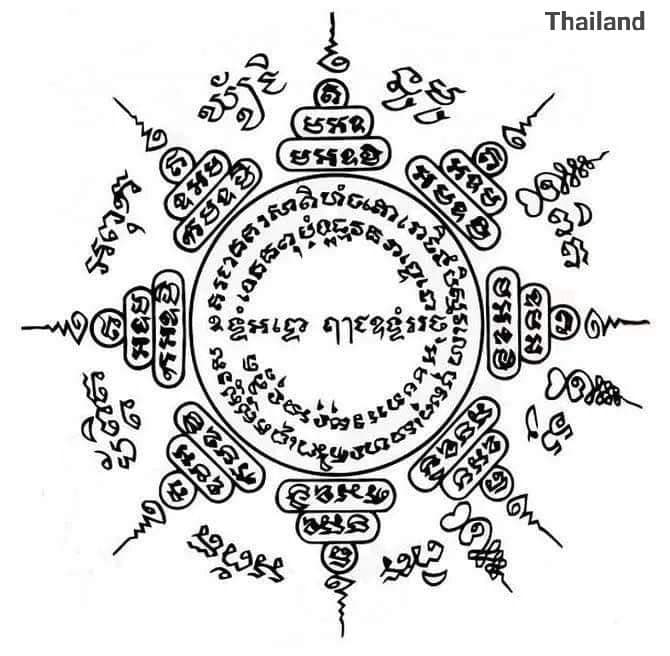
Getting a Sak Yant from Amsterdam, Rotterdam, Utrecht or Eindhoven
You will not find an authentic Sak Yant in every city. How long it takes to reach the studio in Breda from Amsterdam, Rotterdam, The Hague, Utrecht and Eindhoven, and what to look for.
5 min read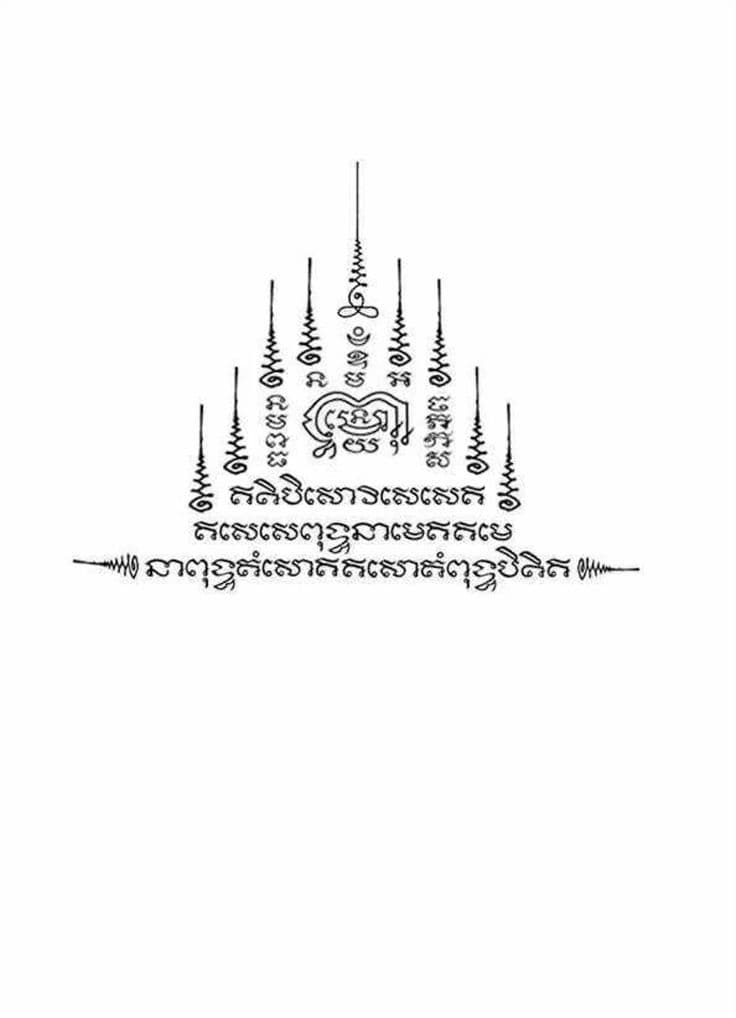
12 myths about Sak Yant (and what is really true)
Only monks, only in Thailand, only for men? Twelve myths about Sak Yant that you hear a lot, and what the reality is.
7 min read