
Spiritual tattoo: meaning, symbols and what to watch for
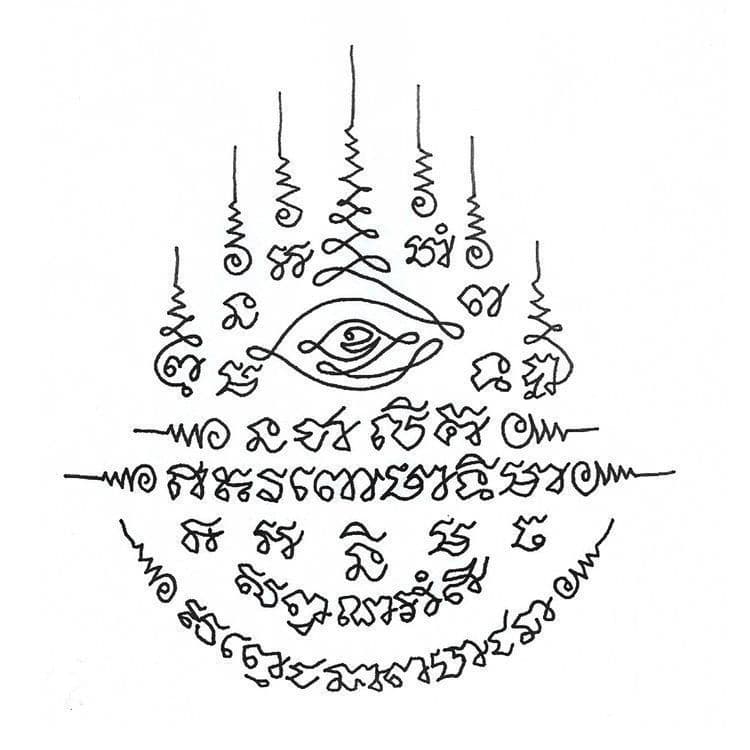
What makes a tattoo spiritual: the symbol, your intention, or the ritual around it? A guide through the best known symbols, where they come from, and the choices you make beforehand.
A spiritual tattoo is not a style the way fineline or blackwork are. It is a category defined by what the image does for you: remind, protect, point a direction, or mark that something has changed. The same lotus can be purely decorative for one person and mark the end of a hard year for another. The ink is identical. The difference sits in everything around it.
That also makes it a difficult subject to read about. Search for spiritual tattoos and you mostly get pictures: a hundred versions of the same lotus, mandala or unalome, without a word about where they come from. This article does the opposite. First what makes a symbol spiritual, then the best known symbols and their origins, and finally the practical decisions: placement, size, respect, and choosing who does the work.
What makes a tattoo spiritual?
Three things decide it, and they are independent of each other: the symbol, the intention, and the ritual. You can have one without the other two, and in practice that happens all the time.
The symbol gives you a layer of meaning you do not have to invent. A unalome, a lotus or a yantra has been read in roughly the same way for centuries. You step into a story larger than your own year, and that is exactly why people reach for them at moments when their own story feels too small.
The intention is your own answer to the question why now. What do you want to remember, or leave behind? Without that answer it stays decoration. That is fine, decoration is a perfectly good reason to get tattooed, but then do not call it a spiritual tattoo.
The ritual is the act of getting it done. In many traditions that is the actual work: how it is applied, what is said during it, and what you promise afterwards. Within Sak Yant that part is explicit. The work is done by hand, a mantra is recited while it is applied, and the design is blessed afterwards. Most Western tattoos skip that part entirely, which is not a criticism, just a different way of working.
Most people walking around with a spiritual tattoo have the first two. The third, the ritual, is what separates a tradition like Sak Yant from a beautiful symbol on your skin.
Why people choose a spiritual tattoo
The same handful of reasons keeps coming up in the conversations that precede a design. They are worth naming, because they almost always determine which symbol fits.
Grief is the most common one. A symbol becomes a place to put something down, and the choice usually falls on an image that acknowledges loss rather than glossing over it. The lotus does that literally: it starts in the mud.
Recovery is the second: after illness, after addiction, after a stretch where you lost yourself. The unalome fits best here, because its shape shows the process rather than just the outcome.
Transitions form the third group. A divorce, a move to another country, becoming a parent, closing a career. The tattoo marks the line between before and after, the way a scar or a piece of jewellery did in many cultures.
And finally: a promise to yourself. Something you do not want to forget, permanently placed where you see it regularly. That is why forearms and wrists are chosen so often, even though some traditions do not consider them the most respectful spot.
The best known spiritual symbols
A short guide through the symbols that get asked for most, with their origins. What stands out: almost all of them come from Asian traditions, and almost all of them are explained more simply in the West than they actually are.
Unalome
A vertical line that starts with a spiral at the bottom and runs straight up at the top. The spiral stands for searching and doubt, the straight line for clarity. It reads from bottom to top, so the direction matters: upside down, you reverse the meaning. See the unalome design for how it is built.
Lotus
The flower that grows up through mud and opens clean above the water. Within Buddhism it is the image for flourishing that comes precisely out of difficult circumstances. Colour and petal count add a second layer of meaning. More about the lotus and its colours.
Mandala and yantra
Both are geometric figures with a centre, but they do not do the same thing. A mandala is an image to rest your attention in. A yantra is a working diagram, tied to a mantra and to a purpose. Someone looking for protection who picks a mandala is, strictly speaking, picking the wrong symbol. The difference explained here.
Mantra script
The lines of text inside a Sak Yant are not decoration. They are written in Khom, an old script, and contain a formula in Pali. If you cannot read the text, you cannot check what it says, and that is exactly where designs pulled off the internet go wrong. Which language is really in a Sak Yant.
Buddha and the Buddha eye
The eye stands for seeing beyond illusion, and is a quieter alternative to a full Buddha image. That last one is sensitive, and we come back to it below. The Buddha eye design is one of the more understated choices in the collection.
Animals as carriers of a quality
Tiger, dragon, Hanuman and Garuda do not stand for the animal itself, but for the quality attributed to it: nerve, protection, loyalty, speed. So you are not choosing an animal, you are choosing a stance. See the full overview of Sak Yant designs for what each one carries.
Symbols from other traditions
Not every spiritual symbol comes from Thailand. Four you will run into often, with the nuance attached.
Om is the best known syllable from Hinduism and Buddhism, seen as the primordial sound everything comes from. It is a sacred sign, not an ornament. In India it is considered disrespectful to wear it below the waist, the same way that applies to Buddha images.
The hamsa, the open hand with an eye, comes from the Middle East and North Africa and has Jewish, Islamic and older roots. It is worn against the evil eye, so as protection rather than as a good luck charm.
The enso, the circle painted in one brushstroke in Zen Buddhism, stands for the moment itself: it is deliberately not perfectly round, and it is not redone. That makes it awkward as a tattoo, because a traced enso is precisely what an enso is not.
The tree of life, moon phases and chakra symbols are the most Western of the group. They have old roots, but the explanations you read about them are largely modern. That is no objection as long as you know it: you are choosing a personal symbol, not a traditionally prescribed one.
The advice given most often: do not mix at random. A unalome with a hamsa and a chakra flower may look coherent, but it draws on three traditions that have nothing to do with each other. Better to pick one tradition and go deeper into it.
Origin and respect: where is the line?
This is the question asked most often and answered least honestly. A Westerner with a Thai symbol on their arm is not automatically being disrespectful, and not automatically in the clear either. The difference sits in three things: do you know what you are wearing, do you know where it comes from, and did you get it through the right route.
Concretely, a Buddha image on your lower leg or foot lands badly in Thailand. Feet are considered the lowest part of the body there, and wearing a sacred image on them reads as an insult. The Thai government has run campaigns against exactly this kind of tourist tattoo. If you want a Buddhist symbol, look at placement before you look at size.
Within the Sak Yant tradition it is taken a step further: a yant is not just applied but blessed, and that is done by someone trained to do it. A yant traced out of a book by someone who cannot read the script is, within that tradition, not a yant but a picture of one.
What almost everyone from inside the tradition does say: interest is welcome, ignorance is not. Knowing what is on your skin is the minimum.
From idea to design: how it actually goes
The order that works best in practice is not the order most people use. Almost everyone starts with a picture they like. That is the last step, not the first.
Step one is the conversation about the reason. Why now, what happened, what do you want to hold on to. That conversation points to a group of symbols: protection, calm, direction, strength or connection.
Step two is the symbol itself. Within that group there are usually three or four designs that could work. This is where the explanation of origin and meaning belongs, so you know what you are signing off on.
Step three is placement. That is a question of substance, not just aesthetics: within the tradition, higher on the body is more respectful. Practically, whether you want it visible at work also counts.
Step four is size, and that is a durability question. Many fine lines close to each other will bleed together over the years. The smallest size at which a design is still readable in ten years is a technical limit, not a matter of taste.
Step five is the session itself, aftercare included. The first two weeks decide how the lines look a decade from now. Full aftercare instructions.
What else to watch for
Placement matters more than most people think. Back, shoulder and neck are the classic spots within the Sak Yant tradition, feet distinctly are not. How to choose the right spot.
Meaning does not live in size. A five centimetre line can carry more weight than half a back. Do not let yourself be talked into bigger than you wanted, and not into smaller than the design can technically handle either.
Choose the artist on substance, not just on portfolio. Ask what the symbol means, where it comes from and why they propose this particular version. If you do not get an answer, you are buying a picture. That is allowed, but call it that.
And look at healed work, not at photos of fresh work. Fresh, everything looks sharp. Only after a year do you see whether the lines hold their place. Why the artist matters.
Frequently asked questions about spiritual tattoos (FAQ)
Do you have to be religious to get a spiritual tattoo?
No. Most people who get one are not religious. What counts is that you know where the symbol comes from and that you take it seriously. Borrowing a tradition without looking into it is exactly what people mean when they talk about cultural appropriation.
Is a spiritual tattoo the same as a Sak Yant?
No. Sak Yant is a specific Thai tradition with fixed designs, a mantra and a blessing afterwards. A spiritual tattoo is the broader category: any symbol you wear for its meaning falls under it. Every Sak Yant is spiritual, not every spiritual tattoo is a Sak Yant.
Which spiritual symbol suits me?
That starts with what you need, not with which design looks good. Protection, calm, direction and strength each lead to a different group of symbols. An intake conversation works through that question first, and only then looks at designs.
Can a spiritual symbol be combined with existing work?
Yes, but look carefully at what is already there. A yantra belongs upright and with space around it. Squeezed between other work or bent along a sleeve, its reading direction is lost. Discuss this before anything is drawn.
Does a spiritual tattoo hurt more?
The technique decides that, not the meaning. Handpoke feels different from a machine: slower, without the constant buzz, and easier to sit through for many people. What to actually expect in terms of pain.
What does a spiritual tattoo cost?
That depends on size, technique and the time the design takes, not on its meaning. Handpoke takes longer than machine work and that shows in the price. What sets the price.
Can I choose a symbol from a culture that is not mine?
In most cases yes, provided you know what it means, where it comes from and where it should not sit. What almost always lands badly is wearing a sacred symbol low on the body, or using it purely as a pattern with no interest in its origin.
Can a spiritual tattoo be removed later?
Laser removal exists, but expect multiple sessions, costs higher than the tattoo itself, and rarely completely clear skin. Assume it stays. That is exactly why the question of why you want it belongs at the start.
From symbol to decision
The order that works: first why, then which symbol, then where on your body, and only last how big. Start the other way round and you almost always end up with a design that looks good and says nothing. There is nothing wrong with a beautiful picture, but then no meaning needs to be invented for it.
Still torn between two symbols? That usually means the first question has not been answered yet. Take your time with it. A design that waits six months is still the same design.
Recent blogs
Dive deeper into Sak Yant, traditions and tattoo care.
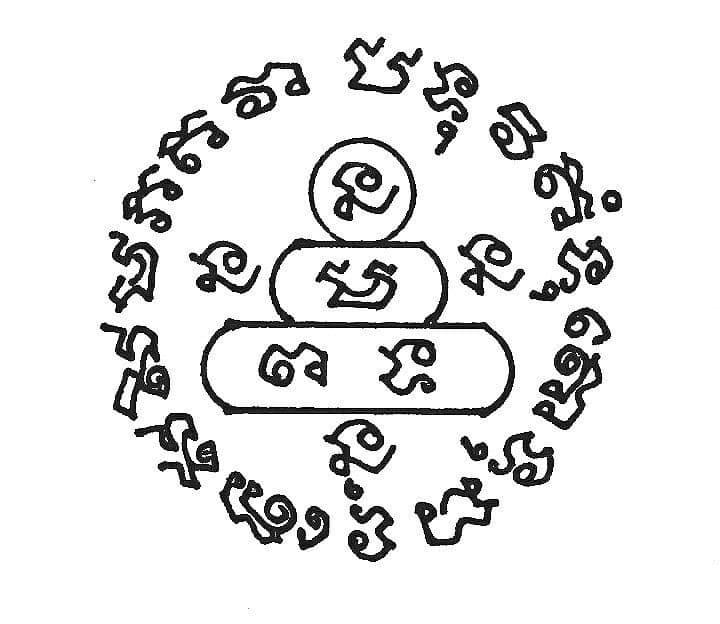
Can a Westerner get a Sak Yant? On respect and cultural appropriation
Is a Sak Yant cultural appropriation? How people in Thailand see it, where the line lies between respect and a lack of it, and what you can do in practice.
7 min read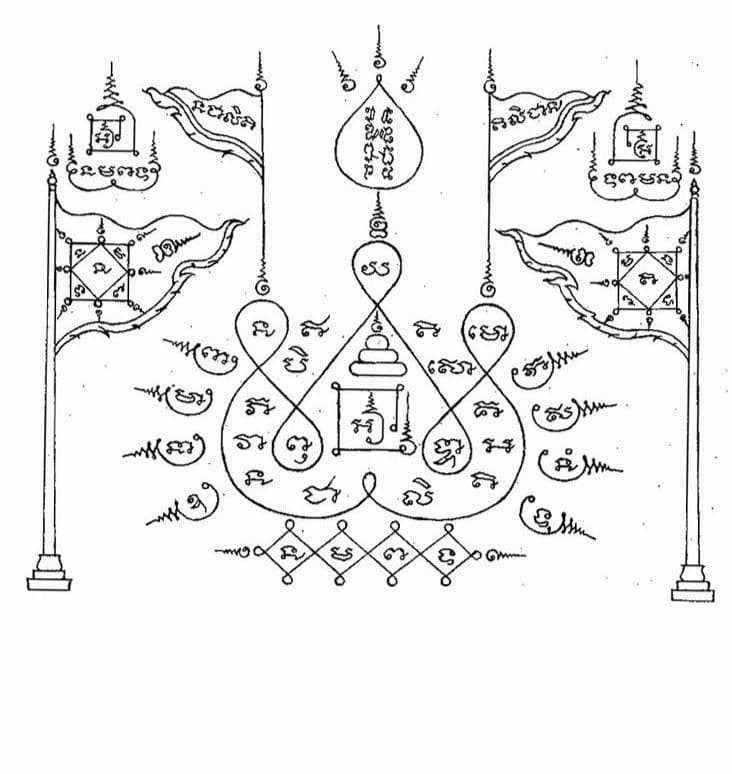
Holistic tattoo: a tattoo as a ritual, not a product
Holistic tattooing means the reason, the conversation, the ritual and the aftercare weigh as much as the design. The four phases, what really differs, and what merely sounds good.
10 min read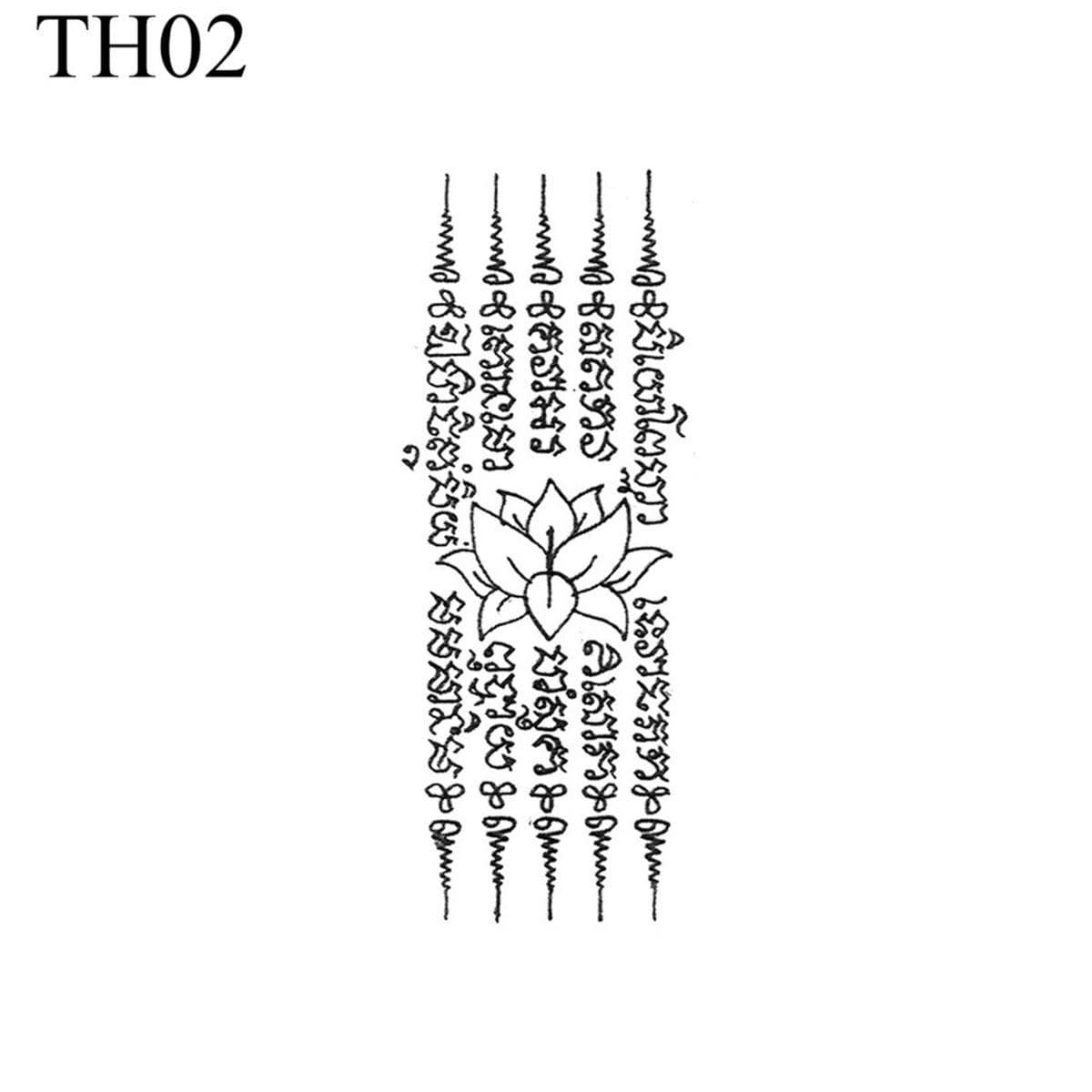
Lotus tattoo meaning: rising out of the mud
The lotus stands for flourishing that comes out of difficult circumstances. Its origins, the meaning of each colour, the petal count, its role within Sak Yant and the mistakes to avoid.
11 min read