
Sak Yant blessing: what it means and what happens
The blessing is what turns a tattoo into a Sak Yant. What happens in the tradition, from reciting kata to blowing over the fresh yant, and why the life rules belong to it.
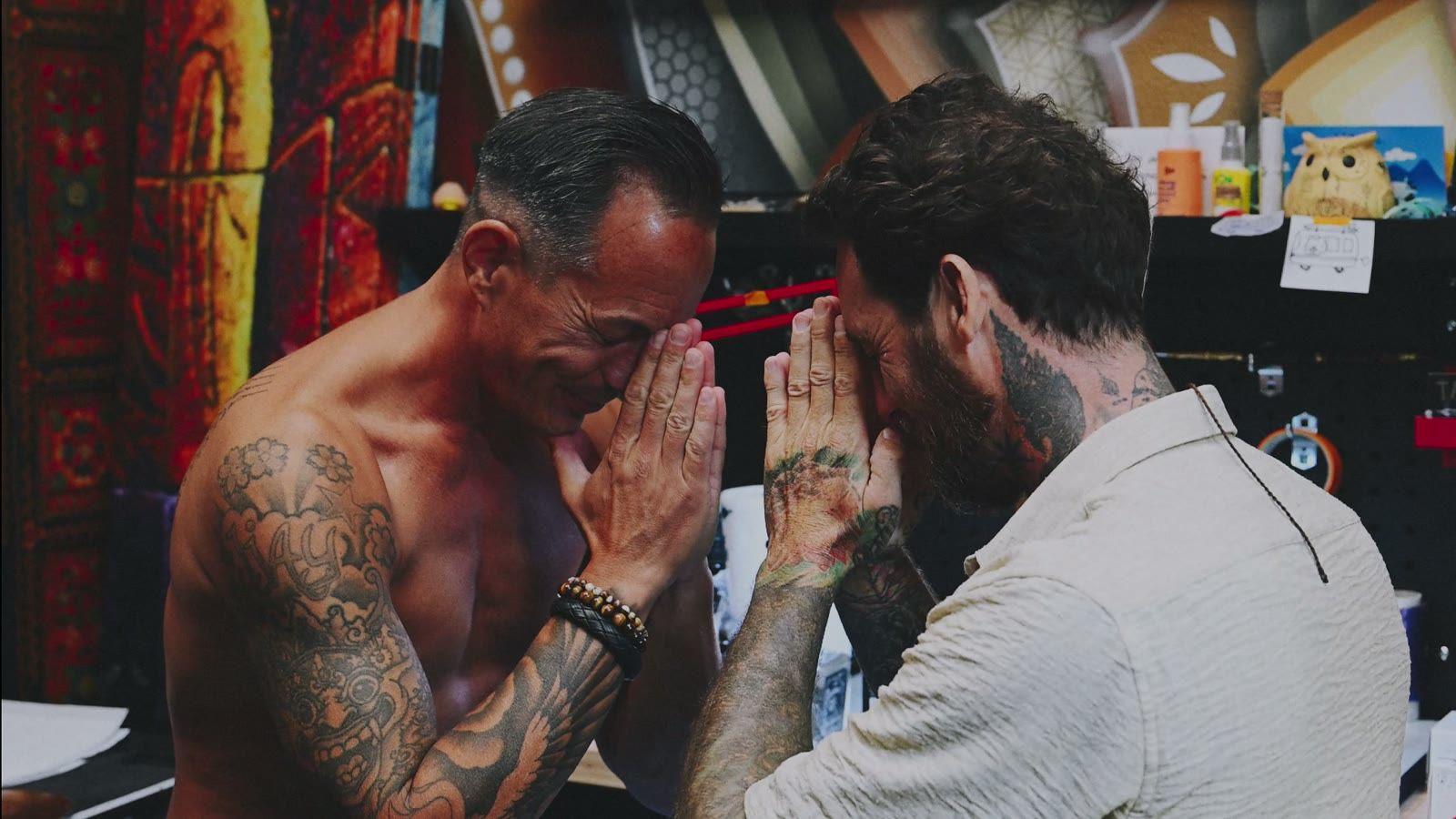
The Sak Yant blessing is the moment when, in the tradition, a tattoo becomes a Sak Yant: the master recites kata, sacred verses, and blows over the fresh yant to activate it. The blessing comes with life rules, the promise you carry with you as the wearer. Without a blessing, the tradition sees an image on your skin; with it, a yant. In this article you'll read what the blessing means, what broadly happens, and how it differs from a tattoo without a blessing.
One note first: Sak Yant is a living tradition with many masters and lineages, and the details vary from master to master. What follows are the broad lines you often see in the tradition.
What the blessing means in the tradition
In the tradition, it is the blessing that completes the yant. The lines, the animals and the script form the body of a Sak Yant. The blessing gives it, as it is often explained, its power. In Thai that sacred power is called saksit.
That is why the value of a Sak Yant doesn't lie only in how it looks. Two yants can look identical in a photo while, in the tradition, there is a world of difference between them. One has been tattooed and blessed by someone trained to do so, the other is a copy of a picture. That is why it matters who tattoos your yant.
The tradition is more than 2,000 years old and connects Buddhist ethics with ancient protective rituals. In the blessing the two come together: words that in the tradition stand for protection, and a promise about how you live.
Reciting the kata
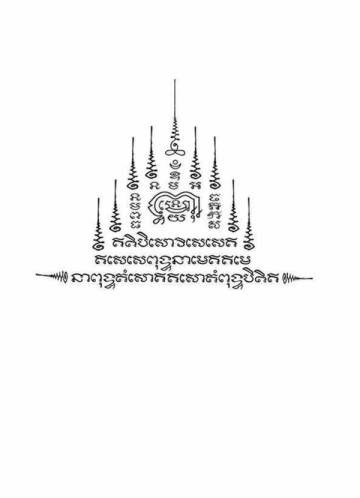
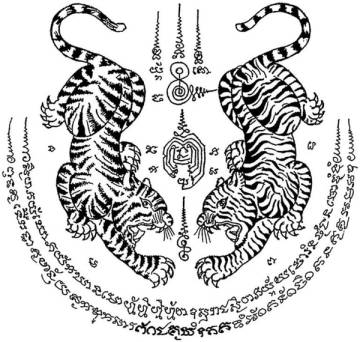
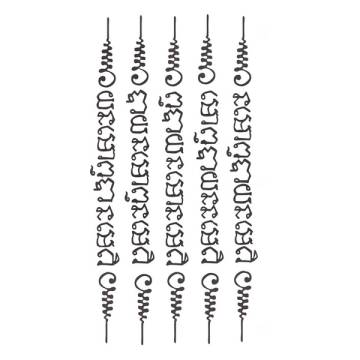
The heart of the blessing is the recitation of kata: sacred verses or prayers, usually in Pali. The word kata comes from the Pali word gatha, verse. They are related to the texts written in Khom script in many yants. You can read more about that in the script in a Sak Yant.
In the tradition, speaking the kata transfers the intention of the text onto the yant. The script on your skin and the words spoken aloud belong together. You don't need to understand the language or recite along. What the tradition does ask of you is attention and respect for the moment.
Which kata are used varies by master, by lineage and often by design. A yant that stands for protection may receive different verses than one for luck or compassion. That is another reason why a Sak Yant isn't a product you can separate from the master.
Blowing over the fresh yant
After the recitation, in many traditions the master blows over the fresh yant. In Thai this is called pao, to blow. It is a short, deliberate gesture: the breath carries the spoken words to the skin, as it is explained, and in a sense brings the yant to life.
If you see it for the first time, it may seem like a small moment. In the tradition it is one of the most important. The blowing stands for activating the yant: from that moment on it is no longer a drawing but a blessed Sak Yant. Exactly how the master does this, and how often, differs between traditions.
In temples such as Wat Bang Phra, too, a yant is completed this way, with whispered kata and a blessing. Wearers also return there every year for the Wai Khru, the ceremony in which they honour their teacher and have their yant renewed.
The life rules: the promise that comes with it
In the tradition, a blessing is not a one-way street: whoever receives it also takes on a promise. A Sak Yant comes with life rules. The best known are the five precepts of Buddhism: do not kill, do not steal, do not lie, no sexual misconduct, and no misuse of alcohol or drugs.
They are not laws with punishments. The idea in the tradition is that a yant keeps its meaning as long as the wearer lives in line with what it stands for. If you let go of the rules, the ink stays, but according to the tradition the yant loses its power. Some designs and lineages come with additional rules.
You don't have to be a Buddhist to wear a blessed Sak Yant. For many wearers the rules work like a compass: a daily reminder of how you want to live.
How it differs from a tattoo without a blessing
A tattoo without a blessing can be beautiful, but in the tradition it isn't a Sak Yant. Some studios tattoo Thai motifs with a machine or copy a yant from the internet. The result looks like a Sak Yant, but no kata were recited, nobody blew over it and no life rules were passed on.
So in the tradition the difference isn't aesthetic but fundamental. A blessed yant is a living sign, an unblessed yant is an image. That is not a judgement on ordinary tattoos; it is simply something different.
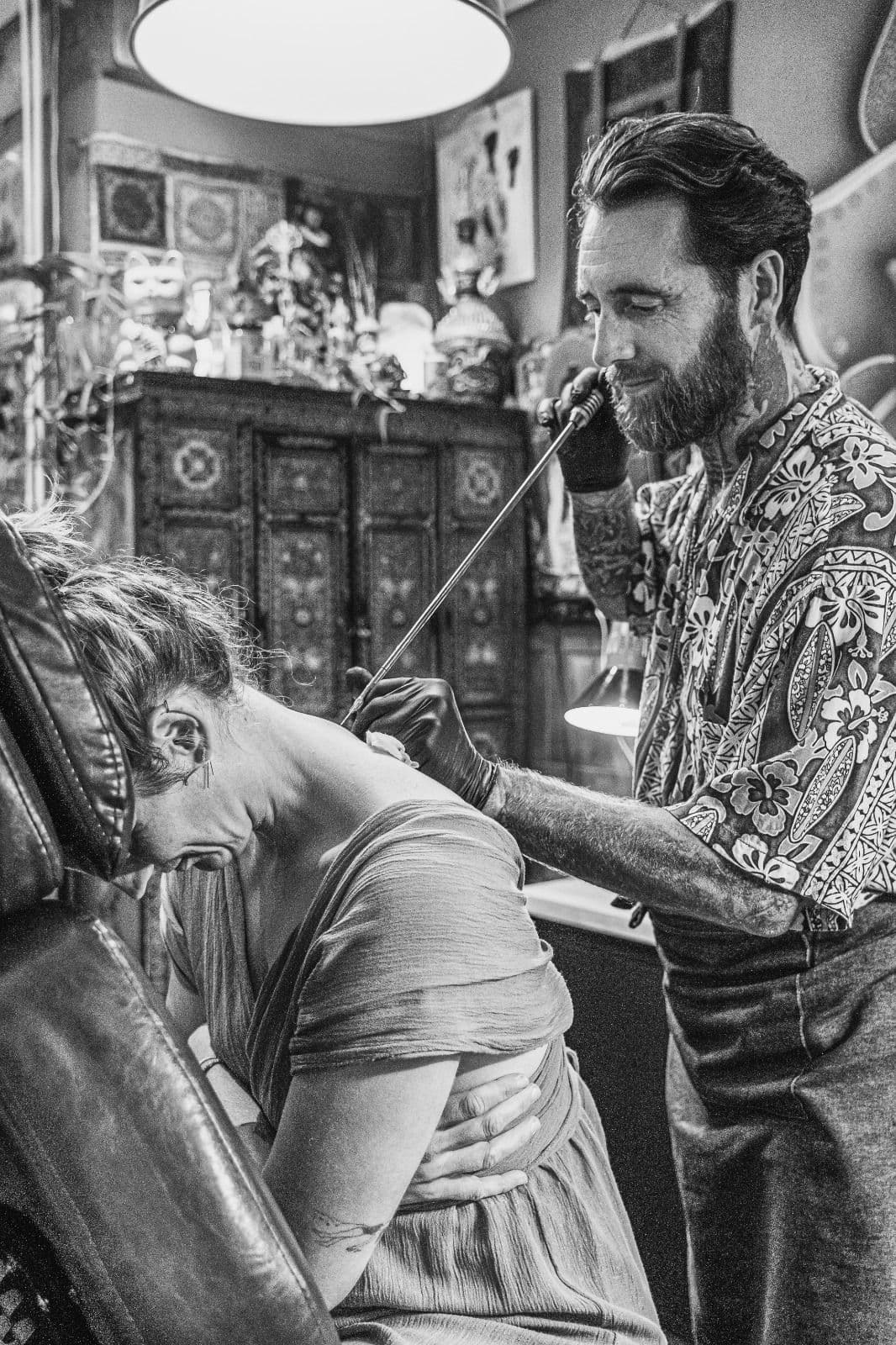
The way it is tattooed is part of the ritual as well. A Sak Yant is traditionally done by hand: handpoked, with a long needle or as a bamboo tattoo. You can read about the difference with a machine in Sak Yant versus machine tattoo.
What the blessing means to you is ultimately up to you. In the tradition it stands for protection and strength, but it is not a guarantee or a promise of any particular outcome.
The blessing during a session at the studio
At the studio in Breda the blessing is part of the session: at the end of the session there is a blessing, and you receive the life rules that belong to a Sak Yant. You'll hear beforehand how this works, so you know what to expect and can ask your questions.
Silas van Gemert has more than 25 years of experience and, from 2010, spent years learning from monks in Thailand. You can read more about his background on the page about Silas van Gemert. The whole process, from your first message to aftercare, is described in the article on what to expect at a Sak Yant session.
Frequently asked questions about the Sak Yant blessing (FAQ)
What happens during a Sak Yant blessing?
In the tradition the master recites kata, sacred verses usually in Pali, and blows over the fresh yant to activate it. The blessing comes with life rules that the wearer takes with them. The exact form differs by master and by lineage.
Do I need to understand the prayers or recite along?
No. The kata are spoken for you, and you don't need to know the language. What the tradition asks is attention and respect for the moment.
Is a Sak Yant without a blessing still a Sak Yant?
Not in the tradition. Without kata, without the blowing and without life rules, it is an image in the style of a Sak Yant. It can be beautiful, but it lacks what makes a yant a yant in the tradition.
Do I have to be a Buddhist to receive a blessed Sak Yant?
No. Anyone who respects the tradition can receive a Sak Yant with a blessing. You can see the life rules as an ethical compass rather than a declaration of faith.
Can a blessing be renewed?
In Thailand, wearers return to their teacher during the Wai Khru, the ceremony in which the teacher is honoured and the yant is renewed. At Wat Bang Phra this is a large annual festival.
A blessed Sak Yant is more than ink: it is a ritual and a promise. If you'd like to find out which yant suits you, see the book an appointment page for how to plan a visit.
Recent blogs
Dive deeper into Sak Yant, traditions and tattoo care.
Tattoos that mean love: six symbols of love and connection
Which tattoo stands for love? Six symbols explained, from the Na Metta and the Hong birds to the lotus, plus strength and love in one design and tattoos for couples.
7 min read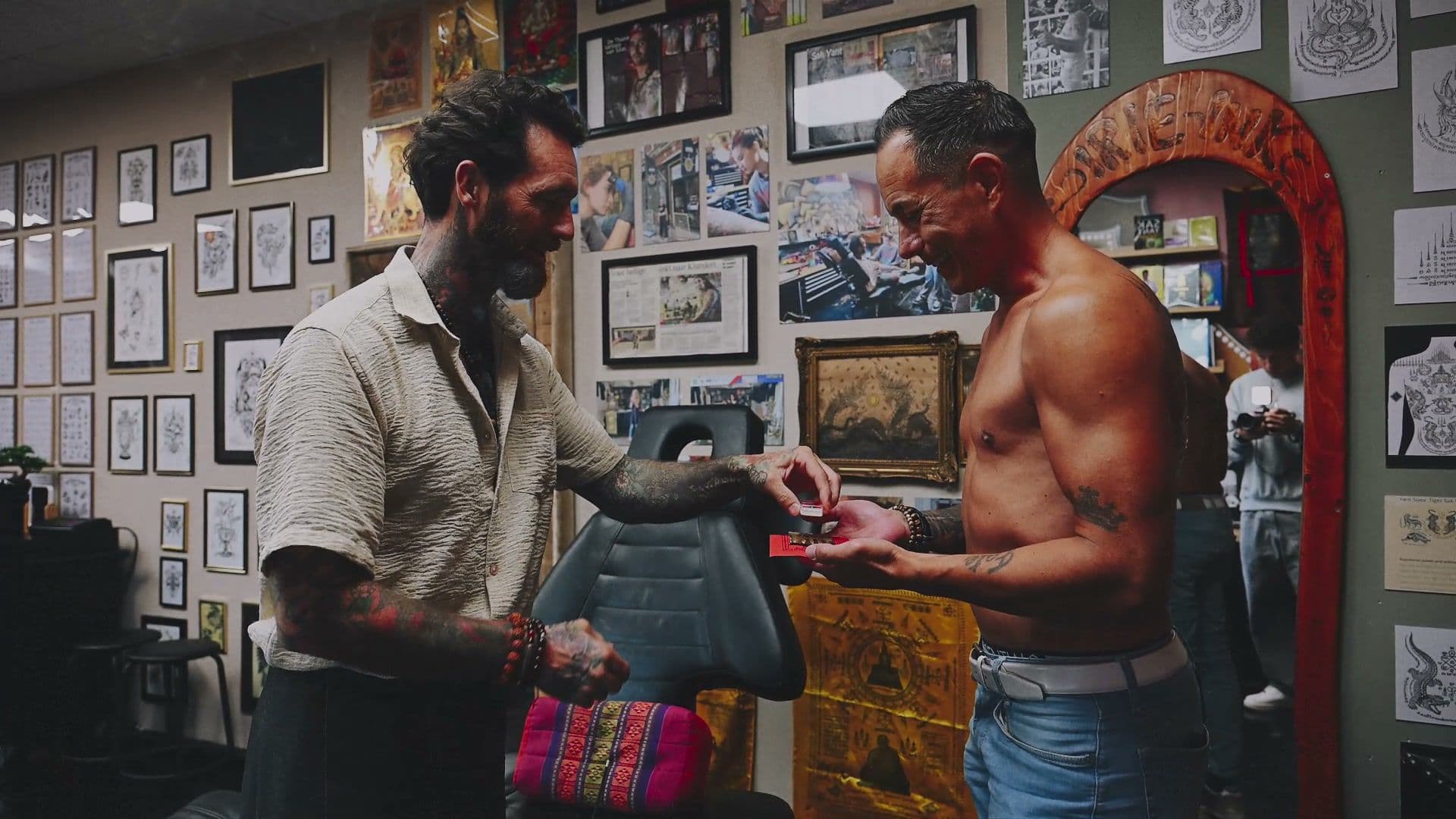
Can a Westerner get a Sak Yant? On respect and cultural appropriation
Is a Sak Yant cultural appropriation? How people in Thailand see it, where the line lies between respect and a lack of it, and what you can do in practice.
7 min read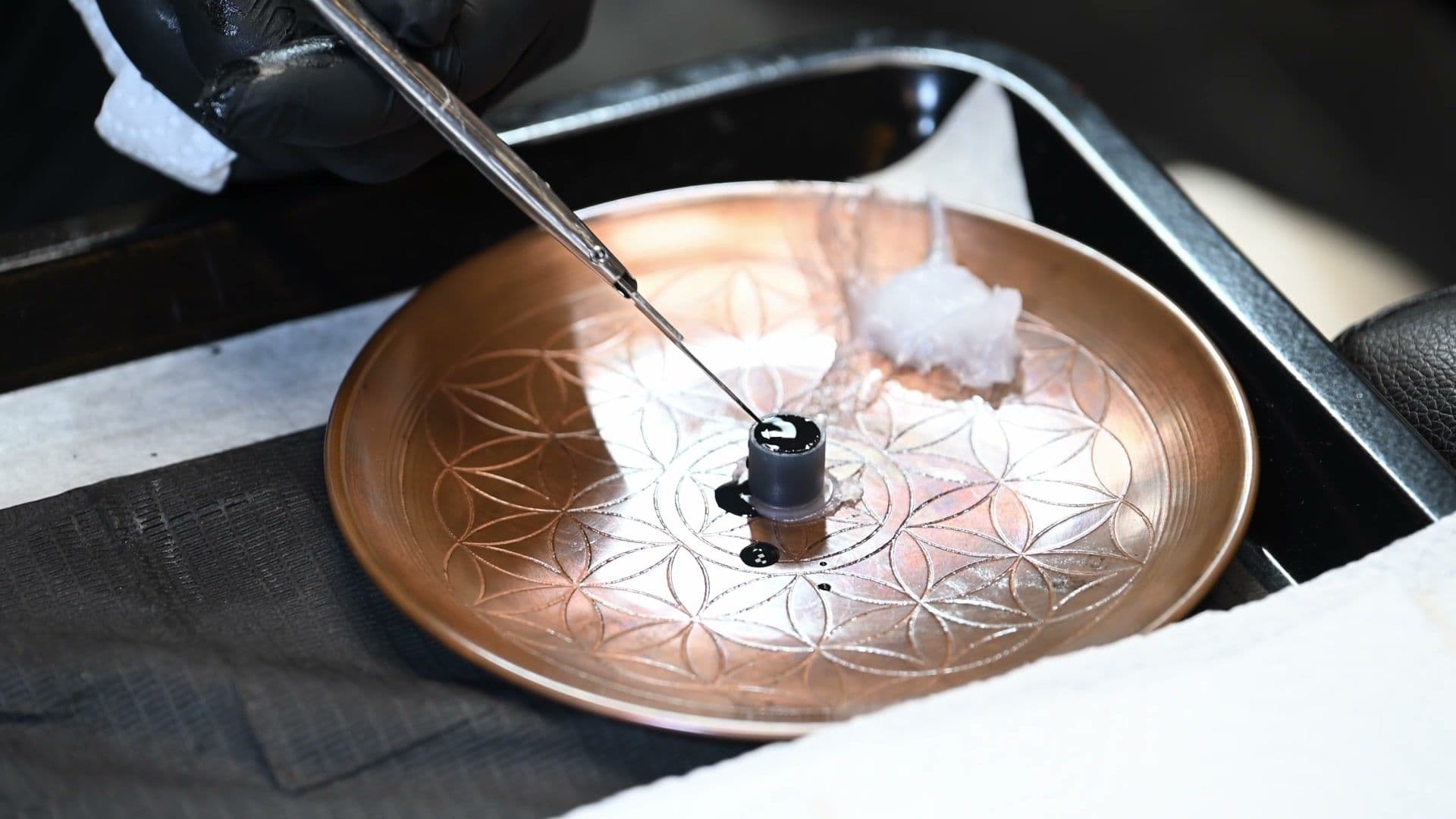
Holistic tattoo: a tattoo as a ritual, not a product
Holistic tattooing means the reason, the conversation, the ritual and the aftercare weigh as much as the design. The four phases, what really differs, and what merely sounds good.
10 min read