
Spiral tattoo meaning: growth, movement and the path of life
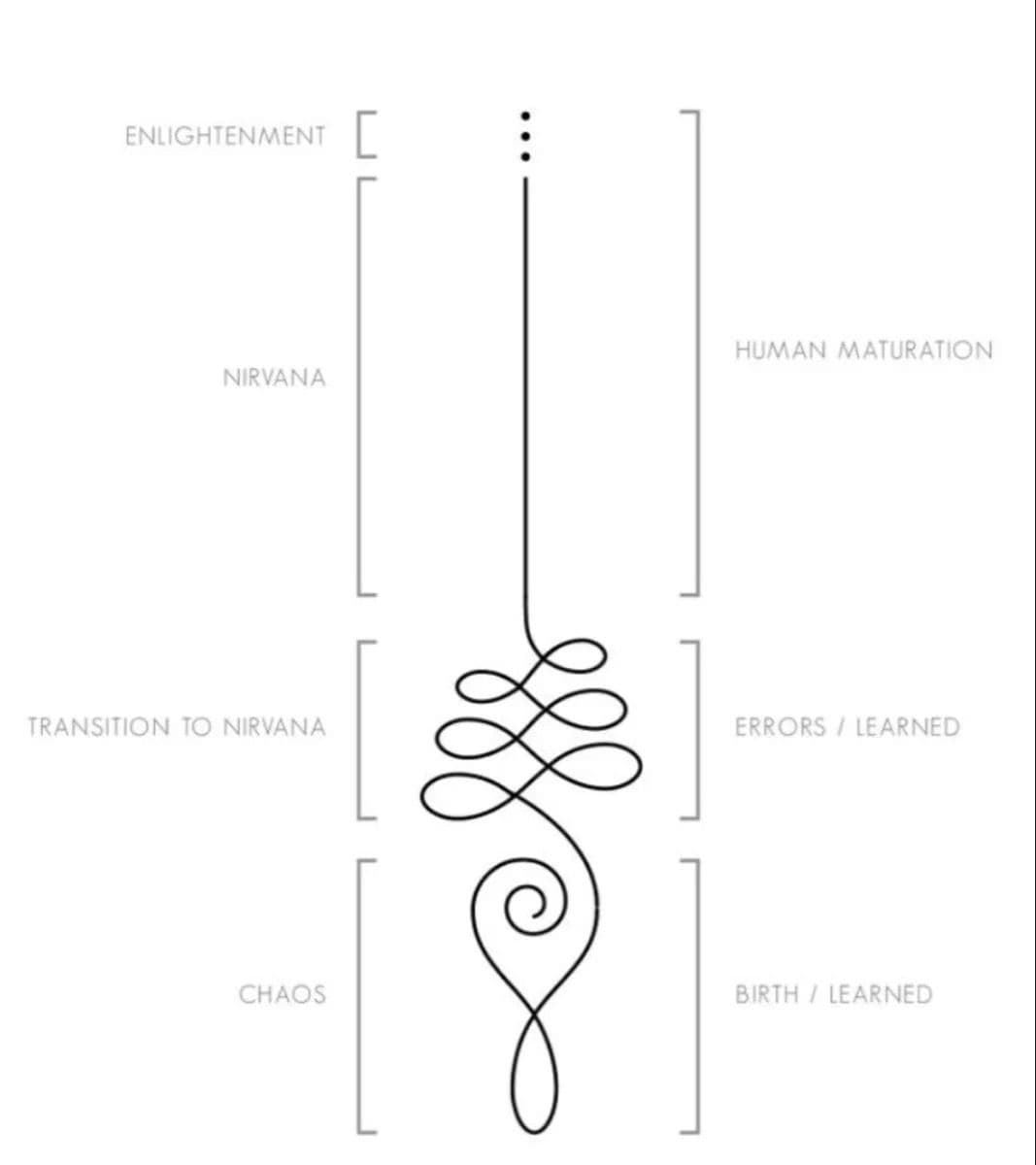
What does a spiral tattoo mean? About growth and cycles, the spiral among the Celts and the Maori, and the role of the spiral in the Unalome and the Singha.
The spiral is probably the oldest symbol humans have ever drawn. You find it on prehistoric stones, in Celtic art, in Maori wood carving and in the sacred tattoos of Thailand. So a spiral tattoo carries a meaning far older than any fashion. In the Sak Yant tradition, the spiral is the beginning of the Unalome, and in some designs it stands for built-up, concentrated power.
In this article you will read what a spiral tattoo means, how different cultures use the spiral, and what role it plays in Sak Yant.
What does a spiral tattoo mean?
A spiral is a line that turns around itself and keeps moving further as it does. That makes it a symbol of growth and movement: not in a straight line, but in rounds. You keep coming back to a similar point, but never to exactly the same place. That is why the spiral is read as an image of life itself, with its cycles, its repetitions and its slow development.
On the entrance stone of Newgrange in Ireland, a burial mound older than the pyramids of Giza, there are spirals more than five thousand years old. Nobody knows for sure what their makers meant by them. But the fact that people have been drawing spirals for so long says something about how deep the symbol runs.
Inward or outward?
A spiral can be read in two ways. Read from the outside in, it is about turning inward: back to the core, to calm and to yourself. Read from the inside out, it is about growth: expanding, developing, going out into the world. There is no fixed rule about which direction is right. What matters most is that you know how you read it, because that is what you wear.
The spiral in different traditions
Celtic: the triskele
The triskele consists of three spirals springing from a single point. In Celtic art it stands for movement and for trinities, such as past, present and future, or body, mind and soul. It is one of the best-known Celtic tattoo motifs.
Maori: the koru
The koru is the unfurling fern frond spiral from the Maori art of New Zealand. It stands for new life, growth and harmony. If you wear a koru, you wear a motif from a living culture; the full Maori tattoo, ta moko, is sacred and personal and belongs to Maori themselves.
Buddhist: the spiral in the Unalome
In Buddhist symbolism, the spiral is the beginning of the Unalome: the point where the path to enlightenment begins. More on that below.
The spiral in the Unalome
The Unalome reads from bottom to top. At the bottom it starts with a spiral. That stands for the chaos of the beginning: searching, confusion, making the same mistakes again. Above it, the line winds through curves, the phase of falling down and getting back up. Towards the top the curves become calmer, until the line runs straight upward: the path to clarity, ending in a point or dots.
Silas van Gemert's book states that some versions of the Unalome contain extra spirals, representing the complex twists and turns of life. The message is the same: every step, however erratic, is part of a greater path. That is why the spiral in the Unalome is not a mistake you leave behind, but the beginning you needed.
Anyone who wants the phases of that path shown as clearly as possible often chooses the Unalome life path, in which the spiral, the curves, the straight line and the dots each have their own place. The classic Unalome sums up the same thing in one flowing line.
Concentrated power: the spiral in the Singha
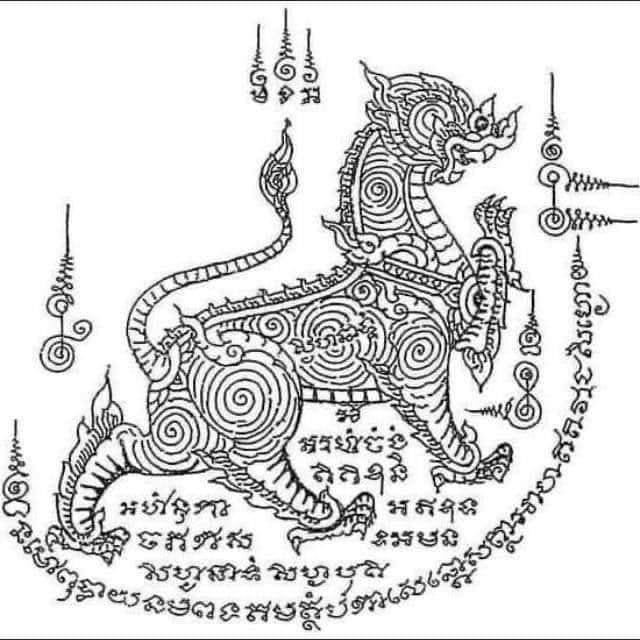
The spiral also appears in Sak Yant in a very different way. In the Singha with spiral energy, the spirals, called koht, are drawn across the body of the mythical lion. Here they do not stand for searching, but for energy that builds up and concentrates instead of scattering aimlessly. The power of the lion is thus controlled and focused. It is a good example of how the same symbol can tell a different story in a different design. The lion also has a design of its own: the Singha lion.
A standalone spiral or a spiral in a yant?
A standalone spiral is a beautiful, minimalist tattoo you can have done in any style. In the Sak Yant tradition, the spiral rarely stands alone. It is part of a larger design and gets its meaning from what surrounds it: the path of the Unalome, or the lion of the Singha. That is why people who want to wear the spiral as a spiritual symbol often choose one of those designs. Read more about the difference between a tattoo with a spiritual motif and a yant in spiritual tattoo: meaning and symbols.
Where to place a spiral tattoo
An Unalome with a spiral has a slim, vertical shape. That makes it work well on the forearm, the neck, behind the ear and along the spine. What matters is that it points upward, from the spiral to the straight line, so the path runs in the right direction. The Singha with spirals is wider and looks better on the upper arm, the shoulder or the back. More about placement.
Frequently asked questions about the spiral tattoo (FAQ)
What does a spiral tattoo mean?
A spiral tattoo stands for growth, movement and the cycles of life. In the Buddhist Unalome, the spiral stands for the beginning of the spiritual path, the phase of searching. In other designs, such as the Singha, it stands for concentrated energy.
Which way should a spiral turn?
There is no fixed rule for that. Inward is often read as turning inward, outward as growth. With the Unalome, what matters most is that the whole symbol points upward, from the spiral to the straight line.
What is the difference between a spiral and an Unalome?
A spiral is a standalone symbol. The Unalome is a complete path: it starts with a spiral, goes through curves and ends in a straight line with a point or dots. So the spiral is one part of the Unalome.
Is a spiral tattoo spiritual?
It can be. The spiral is one of the oldest spiritual symbols in the world. Whether your tattoo is spiritual depends mostly on what you put into it and whether it is part of a tradition, as with the Unalome in a Sak Yant.
Can I have a spiral added to an existing tattoo?
A standalone spiral often fits well with existing work. A yant is preferably placed in a spot of its own, so the design and the script get room to breathe. In the conversation beforehand, you look together at what is possible.
Recent blogs
Dive deeper into Sak Yant, traditions and tattoo care.
Tattoos that mean love: six symbols of love and connection
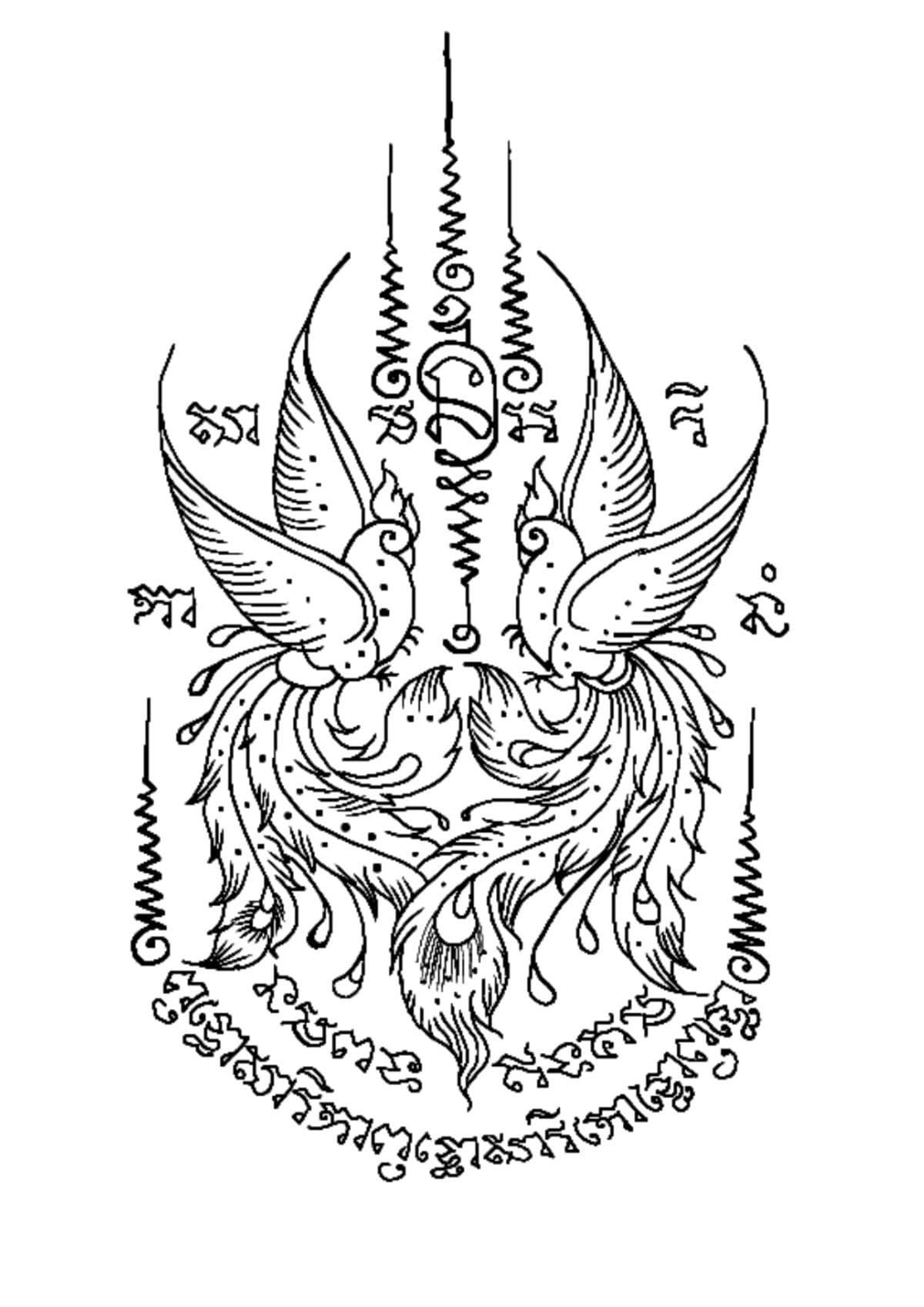
Which tattoo stands for love? Six symbols explained, from the Na Metta and the Hong birds to the lotus, plus strength and love in one design and tattoos for couples.
7 min read
Can a Westerner get a Sak Yant? On respect and cultural appropriation
Is a Sak Yant cultural appropriation? How people in Thailand see it, where the line lies between respect and a lack of it, and what you can do in practice.
7 min read
Holistic tattoo: a tattoo as a ritual, not a product
Holistic tattooing means the reason, the conversation, the ritual and the aftercare weigh as much as the design. The four phases, what really differs, and what merely sounds good.
10 min read