
Yot Mongkut: the meaning of the spired crown (the yant on the head)
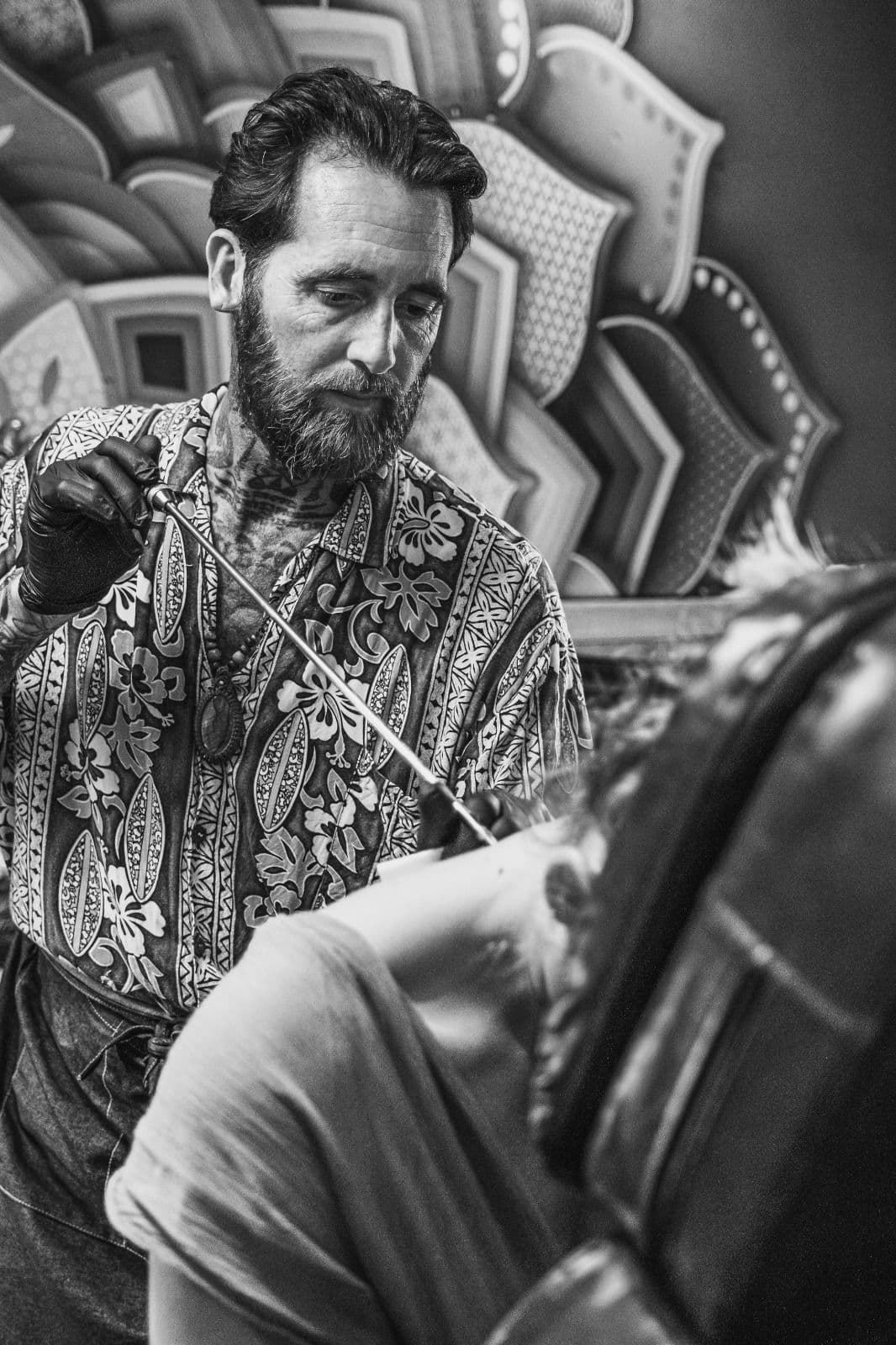
The Yot Mongkut is one of the most elevated Sak Yant designs: the spired crown, traditionally placed on the crown of the head. Learn what the yant means, why it belongs on the highest point of the body, and who it is meant for.
Among the many Sak Yant designs, the Yot Mongkut holds a special place. The name literally means "spired crown" or "top of the crown", and that is exactly what the yant depicts: a rising, pointed shape that ends in a crown. It is one of the most elevated yant, traditionally placed on the highest point of the body, the crown of the head.
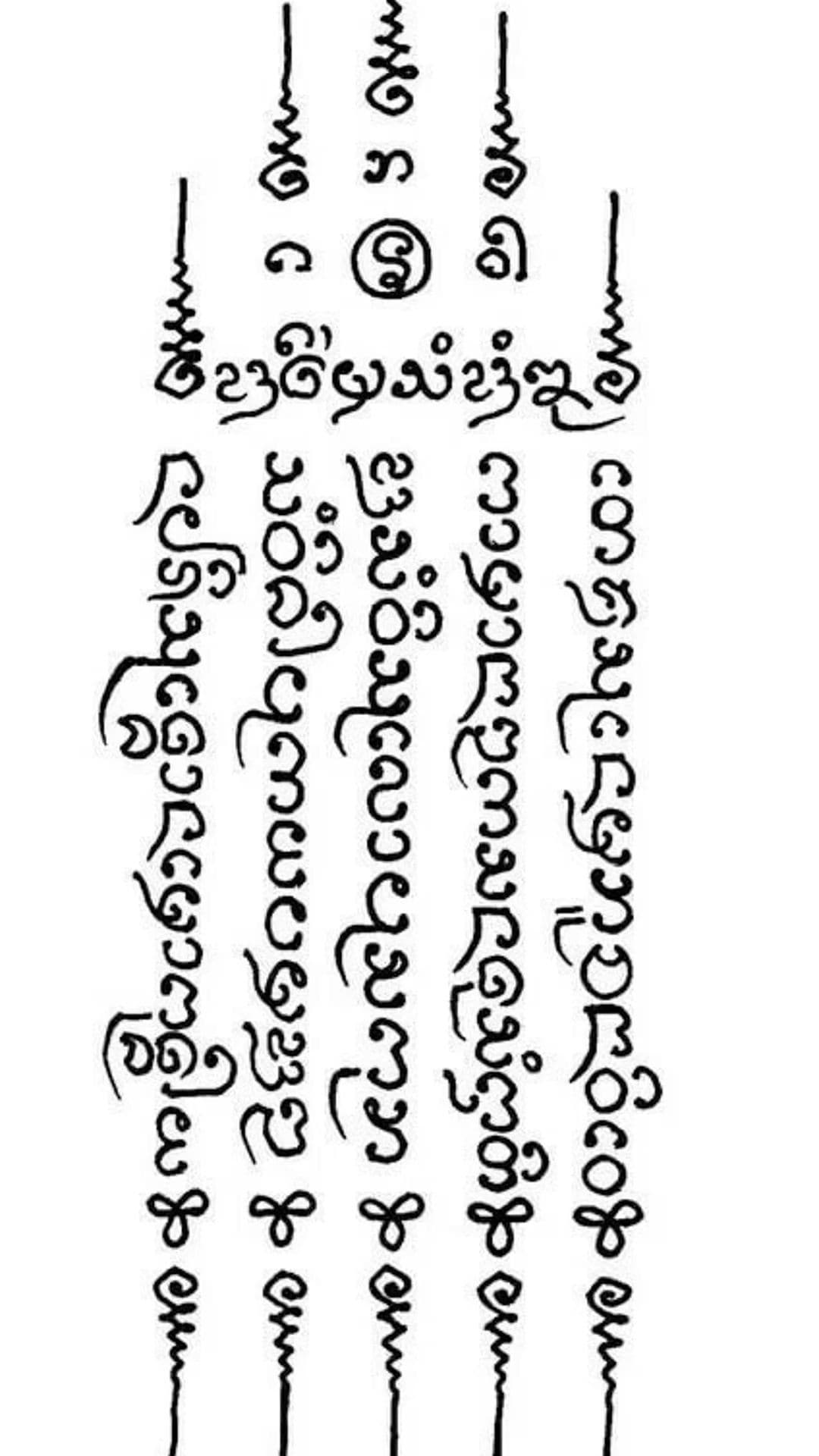
In this article you will learn what the Yot Mongkut means, why the placement on the head matters so much, and who this yant is meant for. Want the basics first? Then read what a Sak Yant really is.
What does Yot Mongkut mean?
Mongkut is the Thai word for the crown, the pointed, tower-shaped crown you know from Thai kings and from dancing temple figures. Yot means top or spire. Together, Yot Mongkut refers to the very highest point, the crown that tops a figure. As a yant it stands for the highest you can reach: protection, luck and spiritual elevation descending on you from above.
The shape is no accident. The rising spire leads the eye and the energy upward, toward the sacred. In the tradition the Yot Mongkut is associated with good fortune and with protection in times of battle, as if you wear an invisible crown that lifts you above danger and misfortune.
Yot Mongkut is not an ordinary yant but a crown: the highest point, placed on the highest part of your body.
Why on the crown of the head?
In Thai and Buddhist culture the head is the most sacred part of the body. It is closest to the heavens, and you do not casually touch someone's head. Placing a yant on the crown is therefore a big step: it is the spot for the most elevated designs. You can read more about what the placement of your yant means in a separate article.
That puts the Yot Mongkut in the same company as the Gao Yord, the nine peaks, which is also placed high on the body or on the head. Both mark the top: the yant that crowns the whole.
Who is the Yot Mongkut meant for?
Because it is an elevated yant that belongs on the head, the Yot Mongkut is traditionally not chosen as a first tattoo. Many bearers begin with a yant on the back or shoulder and grow toward the crown. It is a choice you make together with the master, tuned to where you stand in your life and on your path.
That is what makes the master so important. Only a blessed master can judge whether this yant suits you and this moment, and speak the right mantra and blessing. We explain separately why that difference is so important.
The sacred text in the crown
Like every Sak Yant, the Yot Mongkut carries sacred text written in the ancient Khom script. Those syllables are abbreviations of Pali mantras that carry the power of the yant. It is not decoration, but a prayer in image form. The language written in your yant helps determine how authentic your tattoo really is.
Want to see how different yant look and what they mean? Let the different Sak Yant designs inspire you, then discuss with the master which one suits you.
Frequently asked questions about the Yot Mongkut
Frequently asked questions about the Yot Mongkut
What does Yot Mongkut mean?
Yot Mongkut means "spired crown" or "top of the crown". The yant depicts a rising, pointed crown shape and stands for the highest: protection, good fortune and spiritual elevation, and traditionally protection in times of battle as well.
Where is the Yot Mongkut placed?
Traditionally on the crown of the head, the highest and most sacred part of the body. That makes it one of the most elevated designs, in the same company as the Gao Yord.
Is the Yot Mongkut suitable as a first Sak Yant?
Usually not. Many bearers begin with a yant on the back or shoulder and grow toward the crown. Whether it suits you is decided together with a blessed master, tuned to where you stand in your life.
What is the difference with the Gao Yord?
The Gao Yord is the classic master yant with nine peaks. The Yot Mongkut is the spired crown that tops the whole like a crown. Both belong high on the body or on the head and are among the most elevated yant.
Does a tattoo on the head hurt more?
The scalp is sensitive, but many people find the traditional hand technique calmer than a machine. A good master takes their time and explains beforehand what to expect.
Can I choose the Yot Mongkut myself?
You can voice your wish, but with an elevated yant like this everything starts with a conversation. The master judges whether it suits you and this moment, and chooses together with you.
Ready to get your yant?
Whether you dream of an elevated Yot Mongkut or are still searching for the yant that suits you: it always starts with a conversation. Book a free introductory talk and discover together with our Thailand-blessed master what suits you.
Recent blogs
Dive deeper into Sak Yant, traditions and tattoo care.
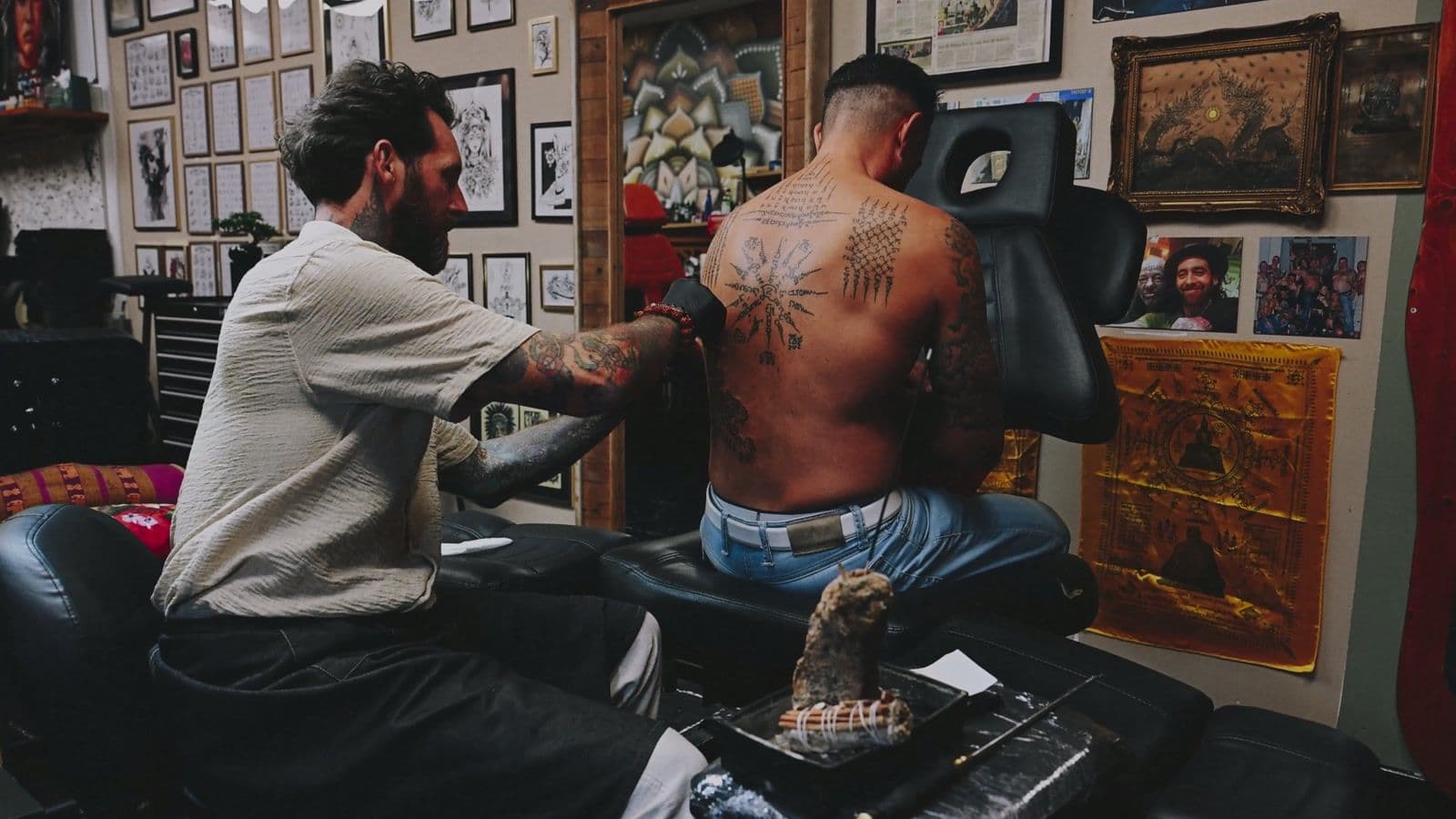
Sak Yant video: how a Sak Yant is tattooed in the Netherlands
A Sak Yant from start to finish, filmed at the studio. Watch the video and read what you see: the design, the rod, the calm in the studio and the closing moment.
4 min read
The 10 most popular Sak Yant designs and what they mean
From the Hah Taew to Ganesha: the ten Sak Yant designs chosen most often, with their meaning and where they work best on the body.
6 min read
Getting a Sak Yant from Amsterdam, Rotterdam, Utrecht or Eindhoven
You will not find an authentic Sak Yant in every city. How long it takes to reach the studio in Breda from Amsterdam, Rotterdam, The Hague, Utrecht and Eindhoven, and what to look for.
5 min read