
Erawan tattoo meaning: the three-headed elephant in the Sak Yant tradition
An Erawan tattoo shows the three-headed white elephant of the god Indra. Read what it means in the Sak Yant tradition, how it differs from Ganesha and where to place it.
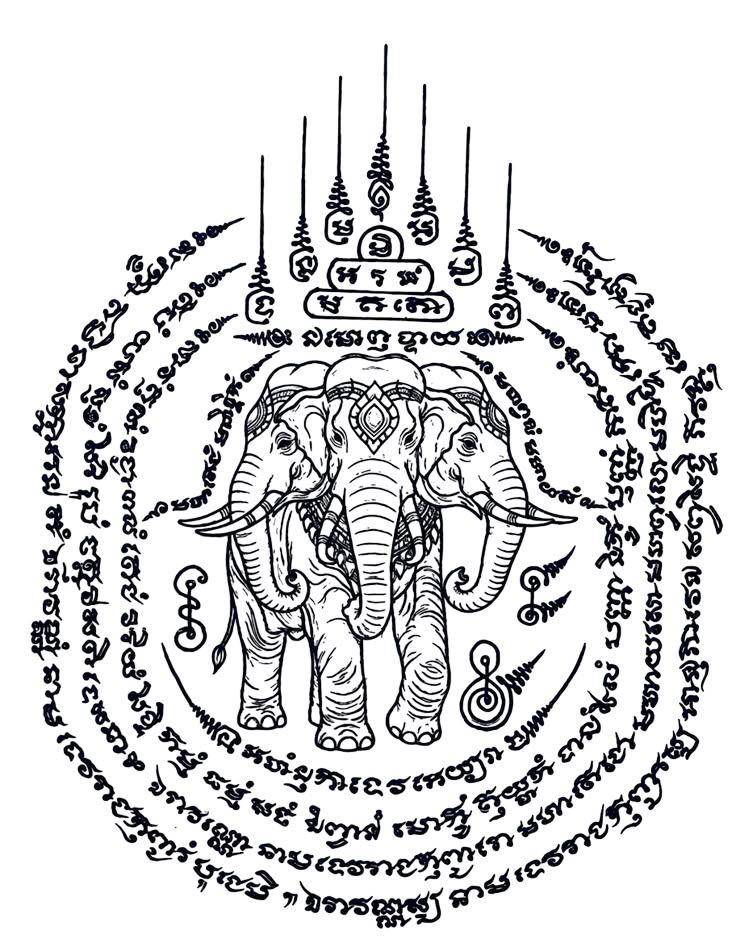
An Erawan tattoo shows the three-headed white elephant that, in Thai tradition, is the mount of the god Indra. In the Sak Yant tradition, the Erawan tattoo meaning comes down to strength, prestige and prosperity: the calm authority of someone who carries a lot and stays firmly on their feet. It is not a god with an elephant's head, like Ganesha, but the sacred animal itself.
Below you will read where Erawan comes from, what the design means, how it differs from Ganesha and Phra Pikanet and where to place it.
Who is Erawan?
Erawan is the Thai name for Airavata, the white elephant ridden by the god Indra. In the Hindu stories, Airavata appeared when gods and demons churned the ocean of milk together. Indra, known in Thailand as Phra In, is the king of the gods in those stories and rules over the sky, the weather and the rain. His elephant carries him, and in doing so carries his authority as well.
In Thai art Erawan usually has three heads. That is why he is also called Chang Sam Sian in Thai, the three-headed elephant. Some old texts give him many more heads, but artists almost always show him with three. That is also how he appears in the Erawan design: drawn from the front, with three heads side by side, each with its own tusks.
Erawan belongs to the Thai Brahmanic layer of the tradition. Like the Garuda, the mount of Vishnu, he is a divine bearer: not a god himself, but a being who carries a god.
The elephant in Thai culture
In Thailand the elephant is much more than an animal. It is seen as a national symbol, and for centuries it worked side by side with people, in the forests and in war. In Thai imagery it therefore stands for strength, patience and reliability.
Within that, a white elephant is something special. White elephants were long regarded as a sign of royal authority and of good fortune for the country, and the old flag of Siam carried a white elephant. The emblem of Bangkok shows Indra riding his three-headed elephant.
What an Erawan tattoo means
In the tradition, the Erawan yant stands for three things that flow into each other.
Strength. An elephant is strong without having to prove it. That calm strength is the core of this yant: staying steady when things get heavy.
Prestige and authority. Erawan carries the king of the gods. In the tradition his yant therefore stands for respect, presence and the trust of others, whether in your work, in your family or in a role where you lead.
Success and prosperity. The white elephant has long been a sign of wealth and good fortune. In the tradition, wearing Erawan means choosing growth and prosperity in what you build.
A Sak Yant is not a guarantee, though. It is a reminder and a promise. At the end of the session there is a blessing, and every Sak Yant comes with life rules that you take with you. In the tradition, the power of the yant is tied to how you live.
How the design is built
The Erawan design is round and symmetrical, and every part has its place. In the centre the elephant faces you directly, with an ornate headdress, a jewel on the middle head and a decorated harness around the neck.
Around him run rings of Khom script, the old script in which the mantras of a Sak Yant are written. They enclose the elephant like a fence. At the top, seven spires rise around a stepped block of letters. That structure recalls the Gao Yord, the nine peaks, one of the best-known yants.
How Erawan relates to other figures, such as the tiger and Hanuman, is explained in the most powerful Sak Yant symbols and their meaning.
Erawan, Ganesha and Phra Pikanet: the difference
The main difference is simple: Erawan is a sacred elephant, Ganesha is a god with an elephant's head. The two are often confused, because in both cases you see an elephant.
Ganesha comes from Hinduism and, in the best-known stories, is the son of Shiva and Parvati. He has a human body and an elephant's head, and stands for new beginnings, wisdom and the removal of obstacles. In Thailand he is called Phra Pikanet. In the catalogue you will find him as Phra Pikanet, the elephant god and as the Double Ganesha. You can read his full story in the blog on Ganesha tattoo meaning.
Erawan has no human body and is not a god, but the mount of a god. In the tradition, Ganesha helps you across the threshold of a new beginning. Erawan stands for the strength and standing to carry what you have already built.
Torn between the two? If you are at the start of something new, Ganesha often fits better. If you want to stand firm in what you already carry, Erawan is the more natural choice.
Where to place an Erawan tattoo
An Erawan tattoo belongs on the upper back or the chest. The round, symmetrical shape needs a flat area where its centre can sit straight.
Respect matters too. Erawan is a sacred being who carries a god, and in the Sak Yant tradition sacred figures are worn above the waist. You can read how the place on your body relates to the meaning of your yant in the blog on Sak Yant placement.
You discuss the size with Silas beforehand. A detailed design like this needs room, so the heads, the harness and the script stay readable. How long the session takes depends on the design, the size and the placement, and it can take longer than you expect. So plan plenty of time. You will get an estimate beforehand, along with a clear price indication.
Handpoked and traditional
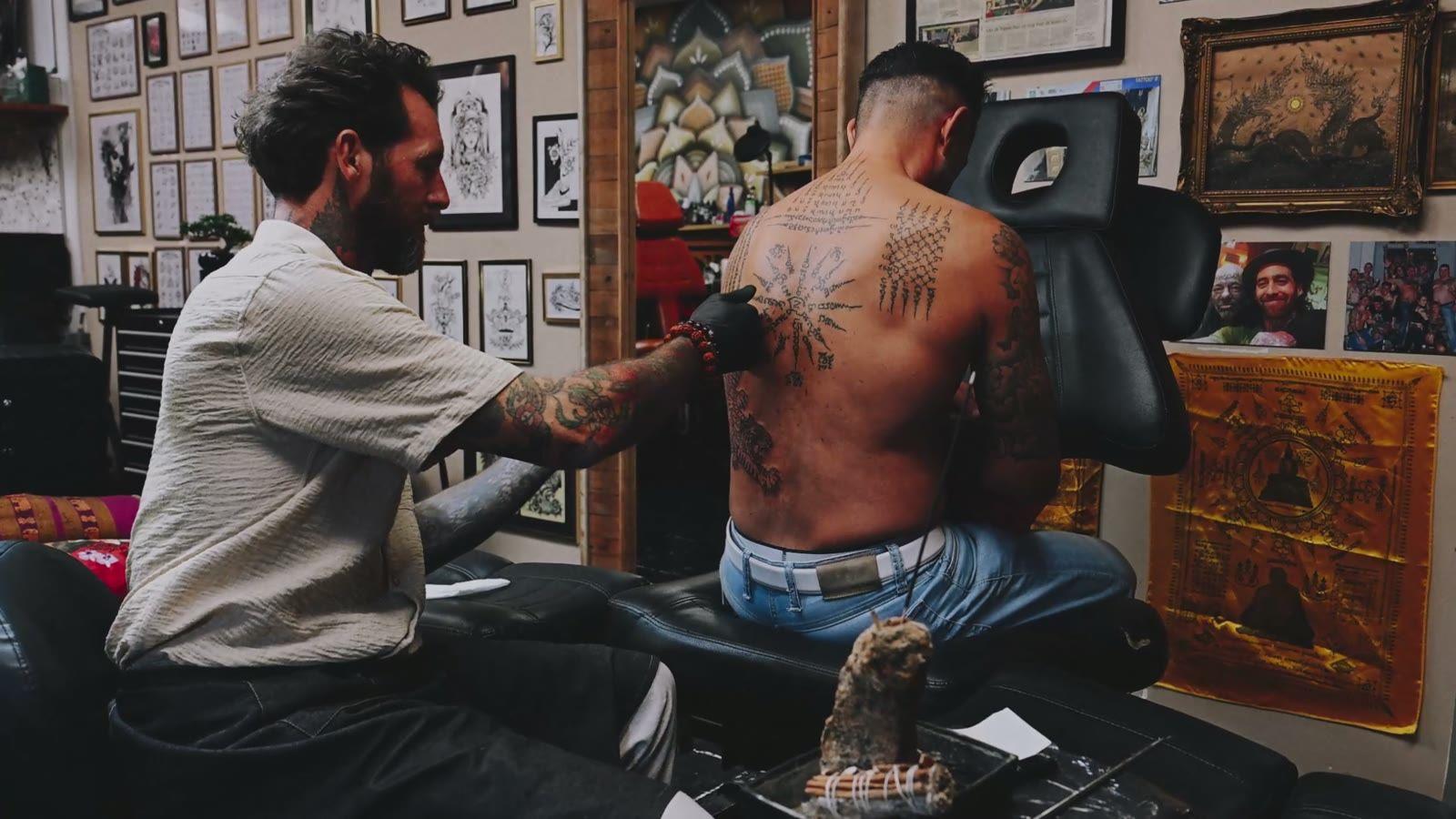
At Sak Yant Tattoo, an Erawan yant is handpoked in the traditional way, point by point. Silas van Gemert has more than 25 years of experience and, from 2010, spent years learning from monks in Thailand. You can read more about his background on the page about Silas van Gemert.
Why the hand technique and the bamboo tattoo belong to this tradition is explained in why handpoke is so special in Sak Yant.
Frequently asked questions about the Erawan tattoo (FAQ)
What does an Erawan tattoo mean?
In the Sak Yant tradition, an Erawan tattoo stands for strength, prestige and prosperity. The three-headed white elephant is the mount of the god Indra and so carries his authority. It is a yant for anyone who wants to stand firm in what they are building.
Is Erawan the same as Airavata?
Yes. Erawan is the Thai name for Airavata, Indra's white elephant from the Hindu stories. In Thailand he is usually shown with three heads and is also called Chang Sam Sian, the three-headed elephant.
What is the difference between Erawan and Ganesha?
Ganesha, called Phra Pikanet in Thailand, is a god with a human body and an elephant's head. Erawan is a sacred elephant and the mount of Indra. Ganesha stands for new beginnings and wisdom, Erawan for strength, prestige and prosperity.
Why does Erawan have three heads?
In Thai art Erawan is almost always drawn with three heads, which sets him apart from an ordinary elephant. Some old texts even give him many more.
Where is the best place for an Erawan tattoo?
On the upper back or the chest. The round, symmetrical design needs a flat area where its centre can sit straight. As a sacred being, Erawan is also worn above the waist in the tradition.
Does the calm strength of Erawan speak to you? Book an appointment for an introduction and talk through whether this yant fits your story. There is no deposit, and you will get a clear price indication beforehand.
Recent blogs
Dive deeper into Sak Yant, traditions and tattoo care.
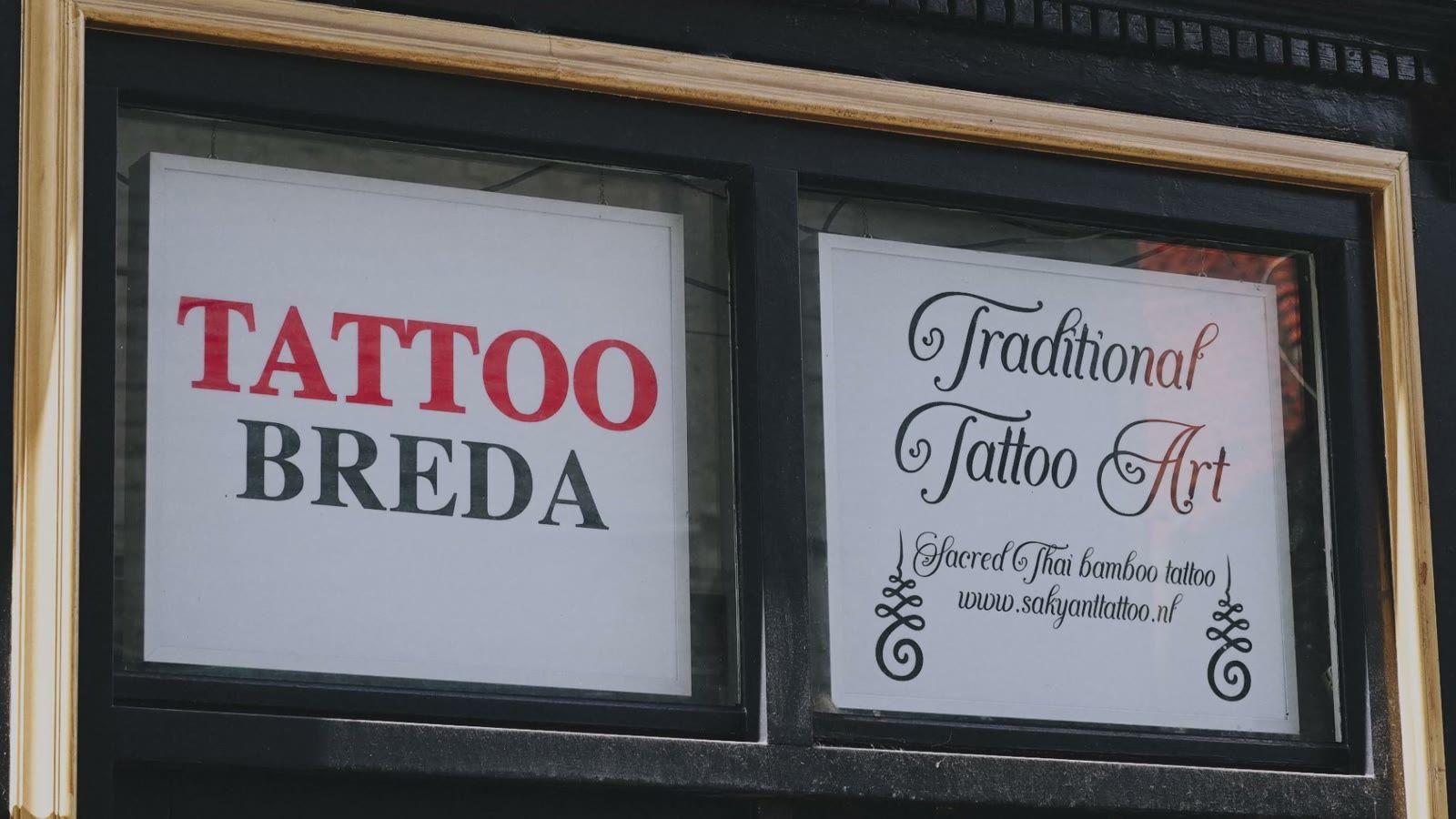
Sak Yant Germany: travelling from Cologne, Düsseldorf or Aachen to Breda
From Cologne the studio in Breda is about 2 hours away, with Düsseldorf and Aachen in the same direction. Here is how to plan the journey and the day.
6 min read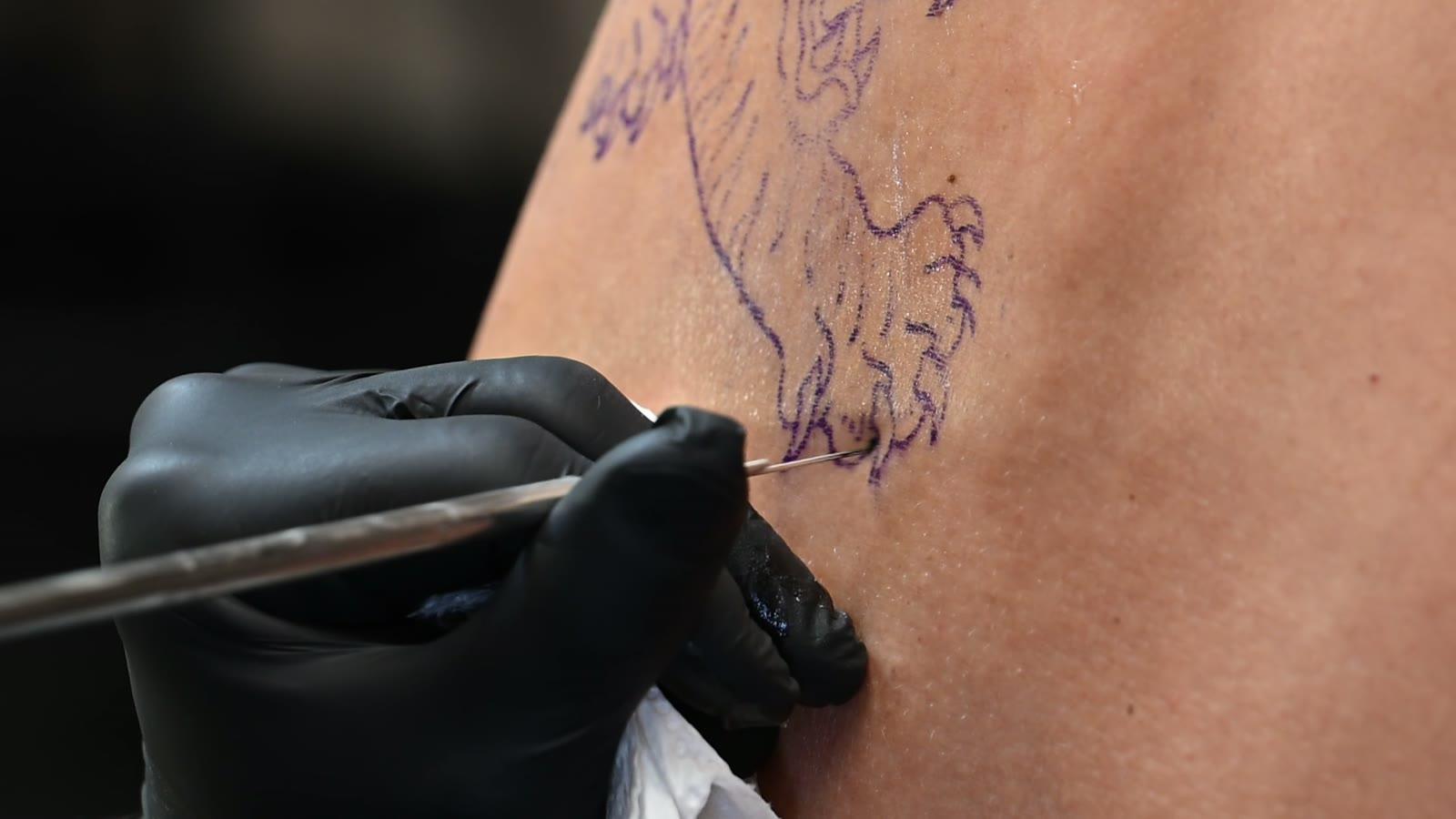
Crocodile tattoo meaning: the Jorakhe Sak Yant explained
What does a crocodile tattoo mean? In the Sak Yant tradition it is called Jorakhe and stands for primal strength, patience and endurance. On the Jorakhe Bak, the twin crocodile and placement.
6 min read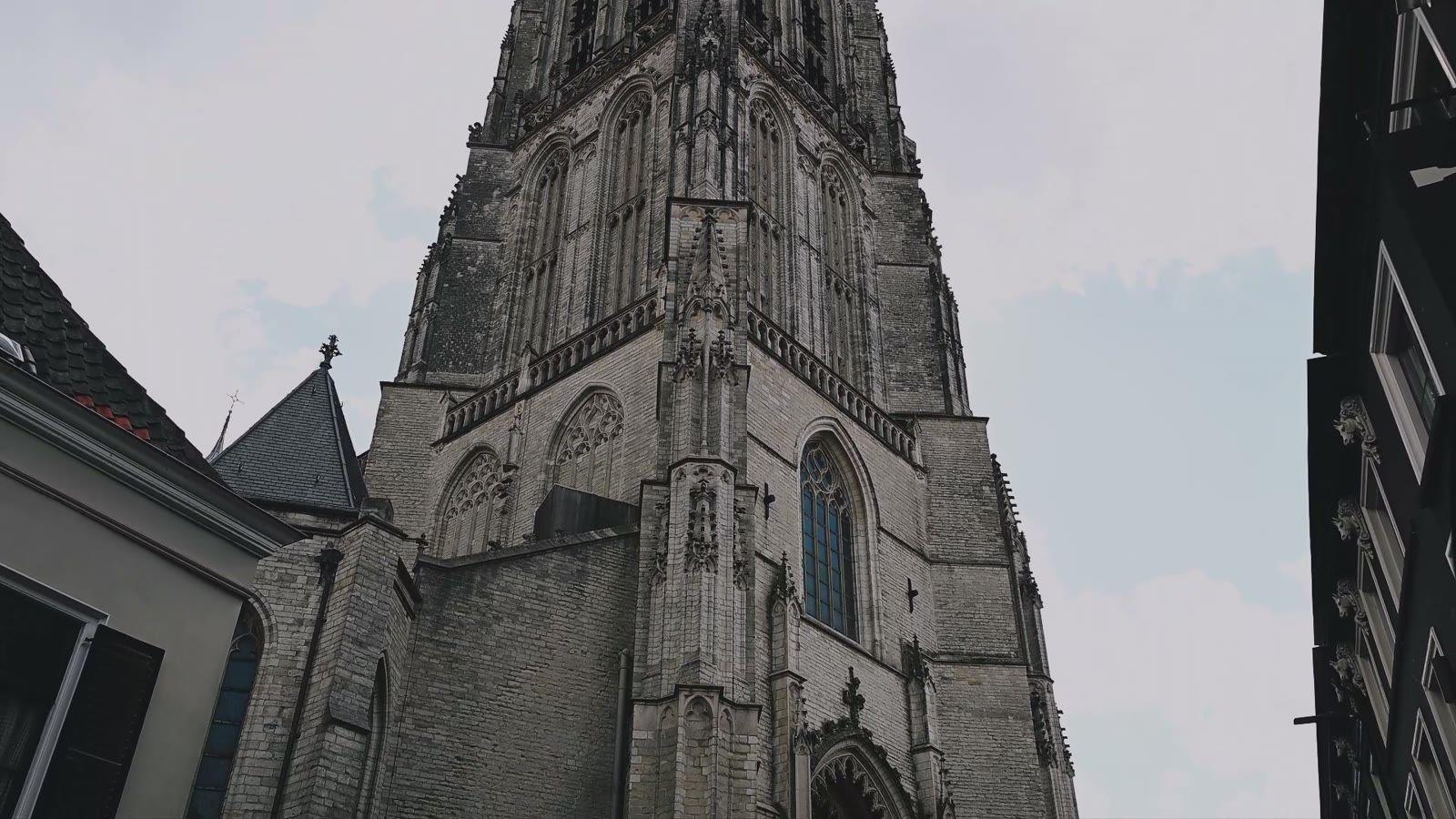
Sak Yant Belgium: getting one from Antwerp, Ghent or Brussels
You don't need to fly to Thailand for a real Sak Yant from Belgium. Here is how to reach the studio in Breda from Antwerp, Ghent or Brussels, and how your appointment works.
6 min read