
Crocodile tattoo meaning: the Jorakhe Sak Yant explained
What does a crocodile tattoo mean? In the Sak Yant tradition it is called Jorakhe and stands for primal strength, patience and endurance. On the Jorakhe Bak, the twin crocodile and placement.
In the Sak Yant tradition, the crocodile tattoo meaning centres on tough strength and endurance. In Thailand the crocodile is called Jorakhe, and a Jorakhe yant stands for primal energy, survival strength and the patience to act at the right moment. It is not an animal of presence or authority, but of stamina: carrying on where others stop.
In this article you will read what the crocodile means in the tradition, how the two crocodile designs differ, where to place them and how the Jorakhe relates to kindred power animals such as the tiger and the dragon.
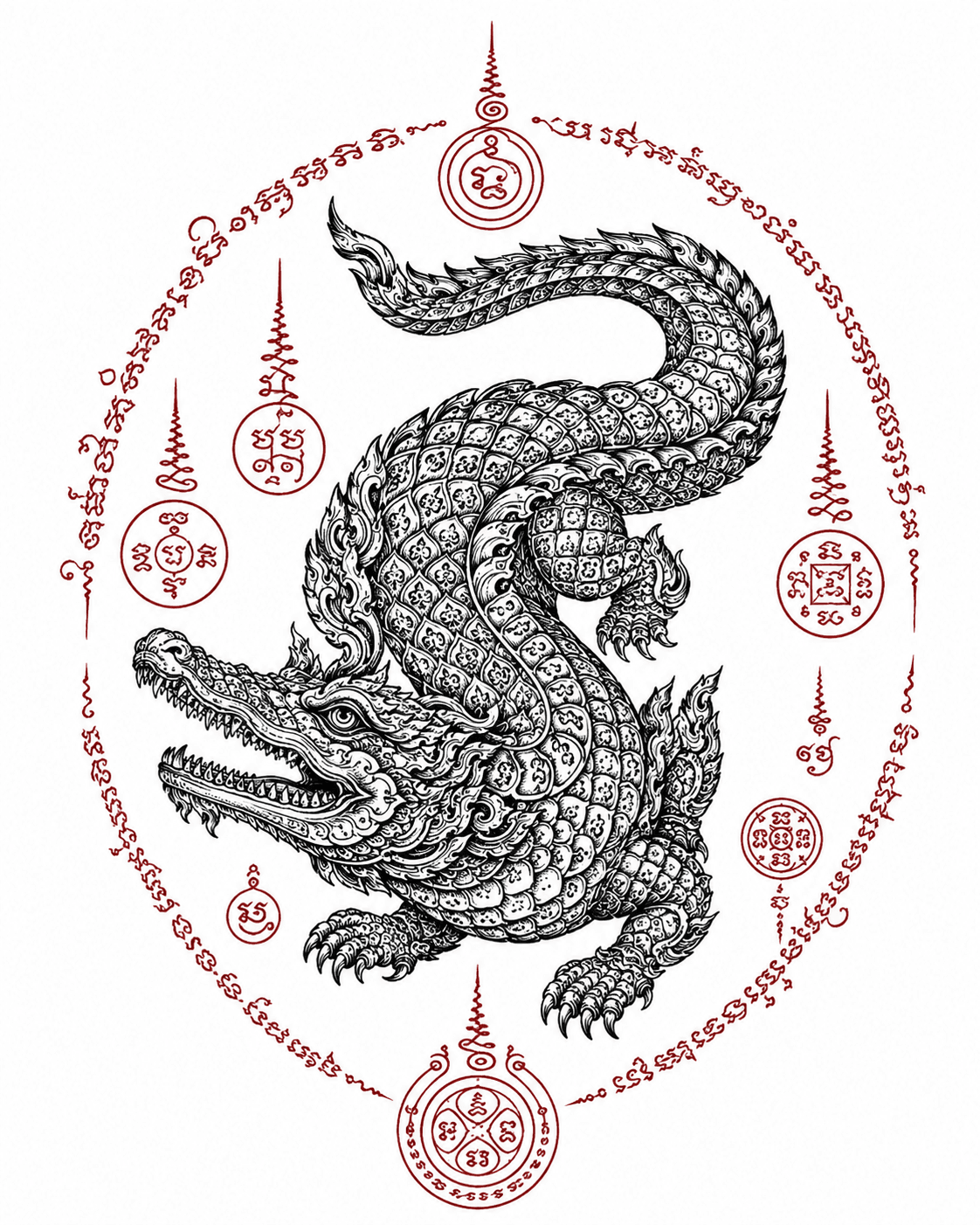
What does a crocodile tattoo mean?
In Thai symbolism the crocodile stands for primal force, patience and decisiveness. The design is derived from animal symbolism within Thai warrior traditions, in which each animal represents a quality the wearer wants to strengthen in themselves.
For the crocodile, a few of those qualities are closely linked. Tough physical strength, to begin with. Then focus and determination: knowing what you want and not straying from it. And finally endurance, the quality that sets the Jorakhe apart most from other power animals.
As with every yant, the explanation can differ from master to master. One ajarn stresses survival and perseverance, another discipline and strategic action. That is part of a tradition that has been passed on, largely by word of mouth, for more than 2,000 years.
Patience, and striking at the right moment
The crocodile's strength lies in its patience. Anyone who has ever watched a crocodile lie in wait knows how still the animal can be. It waits, sometimes for a very long time, and then moves all at once.
That image is also part of the Jorakhe's meaning. In the tradition it stands for explosive action at the right moment, not for blind aggression. First calm and overview, then decisiveness. It is a symbol for people who know you don't have to fight every battle, but that you have to be there when it counts.
That is why the Jorakhe is often chosen by people in physically demanding work, by athletes in a sport where grit counts, and by anyone who wants to build discipline, determination and mental or physical endurance.
The Jorakhe Bak: the crocodile back
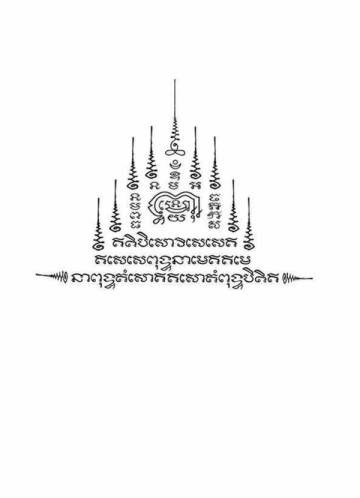
The Jorakhe Bak is the best known crocodile design and shows a single crocodile in a red circle. The name is often rendered as the crocodile back.
It is a dynamic design for physical strength, stamina and perseverance. The single crocodile focuses on one movement: forward, with intent. That makes it a strong design for anyone who wants to sink their teeth into a goal during a particular phase of life.
The Jorakhe Bak works well on the back or the upper arm. Those places fit an active, powerful intention and give the circle and the animal enough room.
The twin crocodile: two animals in balance
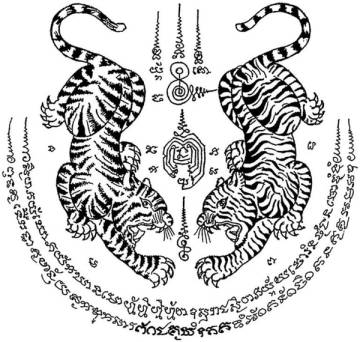
The twin crocodile sets two mirrored crocodiles facing each other with their jaws open. It is a different drawing from the same Jorakhe family.
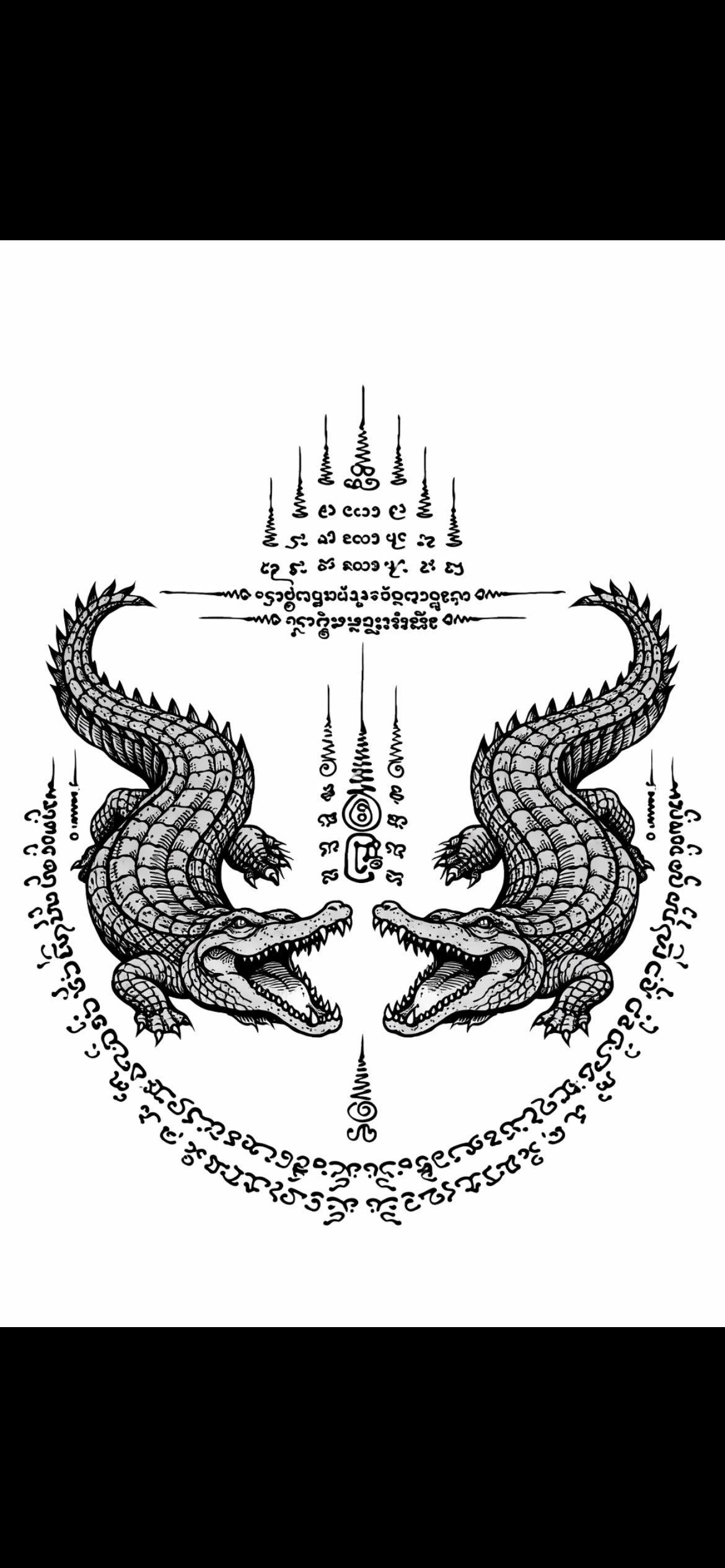
Above the animals runs a row of unalome spires, topped by an arc of Khom script. The mirroring follows the same logic as the twin tiger: two animals holding each other in balance. Strength that does not shoot off in every direction, but stays steady.
Because of its wide shape, which runs from left to right, the twin crocodile fits best on the upper back, the chest or between the shoulder blades. That is where the symmetry shows best.
Crocodile, tiger and dragon: kindred power animals
The Jorakhe belongs to the strength category, like the tiger and the dragon, but each animal sets a different accent. Knowing those differences makes it easier to choose the design that suits you.
The tiger, the Suea, is about authority, courage and presence. It keeps opponents at a distance simply by what it is. Its best known form is the Suea Koo with two mirrored tigers, the same structure as the twin crocodile. Read more in tiger tattoo meaning: the Suea explained.
The dragon, the Mang Korn, stands for sovereignty: ruling over yourself and your own territory, with the responsibility that comes with it. It is closely related to the Naga, the water serpent, which you can read about in Naga tattoo meaning.
The crocodile adds something of its own. Like the dragon and the Naga, it is an animal of the water, but its strength does not lie in authority or power. It lies in holding on. Where the tiger impresses and the dragon rules, the crocodile endures.
Placement and combinations
Like every yant, a crocodile yant belongs above the waist. Within the tradition, higher on the body is considered more sacred, and the back, shoulders, upper arm and chest also give enough room for the detail of the animal. Read more about the meaning of each spot in Sak Yant placement.
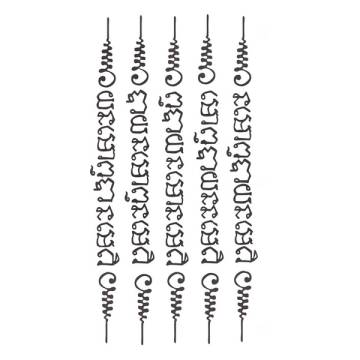
The Jorakhe combines well with other designs. With the Suea Koo you add leadership and authority to the crocodile's perseverance. With the Hah Taew, the five sacred lines, you get broader support, from protection to luck. The combination does determine placement and order, so discuss it in advance.
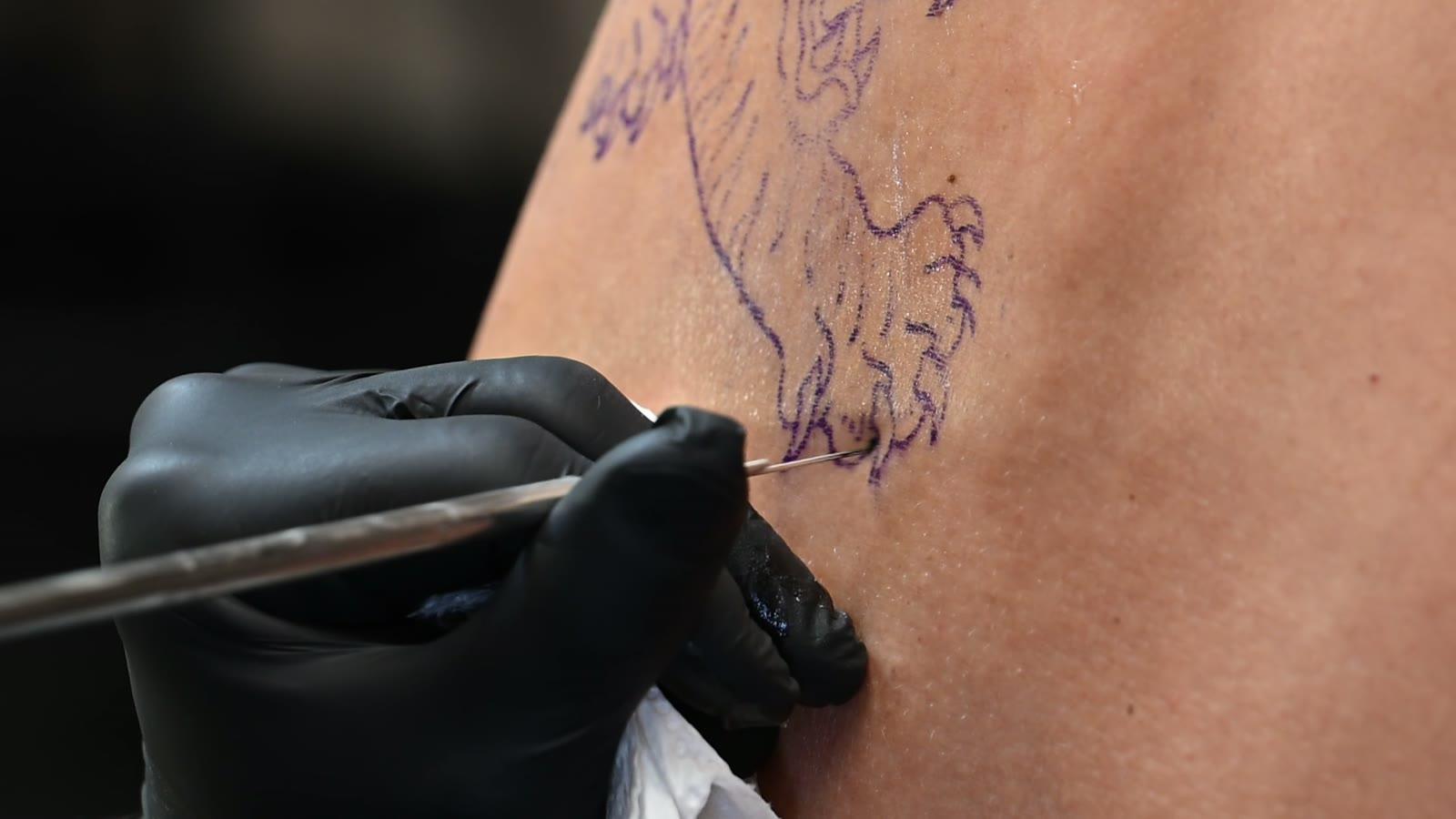
A Jorakhe is traditionally handpoked, as a bamboo tattoo, and the session ends with a blessing. A Sak Yant also comes with life rules.
Frequently asked questions about the crocodile tattoo (FAQ)
What does a crocodile tattoo mean in the Sak Yant tradition?
In the Sak Yant tradition the crocodile is called Jorakhe. It stands for primal force, survival strength, patience and endurance. The emphasis is on holding on and on acting at the right moment.
What is the difference between the Jorakhe Bak and the twin crocodile?
The Jorakhe Bak shows one crocodile in a red circle and is about focus and moving forward. The twin crocodile sets two mirrored animals facing each other beneath unalome spires and Khom script, and puts the emphasis on balance. Because of its wide shape, the twin crocodile also needs a wider spot.
Is a crocodile tattoo an aggressive symbol?
No. In the tradition the Jorakhe is not about attacking for its own sake, but about patience, discipline and decisiveness when it is needed. In that reading, the open jaws of the twin design are about strength, not about seeking conflict.
Can I combine a Jorakhe with a tiger or another yant?
Yes. Combining it with the Suea Koo for leadership or with the Hah Taew for broader support is a common choice. Because the combination determines placement and order, it is wise to discuss it beforehand.
How long does it take to get a crocodile yant?
That depends on the design, the size and the placement, and it can take longer than you expect. The twin crocodile is wider than the Jorakhe Bak. You will get an estimate beforehand, so plan plenty of time.
Would you like a Jorakhe, or would you first like to talk through which power animal suits you? The studio in Breda works by appointment, with no deposit. You can book an appointment here, and you will get a clear price indication in advance.
Recent blogs
Dive deeper into Sak Yant, traditions and tattoo care.
Sak Yant Belgium: getting one from Antwerp, Ghent or Brussels
You don't need to fly to Thailand for a real Sak Yant from Belgium. Here is how to reach the studio in Breda from Antwerp, Ghent or Brussels, and how your appointment works.
6 min read
Kroh Petch meaning: the diamond armour among Sak Yant designs
Kroh Petch is the diamond armour among Sak Yants: a spiritual shield for steadfastness and resilience. Its meaning, placement and how it combines with Gao Yord, Hah Taew and Paed Tidt.
6 min read
Traditional tattoo meaning: what makes a tattoo truly traditional?
The traditional tattoo meaning covers two very different things: a Western style or a cultural tradition with its own method and meaning. We explain the difference, and why Sak Yant is a living tradition.
6 min read