
Eye tattoo meaning: from the third eye to the Buddha eye
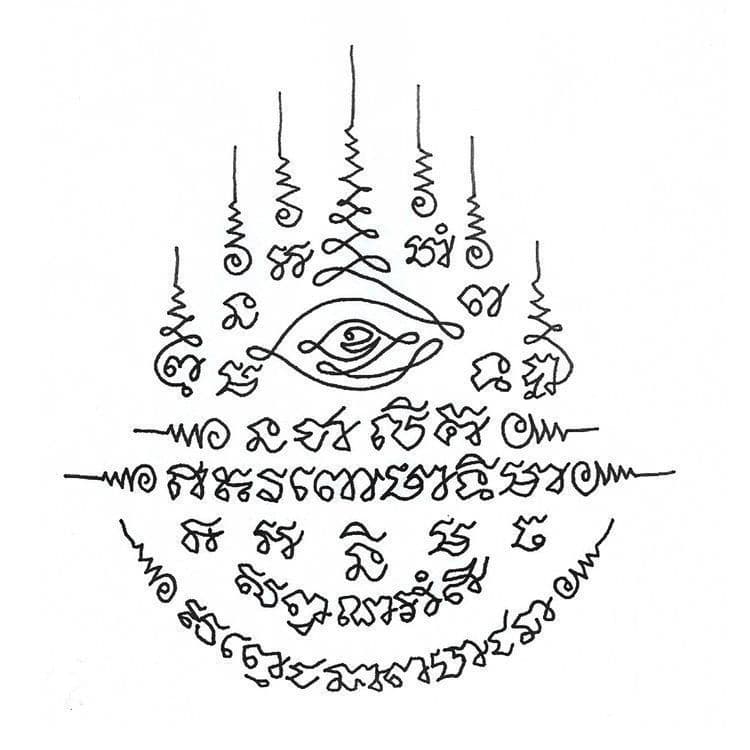
What does an eye tattoo mean? The third eye, the Eye of Horus, the all-seeing eye, the evil eye and the Buddha eye from the Sak Yant tradition explained.
An eye is one of the most powerful symbols you can get tattooed. It looks back at you. Whether it is the third eye, the Eye of Horus, the all-seeing eye or the Buddha eye: in almost every culture, a drawn eye stands for vigilance, insight and protection. Within the Sak Yant tradition, the eye has a design of its own, the Buddha eye, and it is also read in the Unalome.
In this article you will read what an eye tattoo means, which eye symbols exist and where they come from, and what makes the Buddha eye so special as a yant.
What does an eye tattoo mean?
An eye sees what is hidden. That is why an eye tattoo almost always stands for one of three things, or all three at once. First, vigilance: an eye that keeps watching, even when you are distracted. Second, insight: seeing deeper than the surface, through illusion and appearances. Third, protection: an eye that notices harm before it reaches you, or reflects it back.
Which of the three comes first depends on the symbol you choose. An eye from Egypt tells a different story than an eye from the Himalayas.
The best-known eye symbols
The third eye
The third eye comes from the Hindu and yogic tradition. It is placed between the eyebrows and stands for inner sight: intuition, awareness and insight that goes beyond what you perceive with your ordinary eyes. The god Shiva is often depicted with a third eye on his forehead.
The eyes of the Buddha
On the great stupas of Nepal, such as Boudhanath and Swayambhunath in Kathmandu, two large eyes look out over the valley on all four sides. They are called the wisdom eyes and represent the all-seeing wisdom of the Buddha, looking in every direction at once.
The Eye of Horus
The Eye of Horus comes from ancient Egypt. In the myth, the falcon god Horus loses his eye in a battle, after which it is restored. The symbol therefore stands for protection, healing and wholeness, and was worn as an amulet.
The all-seeing eye
The eye in a triangle, surrounded by rays, is called the all-seeing eye or the Eye of Providence. It comes from Christian art and represents a God who watches over people. It was later also used by the Freemasons, and it appears on the American dollar bill.
The evil eye
The blue eye amulet from Turkey and Greece, the nazar or mati, works the other way round. It does not protect by seeing, but by warding off: it reflects the envious gaze of others back at them. As a tattoo it is a small, protective symbol.
The Buddha eye as a Sak Yant
Within the Sak Yant tradition, the eye has its own design: the Buddha eye, Phra Net in Thai. It represents the third eye of the Enlightened One, the ability to see beyond illusion and superficiality. The yant symbolises awakened awareness: seeing situations as they really are, recognising insincerity in others and protecting yourself against spiritual blindness.
What makes the design special is that it is turned inward. Where a yant like the Hah Taew or the Gao Yord mainly protects against what comes from outside, the Buddha eye reminds you every day to perceive consciously. The eye is always watching, even when you yourself are briefly distracted. That is why it is often chosen by people who meditate, and by people in a period of transition who are looking for clarity.
The Unalome: an eye as well
Less well known is that the Unalome is also read as an eye. Silas van Gemert's book states that the Unalome is also known as the Buddha eye or the third eye of the Buddha. The spiral at the bottom stands for the chaos of searching, the straight line above it for the clarity you find. So the path of the Unalome ends in seeing. If you are looking for a more understated eye symbol, without a literally drawn eye, the Unalome is often the choice.
Where to place an eye tattoo
For the Buddha eye, the classic spots are the neck and the space between the shoulder blades. The idea behind it is a beautiful one: the eye sits behind you and stays alert where you are not looking yourself. The design also works well worn visibly, on the arm or the neck, because it is calm and not too explicit. As with every sacred symbol: above the waist. More about placement.
What to keep in mind with an eye tattoo
An eye seems like a neutral symbol, but many eye symbols have a religious background. The Buddha eye and the eyes on the stupas belong to a living tradition. Treat them with the same respect as a Buddha tattoo: high on the body, and knowing what you are wearing. Read more about respect and appropriation in Sak Yant as a Westerner.
Another point is the execution. A realistically drawn eye calls for shading and fine gradients, while a Buddha eye as a yant is linework with sacred script. Those are two different kinds of tattoo, and it helps to know beforehand which one you are after.
Frequently asked questions about the eye tattoo (FAQ)
What does an eye tattoo mean?
An eye tattoo stands for vigilance, insight and protection. The emphasis depends on the symbol: the third eye is about intuition, the Eye of Horus about healing and protection, the evil eye about warding off envy and the Buddha eye about seeing clearly.
What is the difference between the third eye and the Buddha eye?
The third eye comes from the Hindu and yogic tradition and stands for inner sight, usually between the eyebrows. The Buddha eye stands for the wisdom of the Enlightened One. In the Sak Yant tradition, the Buddha eye is also called the third eye of the Enlightened One, so the meanings are close to each other.
What does an eye in a triangle mean?
That is the all-seeing eye or the Eye of Providence. It comes from Christian art and represents a watchful God. It is not a Buddhist symbol and does not belong to the Sak Yant tradition.
Does an eye tattoo bring bad luck?
No, in the traditions eye symbols come from, the eye is actually protective. The evil eye amulet even exists specifically to ward off bad luck.
Can I combine a Buddha eye with other yants?
Yes. Because the Buddha eye is turned inward, many people combine it with a protective yant such as the Hah Taew or the Gao Yord. In the conversation beforehand, you look together at how the designs fit with each other.
Recent blogs
Dive deeper into Sak Yant, traditions and tattoo care.
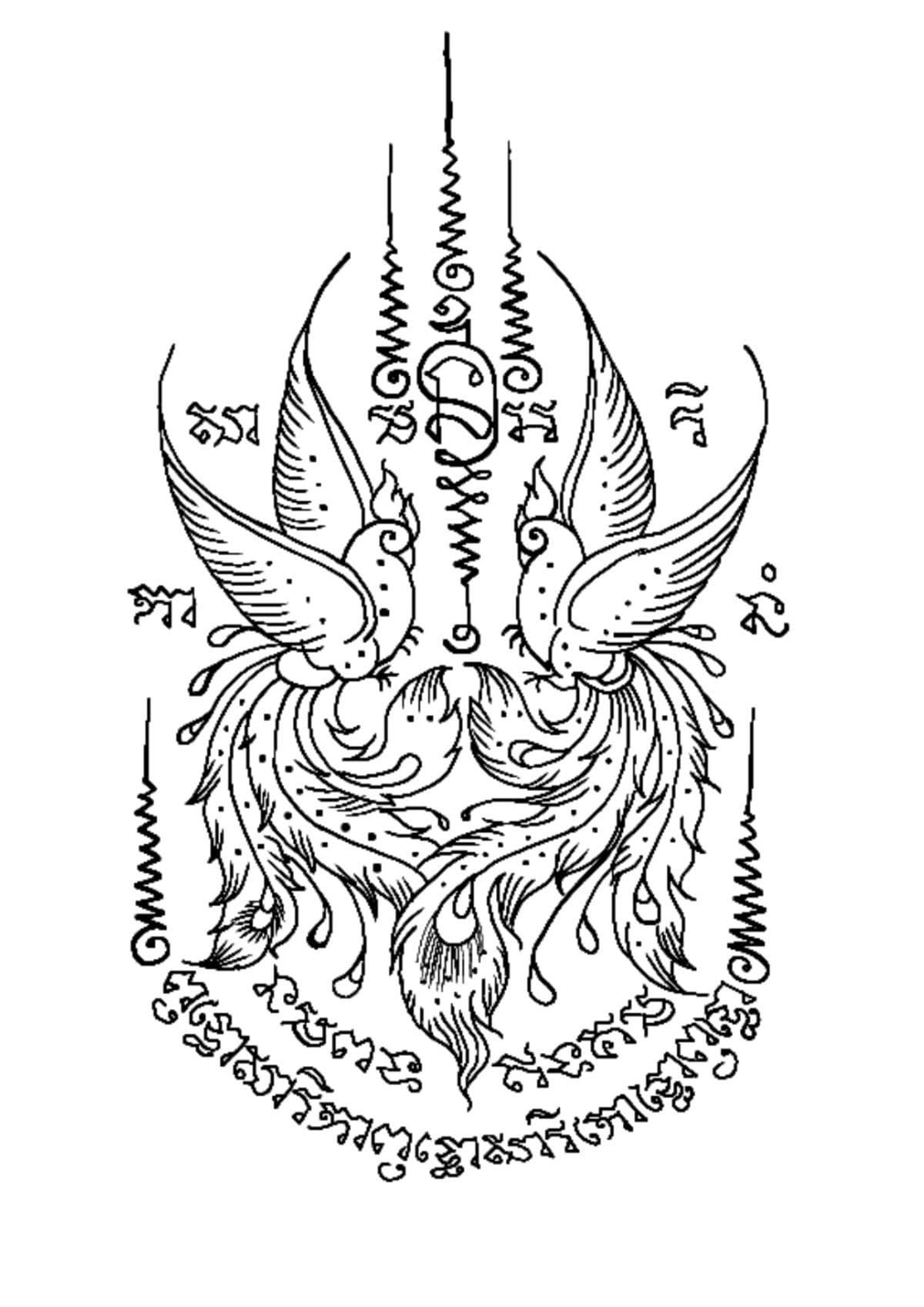
Tattoos that mean love: six symbols of love and connection
Which tattoo stands for love? Six symbols explained, from the Na Metta and the Hong birds to the lotus, plus strength and love in one design and tattoos for couples.
7 min read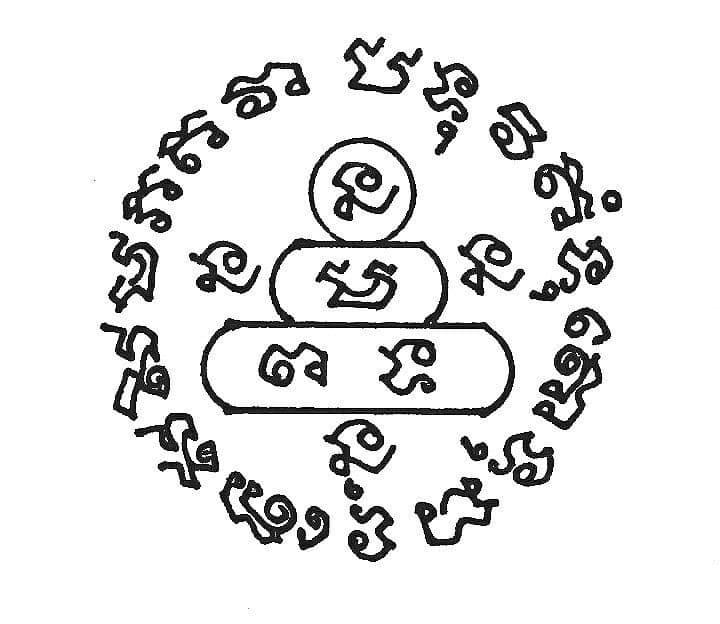
Can a Westerner get a Sak Yant? On respect and cultural appropriation
Is a Sak Yant cultural appropriation? How people in Thailand see it, where the line lies between respect and a lack of it, and what you can do in practice.
7 min read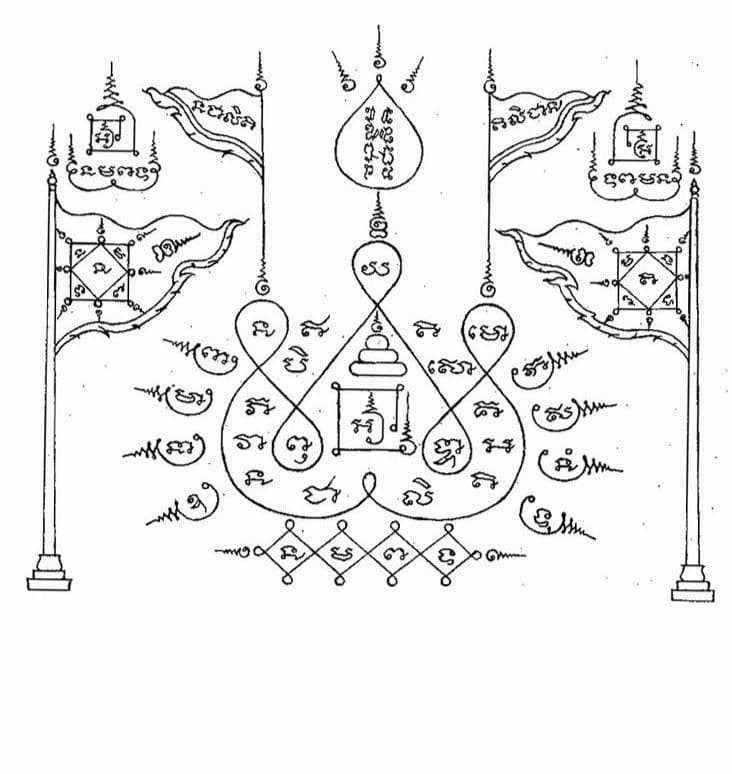
Holistic tattoo: a tattoo as a ritual, not a product
Holistic tattooing means the reason, the conversation, the ritual and the aftercare weigh as much as the design. The four phases, what really differs, and what merely sounds good.
10 min read